Big Belly, on Sandgate Road in Albion, closed without warning just before Christmas, with indoor tables still set and the menu left displayed at the entrance.
Further along the strip, Little Lamb Albion remained closed more than a year after shutting, with items including glassware, fridges and an EFTPOS machine still visible inside.
Vaquero Dining, a Spanish restaurant located nearby, closed in October 2025 despite strong reviews. Nutmeg Indian Cuisine also closed in 2023, adding to a run of hospitality turnover along the strip.
A wine bar beside Olive & Thyme changed operators a few weeks before the report, after the previous owner exited.
Nearby on Collingwood Street, Brewtide Brewery announced in September it would not renew its lease after four years of trading.
Costs, Competition And Capacity
A long-running local operator cited ongoing increases in rent, interest rates, produce costs and wages as continuing pressures since the pandemic period.
Retail analysis referenced in the reporting suggested the Sandgate Road strip may only be able to support a limited number of restaurants, particularly where long-established venues have remained in place for decades.
Some community responses focused on affordability and the number of venues competing in the same area, while others clarified the closures related to Albion, not similarly named venues operating in other suburbs.
Vacant shopfronts were visible along the Sandgate Road strip at the time of the walk-through, with several spaces advertised for lease, indicating further change may still be underway.
Allan Border Field in Albion will once again host the annual Goodwill Cricket Cup on 7 February, bringing together police, multicultural communities and cricket enthusiasts for a cause that extends far beyond the boundary rope.
The free community event kicks off at 11am with a cricket match between the Institute for Australia-India Engagement, Brisbane (South Asia) XI and the Queensland Police Service cricket team. The match takes place at Allan Border Field, located at 1 Greg Chappell Street, Albion, on the same ground that regularly hosts Queensland Bulls and Brisbane Heat fixtures.
Gates open to all community members, with organisers emphasising that families and supporters are especially welcome to enjoy a fun, family-friendly day out. Spectators can watch the cricket, connect with police and community leaders, and stand together in solidarity against domestic and family violence.
More Than Just Cricket
According to Queensland Police’s Brisbane North command, the Goodwill Cup champions awareness of domestic and family violence, promoting the powerful message: break the silence, end the violence. The annual fixture brings together multicultural communities, police and representatives from state and federal government agencies to promote community engagement, inclusion and connection across Brisbane’s northern suburbs.
Photo credit: QPS
Inspector Wayne Clayton will join the QPS cricket team and local police officers at the event, reinforcing the service’s ongoing commitment to strong community partnerships. The Institute for Australia-India Engagement, a Brisbane-based organisation dedicated to strengthening Australia-India relations through research, policy dialogue and community engagement, has partnered with Queensland Police to organise the fixture.
Community Connections
For families attending, the day promises multiple opportunities for engagement beyond watching the match. Community members will be able to meet representatives from the QPS recruitment team. Multicultural Police Liaison Officers will also be on hand.
Cricket enthusiasts may also get the chance to meet former Australian international cricket legends who are expected to attend the event.
Throughout the day, visitors can enjoy a variety of South Asian food trucks and refreshment vendors, ensuring authentic cuisine is available for purchase. The food offerings reflect the multicultural character of the event.
The venue itself holds special significance within Australian cricket. Allan Border Field forms part of the National Cricket Campus and has been upgraded to international standard over recent years. The facility has hosted Women’s Twenty20 International matches and Sheffield Shield finals, with major fixtures drawing crowds exceeding 10,000 spectators.
Why It Matters
Queensland Police encourages local residents from Ascot, Albion and surrounding suburbs to attend this free event, emphasising that community participation sends a strong message of solidarity against domestic and family violence. The Goodwill Cup demonstrates how sport can serve as a unifying force, bringing together diverse communities around shared values of respect, inclusion and the rejection of violence in all its forms.
In a region as culturally diverse as Brisbane’s northern suburbs, events like the Goodwill Cup create important spaces for connection, conversation and collective action on issues that affect all communities. The combination of cricket, culture and community engagement makes this an event worth attending, whether you’re a cricket fan, a family looking for a weekend activity, or someone who wants to support the important cause at the heart of the day.
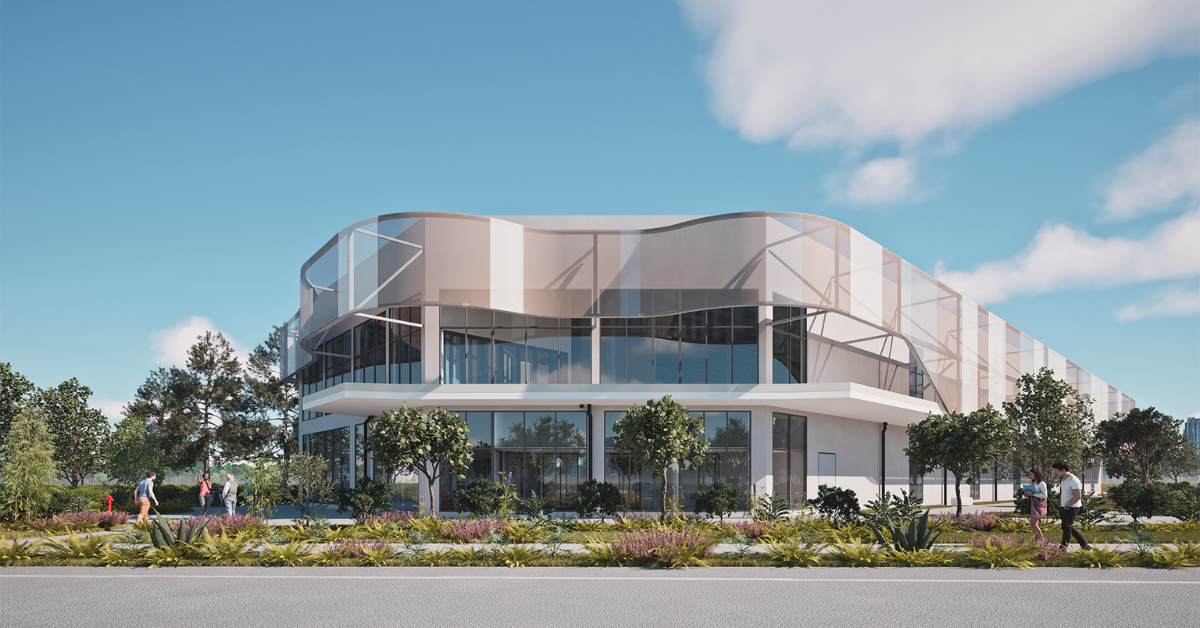
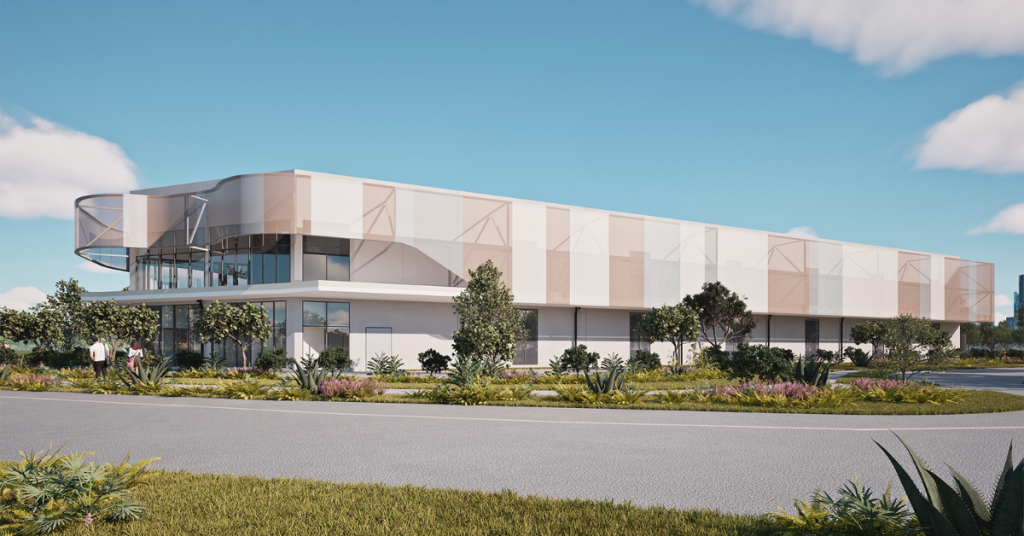
A large industrial site in Albion is set for a major transformation into a modern three-storey automotive destination that brings vehicle showrooms and service centres together in one convenient location.
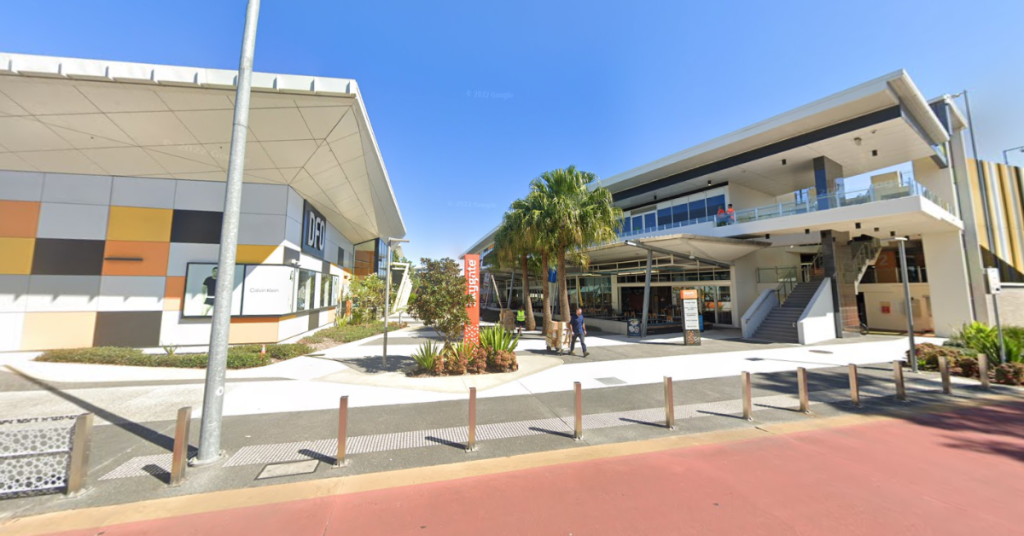
A development application has been approved to upgrade a long-standing automotive site across Sandgate Road, Tate Street, and Collingwood Street. Designed by Wim Architects, the project aims to fix the current scattered layout of the area. The plan will turn the site into a “one-stop” precinct for car buyers and owners.
The development covers a massive area of about 11,779 square metres, which spans across 21 different lots. The goal is to move car brands from tight inner-city spots to this larger space where there is more room for traffic and servicing.
Building Details
The new buildings will stand three storeys high, reaching a maximum height of about 14.9 metres. The design covers roughly 69 per cent of the total site. Inside, customers will find modern vehicle showrooms, display areas, and comfortable sales offices with lounges. The facility is built for high volume, featuring 64 vehicle hoists for servicing.
Parking has also been a focus, with 177 single car spaces, 58 tandem spaces, and four spots for people with disabilities. Planners from Ultimate Planning Solutions stated that the design keeps the industrial character of the neighbourhood but improves the look of the street with better landscaping and reduced outdoor clutter.
The work will happen in two main stages to manage the transition. Stage one involves knocking down the existing Toyota showroom and service buildings to prepare the ground. Crews will then build two new showrooms and a multi-level car park with 129 spaces and 40 service hoists.
The main entry for cars will be off Sandgate Road, with other entrances on Collingwood and Tate Streets. Stage two will see the demolition of the remaining workshops. This phase will add two more showrooms—one multi-level and one standalone—plus a second parking structure with 105 spaces and 24 more service hoists.
The project includes plans to landscape over nine per cent of the site, which planners say will improve the view from Sandgate Road. By moving most of the service functions into screened structures at the rear, the development aims to tidy up the streetscape.
The new precinct is designed to handle modern operational needs, making it easier for locals to buy and service their vehicles without the congestion found in older, smaller locations.
A new grandstand is planned at Eagle Farm, with $25 million committed to begin demolition and early works to replace the ageing John Power Stand at the Brisbane racecourse.
Eagle Farm Racecourse has hosted thoroughbred racing for more than 160 years. Several spectator facilities at the venue, including the John Power Stand, have been assessed as nearing the end of their operational life.
Engineering investigations into the John Power Stand were first undertaken in 2013, with further assessments completed in 2022 and 2023. These reports identified significant structural deterioration and concluded that major components of the building were approaching the end of their structural lifespan.
The John Power Stand is scheduled to be decommissioned in August 2026, following the conclusion of the Winter Carnival.
Funding And Project Scope
An initial $25 million has been released to support the first stage of redevelopment at Eagle Farm. The funding will allow demolition of the John Power Stand to commence and enable detailed planning for a replacement spectator facility.
The funding forms part of a broader loan arrangement for racing infrastructure and aligns with a statewide framework aimed at delivering modern, fit-for-purpose facilities across Queensland’s racing network.
Photo Credit: MID-0524-0842
Planning And Approval Pathway
The Eagle Farm grandstand redevelopment has been approved under Ministerial Infrastructure Designation (MID-0524-0842), granted in October 2025. The designation enables a state-led assessment process for the project.
Planning documentation associated with the designation includes concept designs for a new facility, referred to as The Terraces, which will replace the John Power Stand.
Photo Credit: MID-0524-0842
Maintaining Racing Operations
The Brisbane Racing Club, which operates Eagle Farm, has indicated the works will be staged to allow racing to continue during redevelopment. Coordination with Racing Queensland is intended to minimise disruption between the end of the 2026 Winter Carnival and the commencement of the 2027 season.
Once completed, the new grandstand is expected to provide upgraded amenities and improved accessibility, supporting ongoing use of Eagle Farm as Queensland’s premier thoroughbred racing venue.
A rescue cat named Socko from Ascot has been prevented from boarding Brisbane’s CityCat ferries, drawing attention to pet travel rules that permit dogs but exclude cats.
CityCat and ferry services operate along the Brisbane River, connecting terminals from St Lucia through to Northshore Hamilton and forming a major transport option for daily travel.
In mid-2020, dogs were permitted to travel on CityCats and ferries following a six-month trial. Under these arrangements, dogs are allowed during off-peak weekday hours and throughout weekends, subject to conditions on restraint, location on board, and passenger safety.
Cats were not included in this policy change and remain excluded from CityCat services.
Photo Credit: Sara & Socko/Instagram
Socko’s Experience On The CityCat
Socko is a rescue cat adopted in April 2025 by Sara Calle Herrera, who lives in Ascot. Since his adoption, Socko has regularly travelled outdoors around Brisbane in a carrier or on a leash, including walks and runs along public paths.
Sara became aware of the restriction after boarding a CityCat with Socko secured inside a carrier while remaining in an outdoor area. Ferry staff advised that cats are not permitted under current rules.
Photo Credit: Sara & Socko/Instagram
Existing Pet Travel Rules
Current CityCat conditions allow accredited assistance animals and pet dogs to travel. Dogs must remain outside the ferry cabin, be properly restrained or enclosed, and travel only during approved times.
Cats are not listed as permitted pets, including those contained in enclosed carriers.
For Sara, the exclusion limits transport options when moving around Brisbane without a private vehicle, including trips such as veterinary visits. While she continues to travel by foot and car, the restriction reduces flexibility when using river transport.
The situation contrasts with arrangements in other Australian cities, where small pets are permitted on some public transport services when secured in suitable containers.
Community Discussion And Outlook
Public response to Socko’s experience has been mixed, with some questioning the difference in treatment between dogs and cats, while others raise concerns around allergies and onboard comfort.
Morgan Street in Ascot represents a fascinating example of post-war suburban development, with the street not even existing in 1936 when historical aerial photography captured the area. This relatively modern addition to Brisbane’s street network has evolved into a prestigious residential enclave that embodies the exclusive character Ascot is renowned for.
With an impressive 95% of properties being owner-occupied and residents staying an average of 14 years and 9 months, Morgan Street demonstrates exceptional stability and desirability. While 44% of residents have called the street home for more than a decade, the community reflects both established families and newer residents drawn to this sought-after location. The street’s property transaction history reveals the remarkable appreciation in Ascot’s real estate values, with properties that sold for $200,000 in 1981 now representing multi-million dollar investments in one of Brisbane’s most coveted suburbs.
Morgan Street, Ascot Residents
NUMBER OF PROPERTIES: 28 (24 houses, 4 others) % OF OWNER OCCUPIERS ON STREET: 95% AVERAGE TIME FOR OWNER OCCUPIERS: 14 years and 9 months % OF PEOPLE 10+ YEARS: 44%
Morgan Street, Ascot – As It Looked in 1936
Morgan Street, Ascot in 1936
SOME RECENT SALES ON MORGAN STREET, ASCOT
Property Address
Sale Price
Sale Date
3 Morgan Street, Ascot
$6,505,000
Oct 2025
1 Morgan Street, Ascot
$4,420,000
Jul 2025
SOME TYPICAL PROPERTY SALES ON MORGAN STREET FROM YESTERYEAR
Property Address
Sale Price
Sale Date
19 Morgan Street, Ascot
$200,000
Apr 1981
6 Morgan Street, Ascot
$380,000
Aug 1992
3 Morgan Street, Ascot
$485,000
Nov 1992
SUBURB PROFILE
The median price of a 3 Bedroom House in Ascot in 2025 was $1,576,000 The median price of a 3 Bedroom House in Ascot in 2021 was $1,325,000 TYPICAL INCREASE OF A 3-BEDROOM HOUSE IN ASCOT SINCE 2021: $251,000
The median price of a 5 Bedroom House in Ascot in 2025 was $3,430,000 The median price of a 5 Bedroom House in Ascot in 2021 was $2,620,000 TYPICAL INCREASE OF A 5-BEDROOM HOUSE IN ASCOT SINCE 2021: $810,000
The median price of a 2 Bedroom Unit in Ascot in 2025 was $697,000 The median price of a 2 Bedroom Unit in Ascot in 2021 was $420,000 TYPICAL INCREASE OF A 2 BEDROOM UNIT IN ASCOT SINCE 2021: $277,000
The median price of a 3 Bedroom Unit in Ascot in 2025 was $1,106,000 The median price of a 3 Bedroom Unit in Ascot in 2021 was $625,000 TYPICAL INCREASE OF A 3 BEDROOM UNIT IN ASCOT SINCE 2021: $481,000
Harness racing will remain in Brisbane, with Albion confirmed as the future base of a consolidated racing precinct that will house key industry operations and facilities.
Albion has been identified as the long-term metropolitan home of harness racing in Brisbane, following the release of The Next Lap, an industry-wide roadmap outlining the future direction of Queensland racing. The plan positions Albion Park as the centre of racing administration and operations while maintaining the sport’s presence within the city.
The announcement was made on 19 December 2025 as part of a broader package of infrastructure and operational changes across the racing industry.
Photo Credit: The Next Lap/Delivering for Queensland
Shift Away From Relocation Plans
Earlier proposals had explored moving harness racing away from Brisbane to a new site outside the metropolitan area. Under the current plan, those proposals have been discontinued, with the previously identified Norwell site set to be disposed of.
The decision secures a permanent metropolitan location for harness racing, reinforcing Albion’s role within the industry.
Facilities Planned for the Albion Precinct
The Albion masterplan includes new spectator facilities for the Albion Park Harness Racing Club, along with new offices for Racing Queensland and the Queensland Racing Integrity Commission. A racing science centre will also be developed on site.
Bringing these functions together is intended to improve operational efficiency while maintaining clear separation between commercial and integrity activities.
Photo Credit: The Next Lap/Delivering for Queensland
Training Pathways Beyond Albion
The plan also outlines the development of a broader harness racing corridor. Marburg Showgrounds will be upgraded into an elite training and racing centre, located between Brisbane and Toowoomba. Harness racing is also set to return to Toowoomba, restoring a regular presence at the turf club.
These additions are expected to support participation, training access and regional racing activity.
What Happens Next
Racing Queensland is expected to lead the next phase of delivery, with a detailed implementation program scheduled for release in early 2026. This will outline the timing of infrastructure works, operational changes and future engagement with the industry.
A rare run of racecourse-front homes in Hendra has attracted a buyer waiting list, driven by tightly held supply and direct views across Eagle Farm Racecourse.
Mein Street in Hendra is described as one of the only streets in Australia where freestanding homes sit directly on the boundary of a major metropolitan racecourse. About 20 homes sit along the stretch between the 1200m and 1400m start points of the Eagle Farm track.
The positioning is unusual for metropolitan racecourses, which are more commonly bordered by commercial buildings, stables, or infrastructure rather than residential homes.
Photo Credit: Place
Record Land Sale Points To Scarcity
A recently sold 850sqm parcel achieved $3.8 million, reported as a suburb land sale record for Hendra. The sale was made to Eagle Farm trainer Caitlin Hoysted and her husband Matt.
Market commentary linked the result to the limited supply and the difficulty of replicating the street’s outlook and location.
Photo Credit: Place
Micro-Market Draws Highly Specific Buyers
Agents have described Mein Street as a micro-market that has outperformed the broader Hendra market. Buyer interest has been characterised as narrow and location-specific, with some prospective purchasers focused solely on the racecourse frontage.
98 Mein Street Listing Highlights The Appeal
A neighbouring property at 98 Mein Street in Hendra is also on the market. The home is owned by interior designer Tonya Scheiwe of Style Elements Interiors and her husband Stu Balding.
Photo Credit: Place
The pair have recently completed the residence and are building on the block directly next door, while describing the street as a social community with race-day gatherings.
Other notable points about the property are the home’s position within Hendra, accessible to Racecourse Road and Portside; within walking distance to Doomben and Eagle Farm racecourses and the CBD about 8km away, a short commute via bus or train.
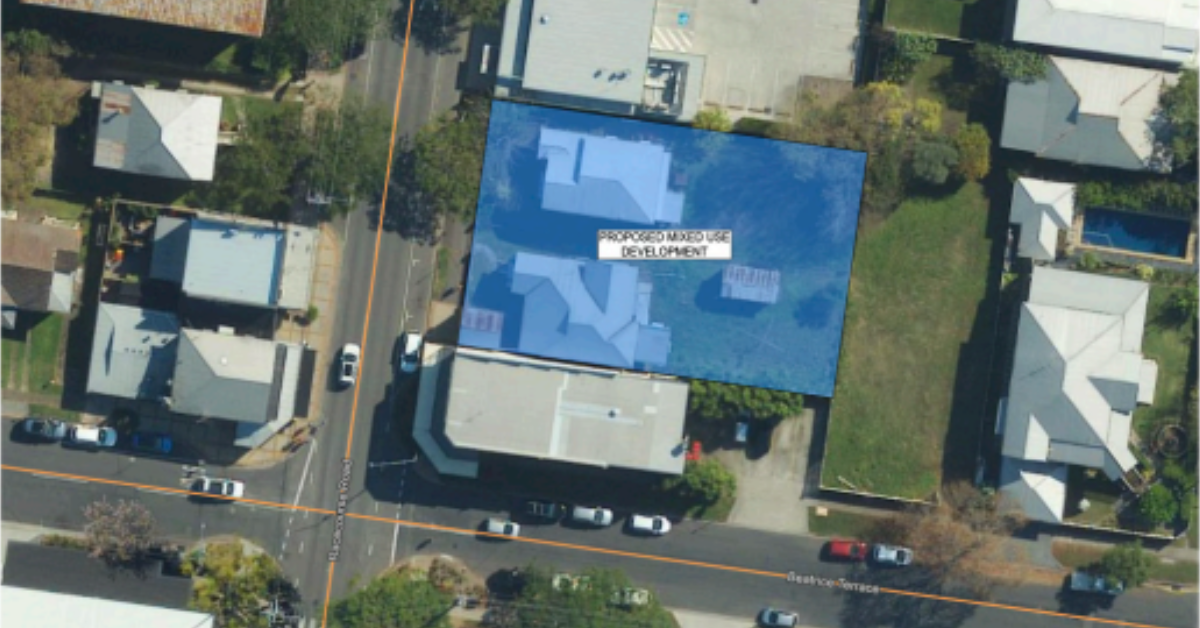
Racecourse Road has long been one of Hamilton’s most recognisable main streets, known for its mix of cafés, shops and services and its role as a local meeting place. It is also an area where proposed change often attracts close attention, and a recently approved mixed-use development has become a topic of ongoing discussion within the community.
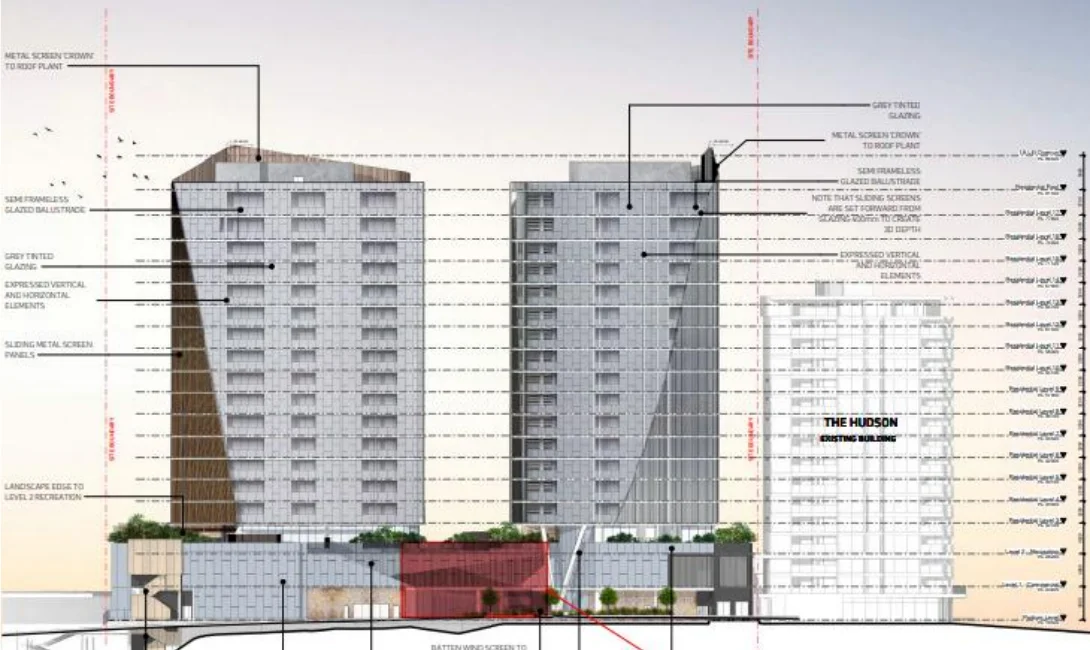
The project is proposed for 63–71 Racecourse Road and 12 Balowrie Street, Hamilton, occupying a site that links the suburb’s commercial strip with surrounding residential streets. The development application (A006790991) has been approved by Brisbane’s local officials, allowing for a building that combines retail, food and residential uses.
Photo credit: Brisbane PD Online
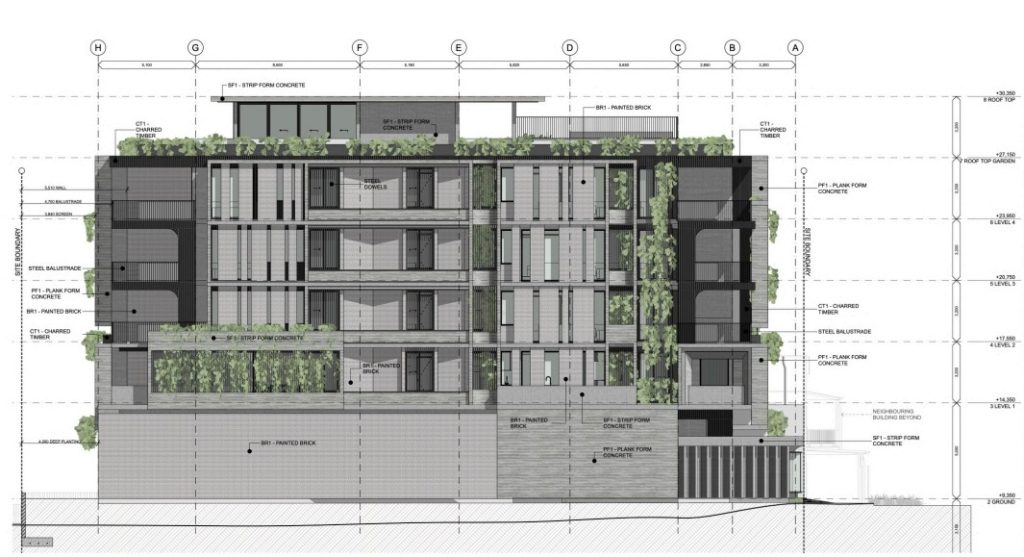
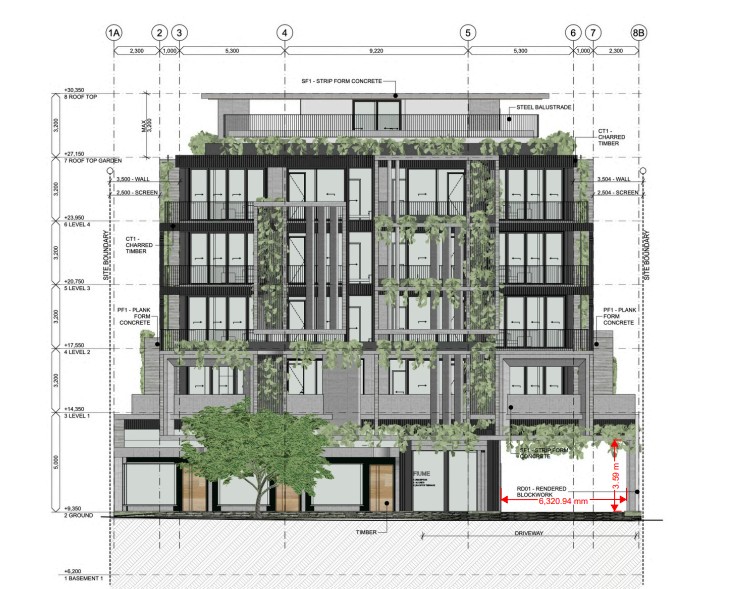
Plans lodged with council outline a mid-rise mixed-use development intended to refresh this section of Racecourse Road. At street level, the proposal includes eight commercial tenancies with a combined floor area of approximately 1,380 sqm. These tenancies are planned to front both Racecourse Road and Kent Street, with the aim of maintaining an active and engaged streetscape.
Above the commercial component, three residential levels would deliver a total of 37 apartments. The mix includes nine two-bedroom and 28 three-bedroom dwellings, reflecting a focus on larger apartment layouts rather than smaller studio or one-bedroom units.
Photo credit: Brisbane PD Online
Design material released with the application indicates a strong emphasis on pedestrian movement and street engagement. A central laneway-style pedestrian connection is proposed to run through the site, linking Racecourse Road to Kent Street. Architectural features such as landscaped edges, deep verandahs and layered façades are intended to moderate the building’s scale and respond to the area’s subtropical streetscape character.
For residents, the development proposes shared facilities including a rooftop communal area of around 800 square metres. Planned amenities include a swimming pool, outdoor gym, yoga lawn and barbecue areas, providing communal spaces above street level. Parking is provided through a combination of basement and ground-level spaces, with 177 car parks and 47 bicycle spaces outlined in the application.
Community discussion continues
63–71 Racecourse Road (Photo credit: Google Street View)
While the approval process did not involve public notification, discussion within the local community has been active. Residents have been sharing views about the proposal through neighbourhood conversations and social media groups, reflecting a range of perspectives on the development.
Some community members see the project as a positive step for Racecourse Road, particularly at a time when many suburban shopping strips are adapting to changing retail conditions. Supporters have suggested that additional housing in close proximity to shops and services may help support local businesses and encourage a more consistent level of activity throughout the day and evening.
Others have expressed unease about how development of this scale may alter the character of Racecourse Road. Informal concerns raised online have included issues such as construction disruption, parking pressure and the cumulative effect of ongoing development along the strip. These views reflect broader conversations occurring across many established suburbs as higher-density projects are introduced into areas with long-standing local identities.
Despite differing opinions, the proposal did not receive formal public submissions during the assessment process. This is because the application was classified as a code assessable development under the Brisbane City Plan. Code assessable developments are those anticipated within the planning framework for a site and are assessed against set criteria. They do not require public notification or a public submissions period.
From a planning perspective, proponents of the development point to its assessment against existing planning controls and its emphasis on active street frontages, rather than blank walls or inactive edges. They argue that mid-rise mixed-use buildings can play a role in accommodating housing demand while supporting walkable neighbourhood centres with a mix of residential and commercial uses.
The contrast between the formal planning pathway and the level of informal community discussion highlights a familiar tension in suburbs like Hamilton. While planning schemes provide guidance about what forms of development are permissible, residents often experience change through its day-to-day impacts on movement, amenity and the visual character of their street.
With approval now in place, attention will turn to construction timing and how the project is delivered. For Racecourse Road, the development represents another phase in an ongoing evolution, continuing conversations about growth, character and the future direction of one of Brisbane’s best-known suburban precincts.
Brisbane Airport Corporation (BAC), in partnership with Airservices Australia and supported by Civil Aviation Safety Authority (CASA), has begun an 18-month voluntary trial to allow pilots to accept tailwinds of up to 10 knots overnight, with the objective of shifting more flights over water between 10:00 pm and 6:00 am, thereby reducing aircraft noise over surrounding suburbs.
The trial remains fully voluntary: no pilot or airline is required to take part, and participation rests solely at the pilot-in-command’s discretion. BAC emphasises the program operates entirely within existing regulatory settings and does not require any exemptions or changes to international aviation standards.
Photo credit: Brisbane Airport/Google Maps
Historically, Brisbane Airport permitted a 10-knot tailwind allowance for around three decades before that limit was reduced to 5 knots in 2016 when the airport aligned with international standards. The new trial is intended to gather evidence on whether safely restoring the higher tailwind limit on a permanent basis is feasible, while simultaneously offering potential noise benefits to nearby communities.
How the 18-month tailwind trial will operate
The trial will roll out in two phases:
First 6 months: the increased tailwind allowance applies only to departures.
Following 12 months: the allowance will be available for both arrivals and departures, provided conditions remain suitable.
The overnight operational window is between 10pm and 6am, targeting the hours when aircraft noise tends to have the greatest impact on residential communities around the airport.
Conditions required for participation
Photo credit: Brisbane Airport/Google Maps
Pilots may choose to accept a tailwind of up to 10 knots only if all of the following safety and operational conditions are met:
Tailwind component is 10 knots or less (including gusts)
Crosswind component is 20 knots or less (including gusts)
Runway is dry
No thunderstorms present or forecast within 30 nautical miles
No reported or forecast windshear
Adequate air-traffic control staffing
Traffic levels remain at acceptable levels
When those criteria are satisfied, Airservices Australia will issue a notification via the Automatic Terminal Information Service (ATIS), indicating that the tailwind option is available. At no point is participation mandated.
Purpose of the tailwind allowance
The core intention of the trial is to increase the likelihood that aircraft will take off and land over water, namely Moreton Bay, rather than above residential areas. Over-water flight paths tend to impose lower noise burdens on suburbs near the airport, especially overnight.
In the six months leading up to the trial’s launch, BAC reports that approximately 63 per cent of aircraft movements between 10pm and 6am either arrived or departed over water. BAC hopes restoring a 10-knot tailwind allowance under controlled conditions will lift that proportion even further, where safely possible.
Data collection and evaluation
Photo credit: Brisbane Airport/Google Maps
The trial has been developed and funded by BAC, with the aviation consultant PlanSafe tasked with creating the operational procedures and managing data collection. The programme aims to capture wind and operational performance data from participating aircraft.
Over the 18-month period, that dataset will be analysed to assess whether permanently reinstating the 10-knot tailwind limit, and thus more frequent over-water operations at night, is viable under safety standards.
Why the trial is timely
The tailwind trial forms part of a broader suite of noise-abatement measures at Brisbane Airport following changes to flight paths and the activation of its parallel runway in 2020. Over-water routing at night has featured prominently among strategies to reduce the noise impact on suburbs near the airport.
By gathering robust operational and safety data, BAC, Airservices Australia and CASA aim to balance the demands of aviation operations with community concerns about aircraft noise, potentially paving the way for a permanent tailwind policy that eases noise burdens while maintaining safety and compliance.