


The Gateway Bridge Has a Past Worth Remembering on Its 40th Birthday

Did you know that the Gateway Bridge, which connects Eagle Farm on Brisbane’s north side to Murarrie in the south, was once called the world’s deadliest bridge? It is a little-known chapter in the bridge’s history that hundreds of thousands of road users who cross it on any given day would likely find hard to believe, yet the statistics from its early years told a grim story.


Read: Higher Toll Fees for Brisbane’s Gateway Bridges


This year marks 40 years since the structure most locals simply call “the Gateway” opened to the public. What began as a bold engineering solution to the city’s chronic traffic gridlock would eventually become the site of more than 120 deaths, and a cautionary tale about the cost of inadequate safety measures.

A city crying out for a crossing
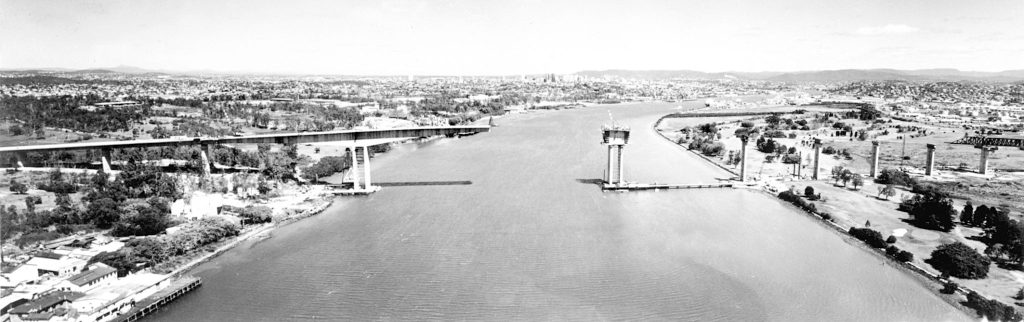
Gateway Bridge under construction, Brisbane, September 1984 Queensland State Archives, Digital Image ID 3514

Back in the 1970s, Brisbane had a problem. Drivers travelling between the Gold Coast and the Sunshine Coast had no practical way to bypass the city. They either crawled through inner-city crossings or queued for slow, capacity-limited car ferries. Freight and commuters alike faced regular delays.

Then roads minister Russ Hinze championed an ambitious bypass plan. A tunnel was considered but ruled out on cost grounds, so engineers looked upward instead, designing a structure tall enough for ships to pass beneath its deck, yet low enough to avoid conflicting with flight paths into nearby Brisbane Airport.

What followed was five years of construction that, by today’s standards, would make a workplace health and safety officer wince. Crews worked high above the river often clad in little more than shorts and thongs, with no harnesses and, in many cases, no hard hats. Remarkably, there were no major incidents.

A public spectacle and a royal quip
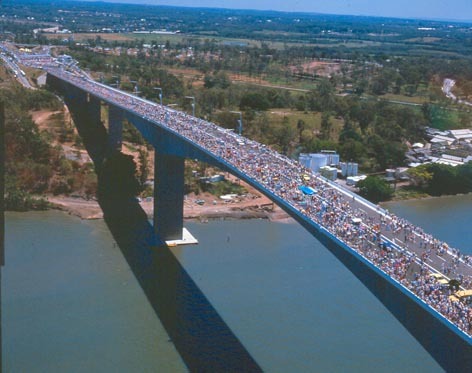
Opening day of the Gateway Bridge in 1986 (Photo credit: Facebook/Brisbane Libraries)

When the bridge finally opened on 11 January 1986, Brisbane went a little wild. An estimated 200,000 Queenslanders turned up to walk across the 1.6-kilometre span before it opened to traffic, with thousands of blue, yellow and black balloons marking the occasion. News reporters called it “a once-in-a-lifetime chance to walk the one-and-a-half kilometre world record span.”

Members of the public declared it “the best bridge in the world.” Its 260-metre main span was a world-leading design for concrete bridges at the time, and the deck rises more than 60 metres above the river.
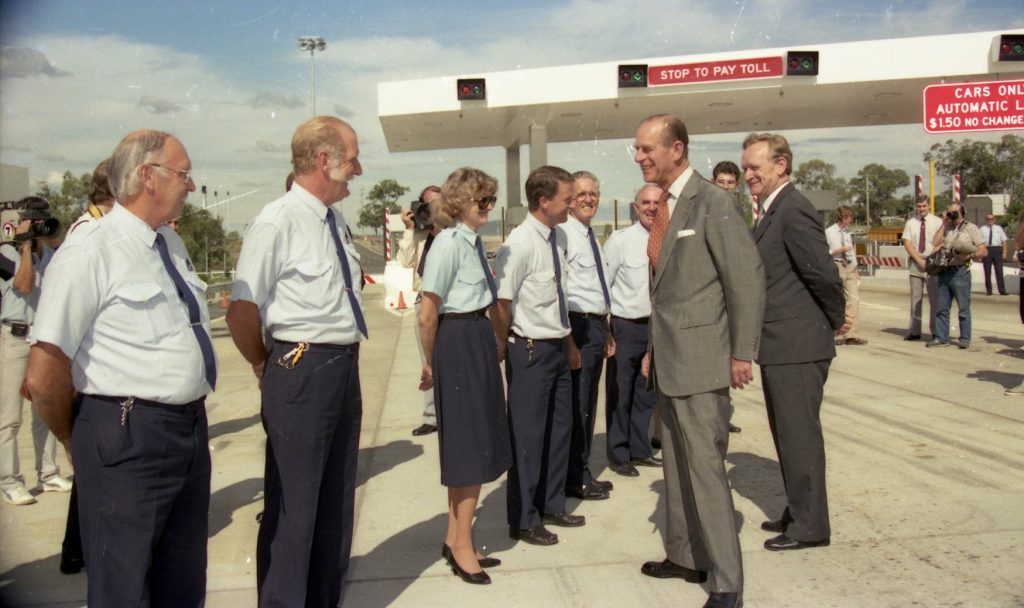
Prince Phillip at the official opening of the bridge (Photo credit: Facebook/Brisbane Libraries)

Prince Philip formally opened the bridge four months later with characteristic dry wit: “I now declare the bridge to be more open than usual.”

Motorists paid $1.50 to cross, while truck drivers were slugged $7. Not everyone was impressed.

A dark chapter

However, the fanfare faded fast. Without adequate safety barriers, just a low wall separating pedestrians from a fatal drop, the bridge became the site of more than 120 deaths from accidents and suicides before 1993.

A television reporter, broadcasting live from the top of the bridge at the time, pointed out to viewers that there were virtually no safety measures in place and that a small wall was the only thing standing between a pedestrian and a fatal plunge below.

In 1993, safety barriers, crisis phones and suicide prevention measures were introduced, fundamentally transforming the bridge’s character. Events like the Bridge to Brisbane fun run later welcomed people back onto the structure in a very different context.

Twin spans and a new name
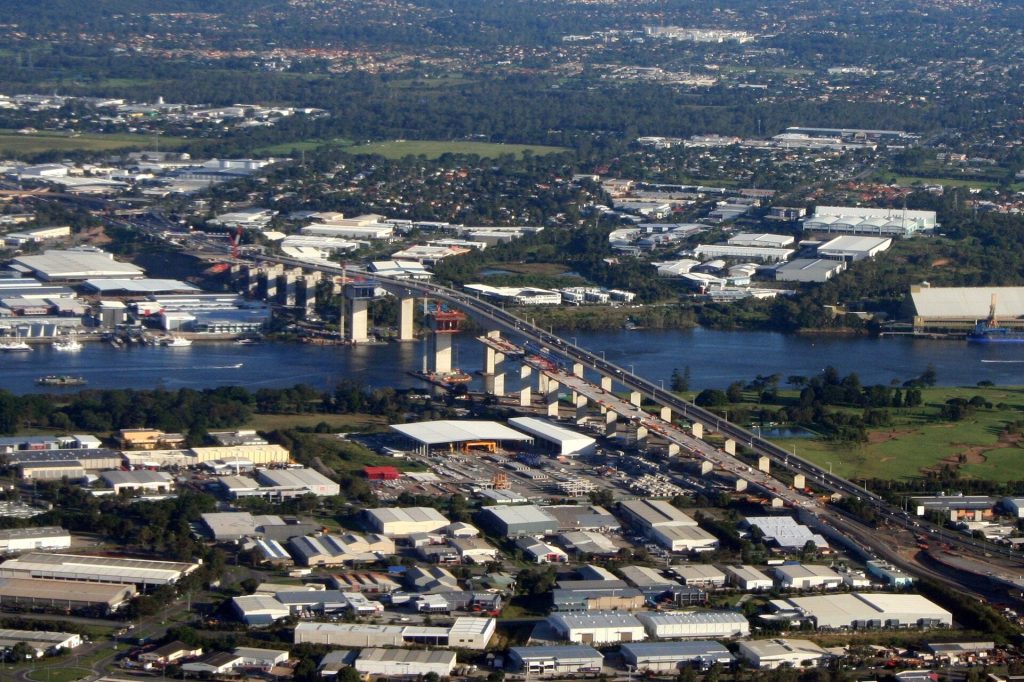
Gateway Bridge
Gateway Bridge under construction (Photo credit: Public Domain/Paul Guard/Wikimedia Commons)

By the mid-2000s, Brisbane’s booming population had outgrown the original six lanes. A second, near-identical bridge was built just 50 metres away, opening in 2010 at a cost of around $350 million, compared to the original’s $92 million build. It added a dedicated pedestrian and cycling path.

The pair were later renamed the Sir Leo Hielscher Bridges, in honour of the German-born Queensland Treasury chief who helped shape the state’s finances for decades. He called the recognition “a great honour,” though most locals still just say “the Gateway.”
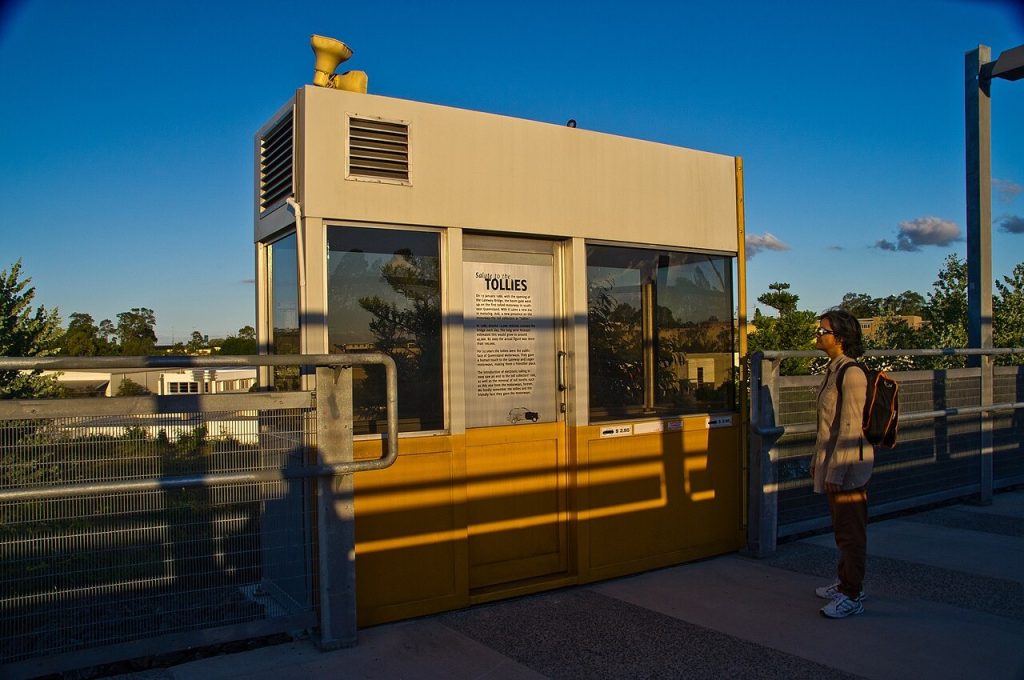
Gateway Bridge
Old toll booth (Photo credit: Wikimedia Commons)

The removal of toll booths in 2009 in favour of electronic tolling also led to an immediate reduction in crashes. Today, motorists pay around $5.50 to cross, with trucks charged closer to $18. Together, the twin bridges now carry up to 160,000 vehicles a day, a staggering leap from the roughly 12,000 vehicles that crossed in its early days.


Read: Should Brisbane’s Tunnels and Bridges Be Toll-Free? More Than 1,500 Drivers Think So


Forty years on, the Gateway’s story is one of transformation, from traffic solution to tragedy, and ultimately to redemption. Not bad for a bridge most of us barely notice on the morning commute.

Published 28-April-2026
Should Brisbane’s Tunnels and Bridges Be Toll-Free? More Than 1,500 Drivers Think So

An online petition calling for Brisbane’s road tolls to be scrapped has drawn 1,509 signatures, and two of the routes in its sights sit close to home for residents of Ascot, Eagle Farm, and Hendra: the Airport Link tunnel and the Sir Leo Hielscher Bridges.


Read: New Shared Path to Connect Eagle Farm to Brisbane Airport


The Airport Link runs underground from the inner city, connecting to the Clem7 at Bowen Hills and travelling north through Kedron and Toombul before linking to the East-West Arterial Road leading to Brisbane Airport. The Sir Leo Hielscher Bridges, known to most as the Gateway, cross the river at Eagle Farm and link the area south to Murarrie via the Gateway Motorway. 

The e-petition, lodged with the State of Queensland, targets both routes along with the Go Between Bridge, the Clem7, and Legacy Way — five roads that together recorded around 490,000 trips since June 2025.

bridges
Photo credit: Google Maps/Robert Goh

Prices ticked up again on 1 January this year, adjusted in line with the Brisbane Consumer Price Index, which is another increase for commuters already managing rising living costs. For anyone using the tunnel regularly, the bill is not trivial.

Add the Gateway Bridge toll for those heading south across the river, and some local residents find themselves paying on both ends of a single trip, with no assurance the roads will be clear when they get there. Brisbane drivers lost an average of 84 hours to congestion in 2024, up 14 per cent on the year before.

The RACQ has weighed in, though not in favour of scrapping tolls outright. Dr Michael Kane, the motoring club’s head of public policy, said removing them would leave less money for new road projects, since the debts attached to existing infrastructure would still need to be paid, just by taxpayers instead of users. He also pointed out that toll roads were designed as a funding tool, not a fix for traffic, and suggested the real need was a wider rethink of how South East Queensland funds and plans its major roads.

bridges
Photo credit: Google Maps/Jason Collingwood

A Transport and Main Roads spokesperson confirmed the petition would go through the standard process, without elaborating further.

Calls to wind back Brisbane’s toll network are nothing new in Queensland. Back in 2018, then Deputy Premier Jackie Trad singled out the Go Between Bridge as a toll that made little sense, given it bypasses the city centre entirely. She argued that commuters crossing between the city’s north and south should not be charged for the privilege. Seven years on, the toll is unchanged.

The Story Bridge has also entered the conversation recently, with proposals floated to fund a long-term fix for the ageing structure through a new toll. Numbers crunched at the time suggested a toll pegged to the same rate as the Gateway bridges could bring in more than $205 million annually within two years.


Read: Opening New Horizons: Delta’s Seasonal Route from Brisbane Airport to Los Angeles


For people living in Ascot, Eagle Farm, and Hendra, these tolled routes are not abstract policy talking points — they are part of the daily commute. Whether Queensland acts on the petition or files it away, the question of who pays for these roads is not going away.

Published 13-March-2026

Higher Toll Fees for Brisbane’s Gateway Bridges

Effective 1 July 2023, motorists travelling across the Sir Leo Hielscher Bridges, commonly known as the Gateway bridges in Brisbane will see an increase in toll fees.


Read: Racecourse Road Precinct Getting Back On Track


The toll for a car journey will rise by 38 cents, bringing the total to $5.45. Similarly, drivers passing through the Legacy Way will experience a toll increase of 46 cents, raising the fee to $6.60.

Transurban, the company responsible for operating most of Australia’s toll roads, manages assets such as Brisbane’s Gateway bridges and Logan motorways, the Clem7, the Legacy Way, Toowoomba Bypass, and Airport Link tunnels. 

Photo credit: CC BY-SA 3.0/Gaz/Wikimedia Commons

Similar to the situation in Brisbane, Transurban operates numerous toll roads in Sydney and Melbourne. Due to the nature of their long-term contracts, toll prices on these roads are set to increase. The specific details of the price hikes, including the amounts and effective dates, will depend on the terms outlined in the contracts.

Toll prices typically adjust in accordance with changes in the Consumer Price Index (CPI), reflecting the overall cost of living. The government regulates the extent and frequency of toll price increases each year. However, the specific rate and timing of these increases vary across different toll roads and are determined by the government.

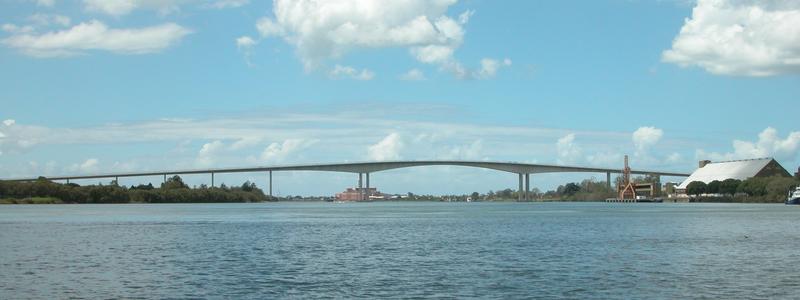
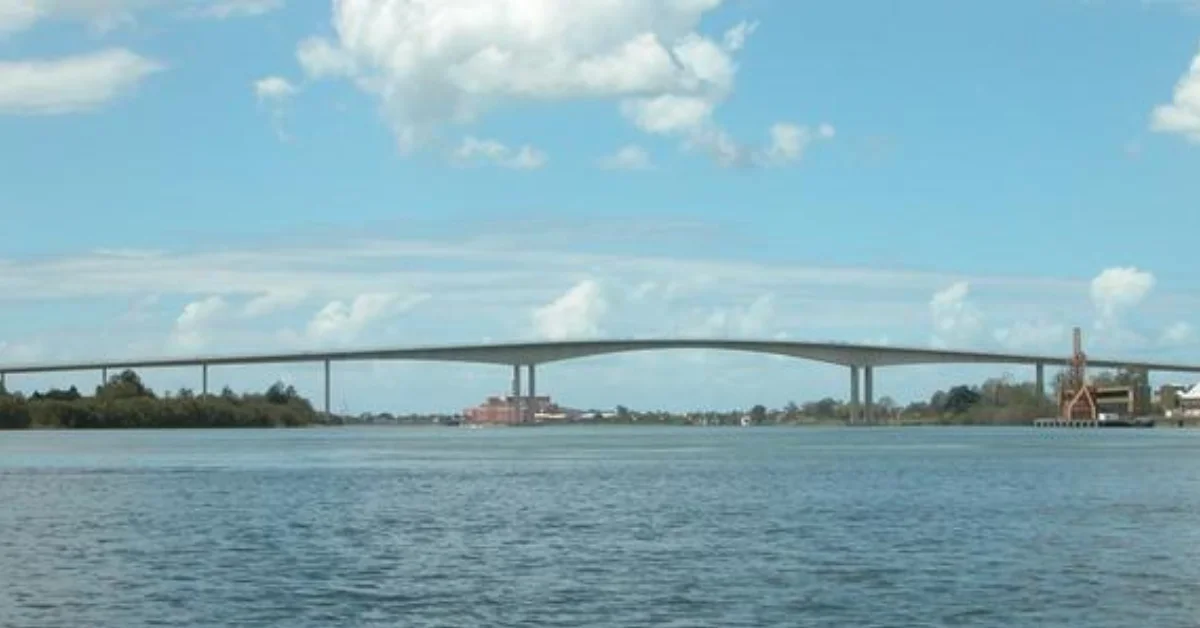
Gateway bridge (Photo credit:CC BY-SA 3.0/Paulguard/Wikimedia Commons)

Recognising that some motorists may face financial difficulties, a spokesperson from Transurban encouraged individuals to seek support. 


Read: Da Biuso Hits the Road With Ascot as Its First Stop


The Linkt Assist team, available to assist drivers, offers various services, including payment plans, extended payment deadlines, and toll credits. Motorists in need can reach out to this team for assistance.

You can visit Linkt’s website to find out more about the eligibility criteria for toll credit support and how to apply.

Published 5-July-2023