




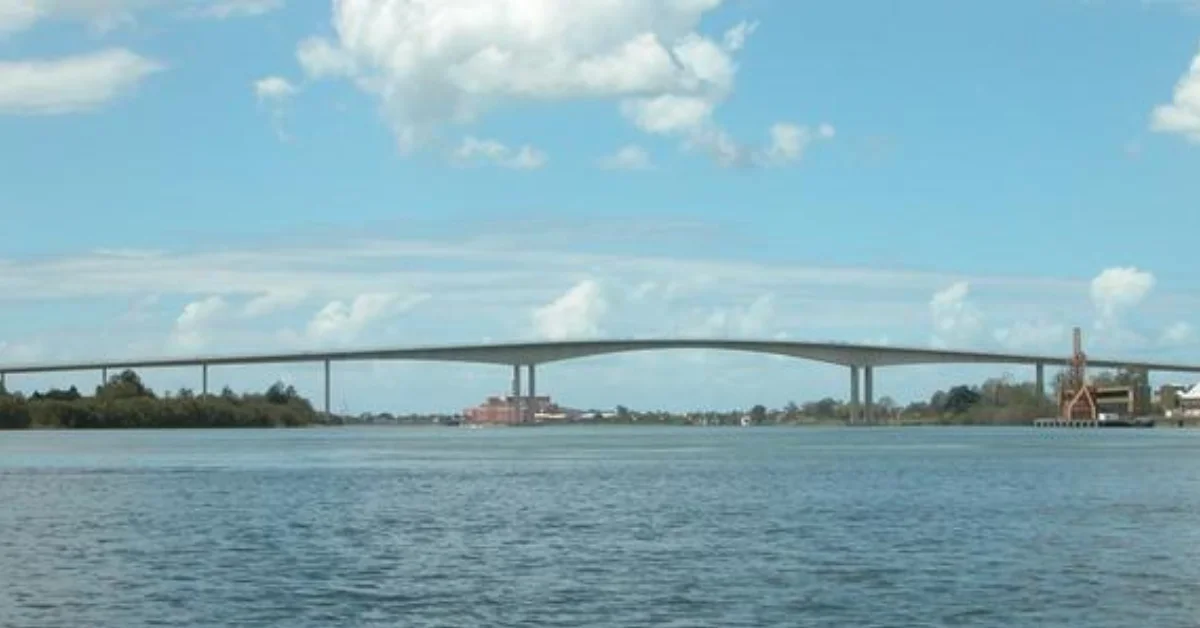
Did you know that the Gateway Bridge, which connects Eagle Farm on Brisbane’s north side to Murarrie in the south, was once called the world’s deadliest bridge? It is a little-known chapter in the bridge’s history that hundreds of thousands of road users who cross it on any given day would likely find hard to believe, yet the statistics from its early years told a grim story.
Read: Higher Toll Fees for Brisbane’s Gateway Bridges
This year marks 40 years since the structure most locals simply call “the Gateway” opened to the public. What began as a bold engineering solution to the city’s chronic traffic gridlock would eventually become the site of more than 120 deaths, and a cautionary tale about the cost of inadequate safety measures.


A city crying out for a crossing
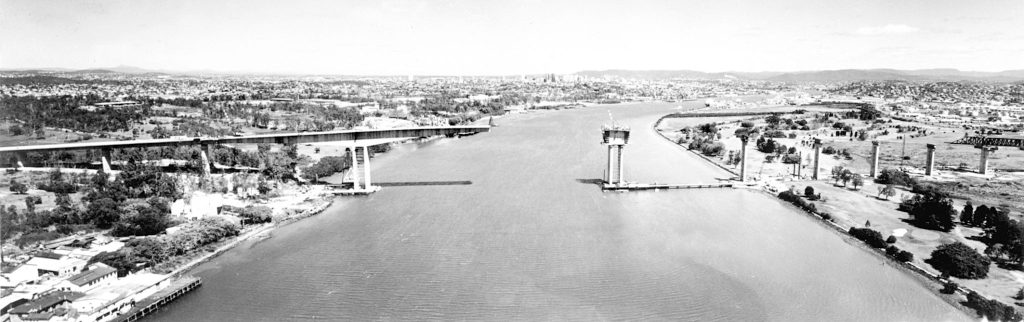
Back in the 1970s, Brisbane had a problem. Drivers travelling between the Gold Coast and the Sunshine Coast had no practical way to bypass the city. They either crawled through inner-city crossings or queued for slow, capacity-limited car ferries. Freight and commuters alike faced regular delays.
Then roads minister Russ Hinze championed an ambitious bypass plan. A tunnel was considered but ruled out on cost grounds, so engineers looked upward instead, designing a structure tall enough for ships to pass beneath its deck, yet low enough to avoid conflicting with flight paths into nearby Brisbane Airport.

What followed was five years of construction that, by today’s standards, would make a workplace health and safety officer wince. Crews worked high above the river often clad in little more than shorts and thongs, with no harnesses and, in many cases, no hard hats. Remarkably, there were no major incidents.

A public spectacle and a royal quip
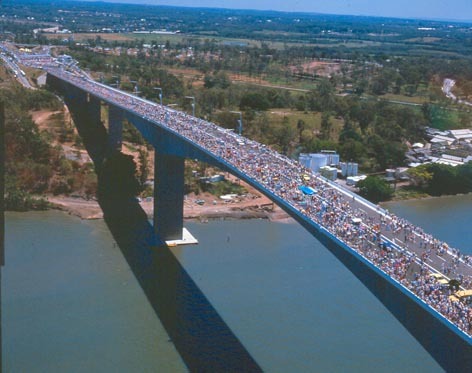
When the bridge finally opened on 11 January 1986, Brisbane went a little wild. An estimated 200,000 Queenslanders turned up to walk across the 1.6-kilometre span before it opened to traffic, with thousands of blue, yellow and black balloons marking the occasion. News reporters called it “a once-in-a-lifetime chance to walk the one-and-a-half kilometre world record span.”
Members of the public declared it “the best bridge in the world.” Its 260-metre main span was a world-leading design for concrete bridges at the time, and the deck rises more than 60 metres above the river.


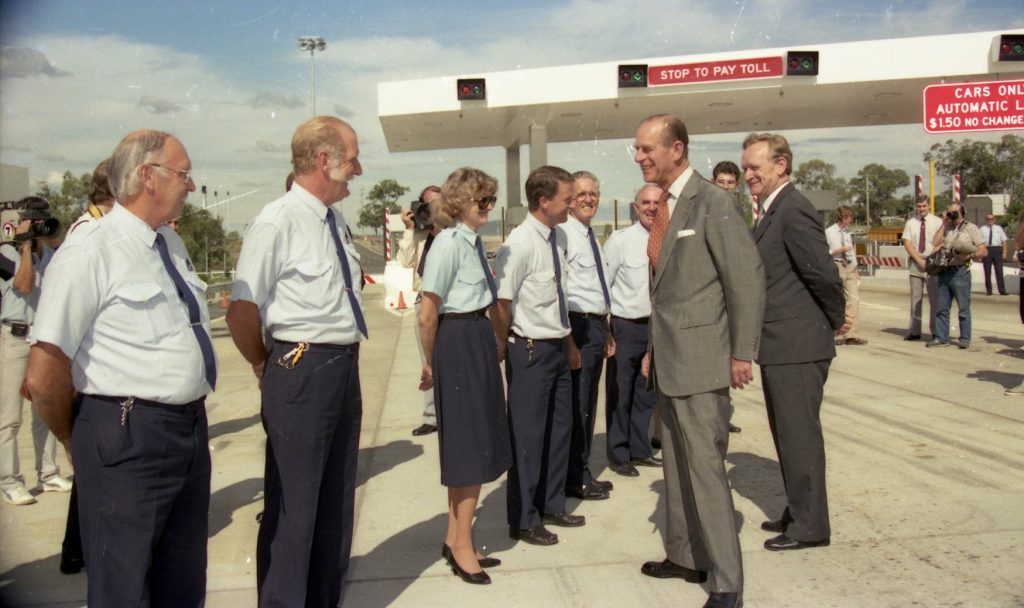
Prince Philip formally opened the bridge four months later with characteristic dry wit: “I now declare the bridge to be more open than usual.”
Motorists paid $1.50 to cross, while truck drivers were slugged $7. Not everyone was impressed.
A dark chapter
However, the fanfare faded fast. Without adequate safety barriers, just a low wall separating pedestrians from a fatal drop, the bridge became the site of more than 120 deaths from accidents and suicides before 1993.
A television reporter, broadcasting live from the top of the bridge at the time, pointed out to viewers that there were virtually no safety measures in place and that a small wall was the only thing standing between a pedestrian and a fatal plunge below.
In 1993, safety barriers, crisis phones and suicide prevention measures were introduced, fundamentally transforming the bridge’s character. Events like the Bridge to Brisbane fun run later welcomed people back onto the structure in a very different context.
Twin spans and a new name
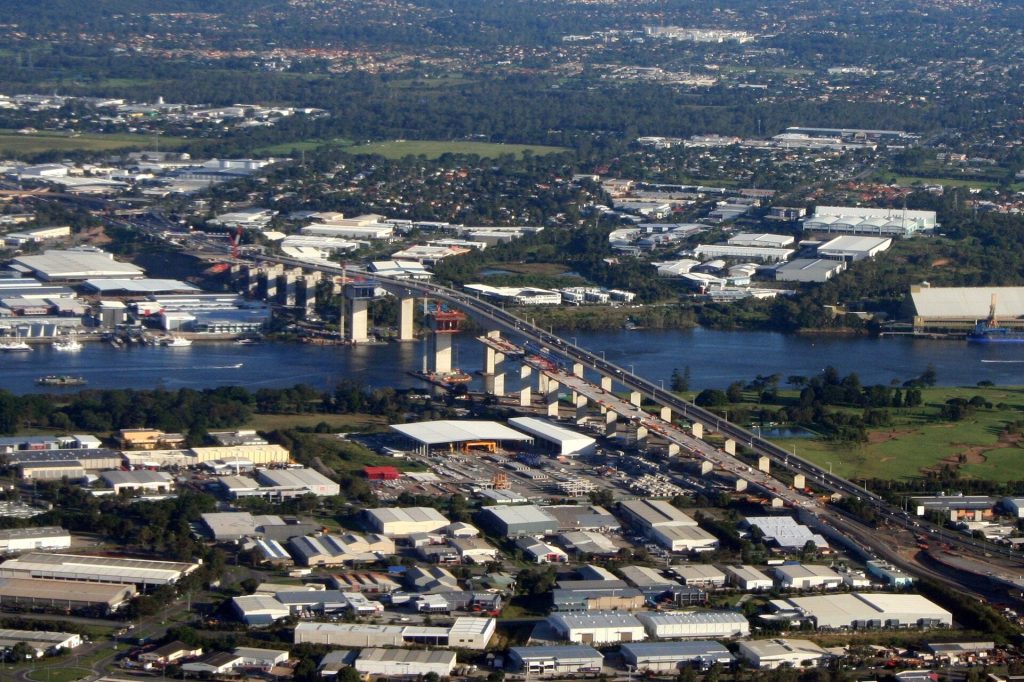
By the mid-2000s, Brisbane’s booming population had outgrown the original six lanes. A second, near-identical bridge was built just 50 metres away, opening in 2010 at a cost of around $350 million, compared to the original’s $92 million build. It added a dedicated pedestrian and cycling path.
The pair were later renamed the Sir Leo Hielscher Bridges, in honour of the German-born Queensland Treasury chief who helped shape the state’s finances for decades. He called the recognition “a great honour,” though most locals still just say “the Gateway.”
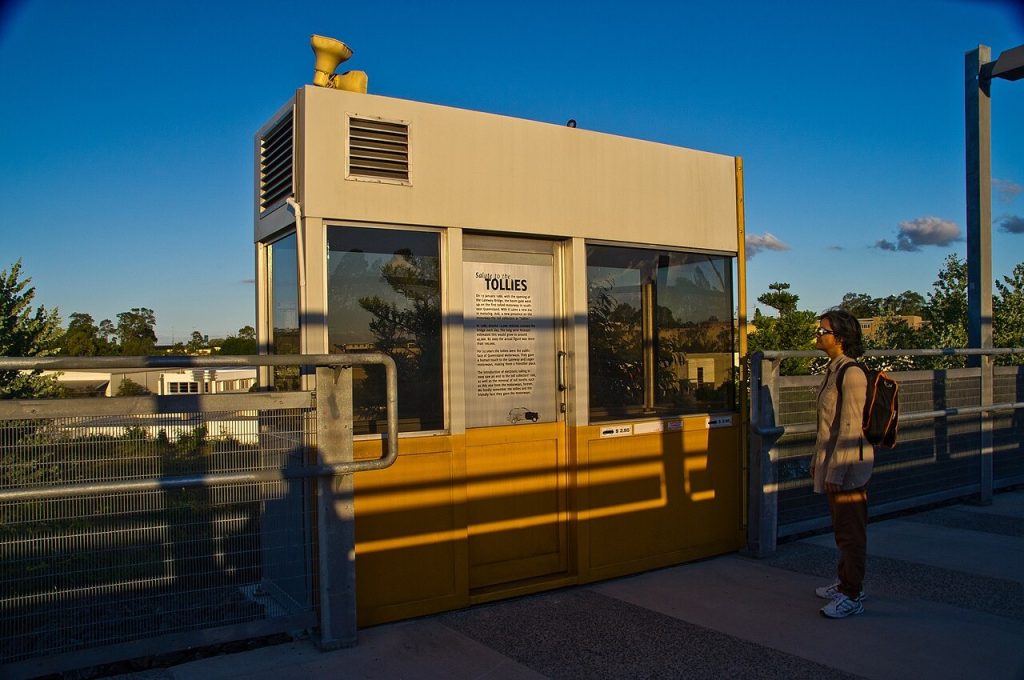
The removal of toll booths in 2009 in favour of electronic tolling also led to an immediate reduction in crashes. Today, motorists pay around $5.50 to cross, with trucks charged closer to $18. Together, the twin bridges now carry up to 160,000 vehicles a day, a staggering leap from the roughly 12,000 vehicles that crossed in its early days.
Read: Should Brisbane’s Tunnels and Bridges Be Toll-Free? More Than 1,500 Drivers Think So
Forty years on, the Gateway’s story is one of transformation, from traffic solution to tragedy, and ultimately to redemption. Not bad for a bridge most of us barely notice on the morning commute.
Published 28-April-2026