



New Grandstand Planned At Eagle Farm Racecourse

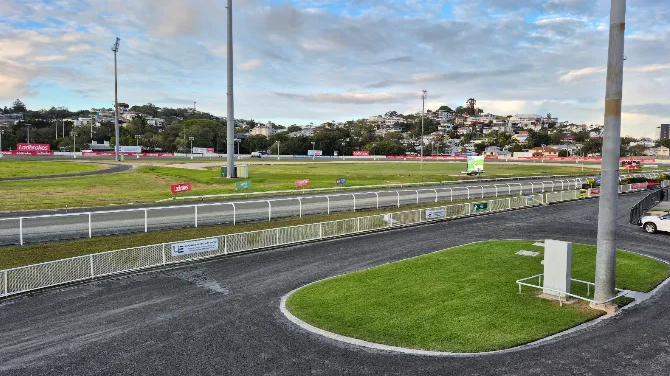
A new grandstand is planned at Eagle Farm, with $25 million committed to begin demolition and early works to replace the ageing John Power Stand at the Brisbane racecourse.


Site History And Existing Facilities

Eagle Farm Racecourse has hosted thoroughbred racing for more than 160 years. Several spectator facilities at the venue, including the John Power Stand, have been assessed as nearing the end of their operational life.

Engineering investigations into the John Power Stand were first undertaken in 2013, with further assessments completed in 2022 and 2023. These reports identified significant structural deterioration and concluded that major components of the building were approaching the end of their structural lifespan.

The John Power Stand is scheduled to be decommissioned in August 2026, following the conclusion of the Winter Carnival.

Funding And Project Scope

An initial $25 million has been released to support the first stage of redevelopment at Eagle Farm. The funding will allow demolition of the John Power Stand to commence and enable detailed planning for a replacement spectator facility.

The funding forms part of a broader loan arrangement for racing infrastructure and aligns with a statewide framework aimed at delivering modern, fit-for-purpose facilities across Queensland’s racing network.

Brisbane Racing Club
Photo Credit: MID-0524-0842

Planning And Approval Pathway

The Eagle Farm grandstand redevelopment has been approved under Ministerial Infrastructure Designation (MID-0524-0842), granted in October 2025. The designation enables a state-led assessment process for the project.

Planning documentation associated with the designation includes concept designs for a new facility, referred to as The Terraces, which will replace the John Power Stand.

John Power Stand
Photo Credit: MID-0524-0842

Maintaining Racing Operations

The Brisbane Racing Club, which operates Eagle Farm, has indicated the works will be staged to allow racing to continue during redevelopment. Coordination with Racing Queensland is intended to minimise disruption between the end of the 2026 Winter Carnival and the commencement of the 2027 season.

Eagle Farm grandstand
Photo Credit: MID-0524-0842

Looking Ahead


Once completed, the new grandstand is expected to provide upgraded amenities and improved accessibility, supporting ongoing use of Eagle Farm as Queensland’s premier thoroughbred racing venue.

Published 7-Jan-2025

Ascot Cat Socko Barred From CityCat Travel

A rescue cat named Socko from Ascot has been prevented from boarding Brisbane’s CityCat ferries, drawing attention to pet travel rules that permit dogs but exclude cats.


CityCat Pet Travel Rules Explained

CityCat and ferry services operate along the Brisbane River, connecting terminals from St Lucia through to Northshore Hamilton and forming a major transport option for daily travel.

In mid-2020, dogs were permitted to travel on CityCats and ferries following a six-month trial. Under these arrangements, dogs are allowed during off-peak weekday hours and throughout weekends, subject to conditions on restraint, location on board, and passenger safety.

Cats were not included in this policy change and remain excluded from CityCat services.

Ascot CityCat cat ban
Photo Credit: Sara & Socko/Instagram

Socko’s Experience On The CityCat

Socko is a rescue cat adopted in April 2025 by Sara Calle Herrera, who lives in Ascot. Since his adoption, Socko has regularly travelled outdoors around Brisbane in a carrier or on a leash, including walks and runs along public paths.

Sara became aware of the restriction after boarding a CityCat with Socko secured inside a carrier while remaining in an outdoor area. Ferry staff advised that cats are not permitted under current rules.

Socko the cat
Photo Credit: Sara & Socko/Instagram

Existing Pet Travel Rules

Current CityCat conditions allow accredited assistance animals and pet dogs to travel. Dogs must remain outside the ferry cabin, be properly restrained or enclosed, and travel only during approved times.

Cats are not listed as permitted pets, including those contained in enclosed carriers.

Brisbane ferries
Photo Credit: BCC

Impact On Everyday Travel

For Sara, the exclusion limits transport options when moving around Brisbane without a private vehicle, including trips such as veterinary visits. While she continues to travel by foot and car, the restriction reduces flexibility when using river transport.

The situation contrasts with arrangements in other Australian cities, where small pets are permitted on some public transport services when secured in suitable containers.

Community Discussion And Outlook

Public response to Socko’s experience has been mixed, with some questioning the difference in treatment between dogs and cats, while others raise concerns around allergies and onboard comfort.


No changes to CityCat pet travel rules have been announced.

Published 31-Dec-2025

Street Spotlight: Morgan Street, Ascot

Morgan Street in Ascot represents a fascinating example of post-war suburban development, with the street not even existing in 1936 when historical aerial photography captured the area. This relatively modern addition to Brisbane’s street network has evolved into a prestigious residential enclave that embodies the exclusive character Ascot is renowned for.


With an impressive 95% of properties being owner-occupied and residents staying an average of 14 years and 9 months, Morgan Street demonstrates exceptional stability and desirability. While 44% of residents have called the street home for more than a decade, the community reflects both established families and newer residents drawn to this sought-after location. The street’s property transaction history reveals the remarkable appreciation in Ascot’s real estate values, with properties that sold for $200,000 in 1981 now representing multi-million dollar investments in one of Brisbane’s most coveted suburbs.

Morgan Street, Ascot Residents

NUMBER OF PROPERTIES: 28 (24 houses, 4 others)
% OF OWNER OCCUPIERS ON STREET: 95%
AVERAGE TIME FOR OWNER OCCUPIERS: 14 years and 9 months
% OF PEOPLE 10+ YEARS: 44%

Morgan Street, Ascot – As It Looked in 1936

Morgan Street, Ascot in 1936

SOME RECENT SALES ON MORGAN STREET, ASCOT

Property AddressSale PriceSale Date
3 Morgan Street, Ascot$6,505,000Oct 2025
1 Morgan Street, Ascot$4,420,000Jul 2025

SOME TYPICAL PROPERTY SALES ON MORGAN STREET FROM YESTERYEAR

Property AddressSale PriceSale Date
19 Morgan Street, Ascot$200,000Apr 1981
6 Morgan Street, Ascot$380,000Aug 1992
3 Morgan Street, Ascot$485,000Nov 1992

SUBURB PROFILE

The median price of a 3 Bedroom House in Ascot in 2025 was $1,576,000
The median price of a 3 Bedroom House in Ascot in 2021 was $1,325,000
TYPICAL INCREASE OF A 3-BEDROOM HOUSE IN ASCOT SINCE 2021: $251,000

The median price of a 5 Bedroom House in Ascot in 2025 was $3,430,000
The median price of a 5 Bedroom House in Ascot in 2021 was $2,620,000
TYPICAL INCREASE OF A 5-BEDROOM HOUSE IN ASCOT SINCE 2021: $810,000

The median price of a 2 Bedroom Unit in Ascot in 2025 was $697,000
The median price of a 2 Bedroom Unit in Ascot in 2021 was $420,000
TYPICAL INCREASE OF A 2 BEDROOM UNIT IN ASCOT SINCE 2021: $277,000

The median price of a 3 Bedroom Unit in Ascot in 2025 was $1,106,000
The median price of a 3 Bedroom Unit in Ascot in 2021 was $625,000
TYPICAL INCREASE OF A 3 BEDROOM UNIT IN ASCOT SINCE 2021: $481,000


If you know Morgan Street, Ascot well and you have some anecdotes or details to add, please email us at editor@brisbanesuburbsonlinenews.com.au.

Harness Racing to Remain in Brisbane With New Racing Precinct in Albion

Harness racing will remain in Brisbane, with Albion confirmed as the future base of a consolidated racing precinct that will house key industry operations and facilities.


Harness Racing Secured in Albion

Albion has been identified as the long-term metropolitan home of harness racing in Brisbane, following the release of The Next Lap, an industry-wide roadmap outlining the future direction of Queensland racing. The plan positions Albion Park as the centre of racing administration and operations while maintaining the sport’s presence within the city.

The announcement was made on 19 December 2025 as part of a broader package of infrastructure and operational changes across the racing industry.

Queensland racing
Photo Credit: The Next Lap/Delivering for Queensland

Shift Away From Relocation Plans

Earlier proposals had explored moving harness racing away from Brisbane to a new site outside the metropolitan area. Under the current plan, those proposals have been discontinued, with the previously identified Norwell site set to be disposed of.

The decision secures a permanent metropolitan location for harness racing, reinforcing Albion’s role within the industry.

Facilities Planned for the Albion Precinct

The Albion masterplan includes new spectator facilities for the Albion Park Harness Racing Club, along with new offices for Racing Queensland and the Queensland Racing Integrity Commission. A racing science centre will also be developed on site.

Bringing these functions together is intended to improve operational efficiency while maintaining clear separation between commercial and integrity activities.

Albion harness racing
Photo Credit: The Next Lap/Delivering for Queensland

Training Pathways Beyond Albion

The plan also outlines the development of a broader harness racing corridor. Marburg Showgrounds will be upgraded into an elite training and racing centre, located between Brisbane and Toowoomba. Harness racing is also set to return to Toowoomba, restoring a regular presence at the turf club.

These additions are expected to support participation, training access and regional racing activity.

What Happens Next

Racing Queensland is expected to lead the next phase of delivery, with a detailed implementation program scheduled for release in early 2026. This will outline the timing of infrastructure works, operational changes and future engagement with the industry.


With Albion confirmed as the focal point, harness racing is set to remain a permanent feature of Brisbane’s sporting landscape.

Published 23-Dec-2025

Racecourse-Front Homes Drive Buyer Demand in Hendra

A rare run of racecourse-front homes in Hendra has attracted a buyer waiting list, driven by tightly held supply and direct views across Eagle Farm Racecourse.


A Rare Racecourse Boundary In Hendra

Mein Street in Hendra is described as one of the only streets in Australia where freestanding homes sit directly on the boundary of a major metropolitan racecourse. About 20 homes sit along the stretch between the 1200m and 1400m start points of the Eagle Farm track.

The positioning is unusual for metropolitan racecourses, which are more commonly bordered by commercial buildings, stables, or infrastructure rather than residential homes.

Hendra racecourse homes
Photo Credit: Place

Record Land Sale Points To Scarcity

A recently sold 850sqm parcel achieved $3.8 million, reported as a suburb land sale record for Hendra. The sale was made to Eagle Farm trainer Caitlin Hoysted and her husband Matt.

Market commentary linked the result to the limited supply and the difficulty of replicating the street’s outlook and location.

Eagle Farm Racecourse
Photo Credit: Place

Micro-Market Draws Highly Specific Buyers

Agents have described Mein Street as a micro-market that has outperformed the broader Hendra market. Buyer interest has been characterised as narrow and location-specific, with some prospective purchasers focused solely on the racecourse frontage.

98 Mein Street Listing Highlights The Appeal

A neighbouring property at 98 Mein Street in Hendra is also on the market. The home is owned by interior designer Tonya Scheiwe of Style Elements Interiors and her husband Stu Balding.

Brisbane property
Photo Credit: Place

The pair have recently completed the residence and are building on the block directly next door, while describing the street as a social community with race-day gatherings.

Location Links To Nearby Precincts


Other notable points about the property are the home’s position within Hendra, accessible to Racecourse Road and Portside; within walking distance to Doomben and Eagle Farm racecourses and the CBD about 8km away, a short commute via bus or train.

Published 19-Dec-2025

Mixed-Use Development Approved for Racecourse Road Amid Local Discussion

Racecourse Road has long been one of Hamilton’s most recognisable main streets, known for its mix of cafés, shops and services and its role as a local meeting place. It is also an area where proposed change often attracts close attention, and a recently approved mixed-use development has become a topic of ongoing discussion within the community.


Read: The Gallery to Revive Racecourse Road with Design-led Living and Retail Spaces


The project is proposed for 63–71 Racecourse Road and 12 Balowrie Street, Hamilton, occupying a site that links the suburb’s commercial strip with surrounding residential streets. The development application (A006790991) has been approved by Brisbane’s local officials, allowing for a building that combines retail, food and residential uses.

Photo credit: Brisbane PD Online

Plans lodged with council outline a mid-rise mixed-use development intended to refresh this section of Racecourse Road. At street level, the proposal includes eight commercial tenancies with a combined floor area of approximately 1,380 sqm. These tenancies are planned to front both Racecourse Road and Kent Street, with the aim of maintaining an active and engaged streetscape.

Above the commercial component, three residential levels would deliver a total of 37 apartments. The mix includes nine two-bedroom and 28 three-bedroom dwellings, reflecting a focus on larger apartment layouts rather than smaller studio or one-bedroom units.

Photo credit: Brisbane PD Online

Design material released with the application indicates a strong emphasis on pedestrian movement and street engagement. A central laneway-style pedestrian connection is proposed to run through the site, linking Racecourse Road to Kent Street. Architectural features such as landscaped edges, deep verandahs and layered façades are intended to moderate the building’s scale and respond to the area’s subtropical streetscape character.

For residents, the development proposes shared facilities including a rooftop communal area of around 800 square metres. Planned amenities include a swimming pool, outdoor gym, yoga lawn and barbecue areas, providing communal spaces above street level. Parking is provided through a combination of basement and ground-level spaces, with 177 car parks and 47 bicycle spaces outlined in the application.

Community discussion continues

63–71 Racecourse Road (Photo credit: Google Street View)

While the approval process did not involve public notification, discussion within the local community has been active. Residents have been sharing views about the proposal through neighbourhood conversations and social media groups, reflecting a range of perspectives on the development.

Some community members see the project as a positive step for Racecourse Road, particularly at a time when many suburban shopping strips are adapting to changing retail conditions. Supporters have suggested that additional housing in close proximity to shops and services may help support local businesses and encourage a more consistent level of activity throughout the day and evening.

Others have expressed unease about how development of this scale may alter the character of Racecourse Road. Informal concerns raised online have included issues such as construction disruption, parking pressure and the cumulative effect of ongoing development along the strip. These views reflect broader conversations occurring across many established suburbs as higher-density projects are introduced into areas with long-standing local identities.

Despite differing opinions, the proposal did not receive formal public submissions during the assessment process. This is because the application was classified as a code assessable development under the Brisbane City Plan. Code assessable developments are those anticipated within the planning framework for a site and are assessed against set criteria. They do not require public notification or a public submissions period.

From a planning perspective, proponents of the development point to its assessment against existing planning controls and its emphasis on active street frontages, rather than blank walls or inactive edges. They argue that mid-rise mixed-use buildings can play a role in accommodating housing demand while supporting walkable neighbourhood centres with a mix of residential and commercial uses.


Read: Redevelopment Aims to Preserve Heritage of Paddock and Members Stands at Eagle Farm Racecourse


The contrast between the formal planning pathway and the level of informal community discussion highlights a familiar tension in suburbs like Hamilton. While planning schemes provide guidance about what forms of development are permissible, residents often experience change through its day-to-day impacts on movement, amenity and the visual character of their street.

With approval now in place, attention will turn to construction timing and how the project is delivered. For Racecourse Road, the development represents another phase in an ongoing evolution, continuing conversations about growth, character and the future direction of one of Brisbane’s best-known suburban precincts.

Published 18-December-2025

Brisbane Airport Begins 18-Month Tailwind Trial to Reduce Night-Time Aircraft Noise

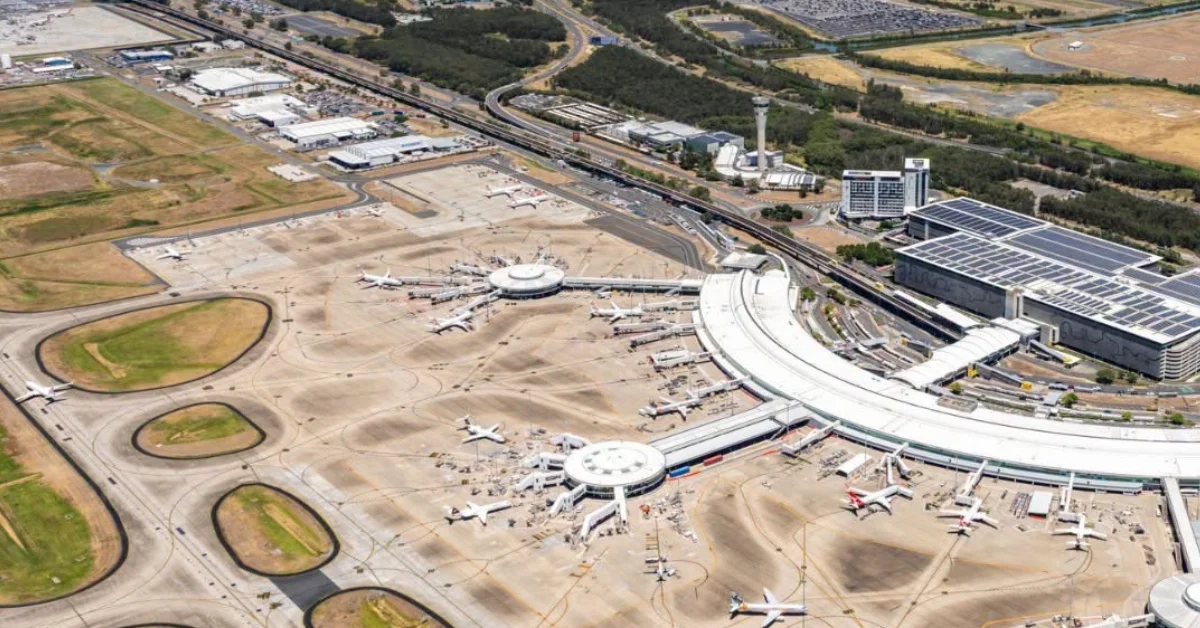
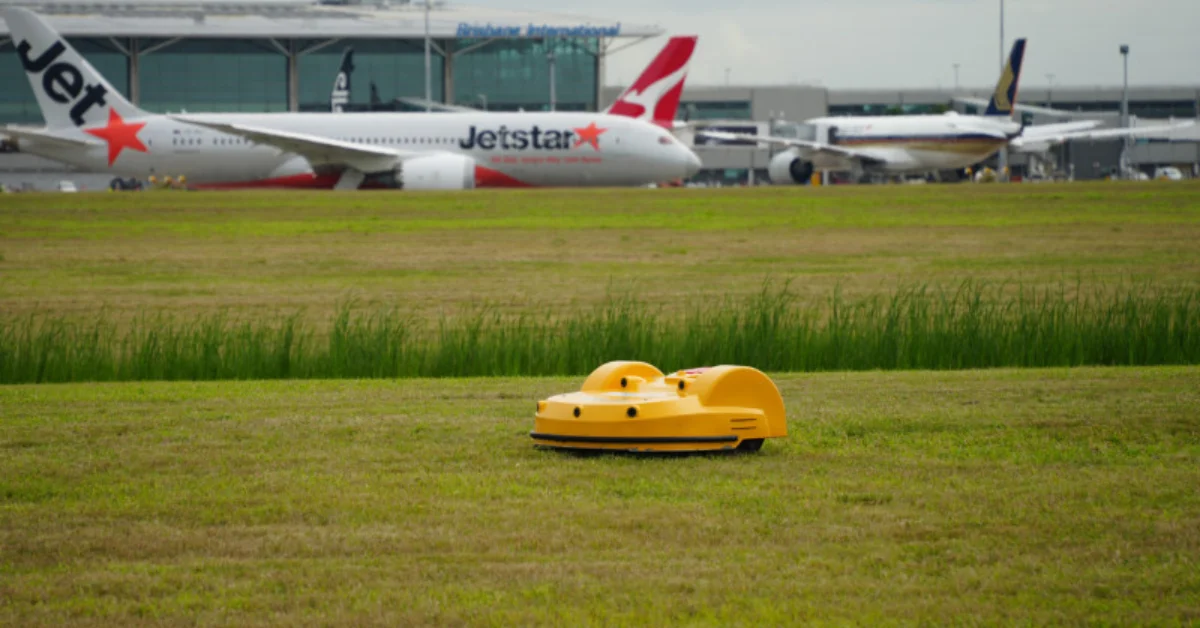
Brisbane Airport Corporation (BAC), in partnership with Airservices Australia and supported by Civil Aviation Safety Authority (CASA), has begun an 18-month voluntary trial to allow pilots to accept tailwinds of up to 10 knots overnight, with the objective of shifting more flights over water between 10:00 pm and 6:00 am, thereby reducing aircraft noise over surrounding suburbs.


Read: Landers Pocket to Open Near Brisbane Airport, Bringing Food, Sport, and Entertainment Together


The trial remains fully voluntary: no pilot or airline is required to take part, and participation rests solely at the pilot-in-command’s discretion. BAC emphasises the program operates entirely within existing regulatory settings and does not require any exemptions or changes to international aviation standards.

Photo credit: Brisbane Airport/Google Maps

Historically, Brisbane Airport permitted a 10-knot tailwind allowance for around three decades before that limit was reduced to 5 knots in 2016 when the airport aligned with international standards. The new trial is intended to gather evidence on whether safely restoring the higher tailwind limit on a permanent basis is feasible, while simultaneously offering potential noise benefits to nearby communities.

How the 18-month tailwind trial will operate

The trial will roll out in two phases:

  • First 6 months: the increased tailwind allowance applies only to departures.
  • Following 12 months: the allowance will be available for both arrivals and departures, provided conditions remain suitable.

The overnight operational window is between 10pm and 6am, targeting the hours when aircraft noise tends to have the greatest impact on residential communities around the airport.

Conditions required for participation

Photo credit: Brisbane Airport/Google Maps

Pilots may choose to accept a tailwind of up to 10 knots only if all of the following safety and operational conditions are met:

  • Tailwind component is 10 knots or less (including gusts)
  • Crosswind component is 20 knots or less (including gusts)
  • Runway is dry
  • No thunderstorms present or forecast within 30 nautical miles
  • No reported or forecast windshear
  • Adequate air-traffic control staffing
  • Traffic levels remain at acceptable levels

When those criteria are satisfied, Airservices Australia will issue a notification via the Automatic Terminal Information Service (ATIS), indicating that the tailwind option is available. At no point is participation mandated.

Purpose of the tailwind allowance

The core intention of the trial is to increase the likelihood that aircraft will take off and land over water, namely Moreton Bay, rather than above residential areas. Over-water flight paths tend to impose lower noise burdens on suburbs near the airport, especially overnight.

In the six months leading up to the trial’s launch, BAC reports that approximately 63 per cent of aircraft movements between 10pm and 6am either arrived or departed over water. BAC hopes restoring a 10-knot tailwind allowance under controlled conditions will lift that proportion even further, where safely possible.

Data collection and evaluation

Photo credit: Brisbane Airport/Google Maps

The trial has been developed and funded by BAC, with the aviation consultant PlanSafe tasked with creating the operational procedures and managing data collection. The programme aims to capture wind and operational performance data from participating aircraft.

Over the 18-month period, that dataset will be analysed to assess whether permanently reinstating the 10-knot tailwind limit, and thus more frequent over-water operations at night, is viable under safety standards.

Why the trial is timely

The tailwind trial forms part of a broader suite of noise-abatement measures at Brisbane Airport following changes to flight paths and the activation of its parallel runway in 2020. Over-water routing at night has featured prominently among strategies to reduce the noise impact on suburbs near the airport.


Read: Hands-On Training Takes Flight with Qantas 717 at Brisbane Airport


By gathering robust operational and safety data, BAC, Airservices Australia and CASA aim to balance the demands of aviation operations with community concerns about aircraft noise, potentially paving the way for a permanent tailwind policy that eases noise burdens while maintaining safety and compliance.

Published 10-December-2025

‘Eternal Stable’ Selected as Crane Name for Bernborough Ascot Build

A Brisbane high school student will soon see her idea become part of a major retirement development, after winning a crane-naming competition at Bernborough Ascot.


Read: Redevelopment Aims to Preserve Heritage of Paddock and Members Stands at Eagle Farm Racecourse


Macgregor State High School student Zainabu Abdulganiu was selected as the winner through a competition linked to Magnolia House, the third building now under construction at the vertical retirement village. Her entry, Eternal Stable, reflects qualities she associated with strength, balance and community, and draws on the history of the site.

Photo supplied

The competition formed part of the Property Council of Australia’s Girls in Property initiative, which introduces female high school students to career pathways across the property and construction industries. The national program is now in its seventh year and has reached more than 600 students from 25 schools. In Queensland, four Brisbane schools and eight Townsville schools are participating in 2025.

For participating students, the naming activity offered a practical way to connect with a live project and understand how different roles contribute to a development. The crane carrying the name Eternal Stable is scheduled to be installed in November as construction progresses on Magnolia House.

Photo supplied

Magnolia House represents the next stage of Bernborough Ascot, which is recognised as Queensland’s first vertical retirement village located on a racetrack. Positioned beside Brisbane Racing Club’s Doomben course, the development combines apartment living with access to green space and its racetrack surroundings. The new building will feature a mix of two- and three-bedroom apartments, three penthouses and a rooftop dining and alfresco area overlooking the track. Residents are expected to move in from late 2027.

For Keyton, the developer behind Bernborough Ascot, the competition offered a way to involve students while also aligning with the all-women development team working on Magnolia House. Senior Development Manager Samantha Collins said the activity helped students see how a project comes together and allowed them to contribute in a meaningful way. She noted that naming cranes has become a simple but effective way to build community connection on construction sites.

The Girls in Property initiative continues to give students practical experiences such as workshops, tours and guidance from industry professionals. The program aims to expand awareness of career options in a sector that employs more than one million Australians.


Read: NAPLAN 2025 Shows Performance Movement For Leading Ascot School


For Zainabu, the naming competition provided insight into the property sector through direct engagement with an active development site. For the project team, Eternal Stable will stand as a reminder of student involvement as Magnolia House takes shape.

Published 9-December-2025

Albion Mourns Loss of Long-Time Racing Figure Ron Knack

Albion’s racing community has been shaken by the news that long-time track curator and industry figure Ronald “Knacky” Knack, who helped shape the surface at Albion Park through years of dedicated work, has passed away, leaving behind a legacy rooted in the people who knew him.


A Life Shaped by Tracks and Community

Those who worked alongside Ron across Queensland’s harness racing circuit said he spent years preparing tracks at Albion Park, Redcliffe and Marburg, taking pride in keeping surfaces reliable for trainers and drivers. 

Club officials at Albion described him as a steady presence whose work supported the racing community and contributed to the smooth running of countless events. His daughter Wynetta said he had been involved in racing from his early days as a trainer at Placid Hills before shifting his focus to track curation, later helping with the Marburg track upgrade and eventually serving as Albion Park’s curator and mobile driver. 

Friends and family shared that he often spoke proudly of the work done at Albion, where he was still seen on race days until recently.

Family Ties and Quiet Struggles

Ron’s family said his connection to the sport continued through the next generation, with his grandsons Nathan and Mitchell Dawson building their own careers in harness racing. Nathan, one of Australia’s leading drivers, became the first reinsman in Queensland to record 400 wins in a single season, an achievement Ron followed closely and celebrated with pride. 

The family also spoke about the difficult years following the loss of Ron’s wife, Beryl, who died from complications after surgery. Wynetta said her father lived with long-term mental health challenges and hoped his story would encourage others to look after themselves and the people around them. 

To honour his memory, the family has created a mental health fundraiser supporting R U OK?

Clubs Reflect on His Contribution

Community leaders at Redcliffe and Albion Park said Ron’s influence reached beyond track preparation, describing him as a respected figure whose efforts shaped the racing environment for many years. They recalled how he continued attending race days even after stepping back from official duties, often spending time talking with trainers, staff and families.

 Many who knew him described him as someone willing to help whenever needed. His ongoing volunteer work at the Gatton Show Society and the Marburg Harness Racing Association earned him life membership at both organisations, and locals noted that he continued assisting with track maintenance at Marburg until recently.

Community Says Goodbye

The family expected a large turnout for his funeral service at Peace Lutheran Church in Gatton on 8 December, and said the community’s response shows how widely he was appreciated. They also encouraged anyone wishing to honour his memory to support the fundraiser created in his name, which continues to receive donations and messages from people across Queensland’s racing circles.


Published 8-Dec-2025

NAPLAN 2025 Shows Performance Movement For Leading Ascot School

St Margaret’s Anglican Girls School in Ascot recorded strong NAPLAN outcomes in 2025, although its Year 5 and Year 9 cohorts saw a shift in their statewide rankings compared with the previous year.


NAPLAN Performance Movement in Ascot

St Margaret’s Anglican Girls School remained a high-performing school in Brisbane’s north, with consistent literacy and numeracy outcomes across its 2025 NAPLAN results. The school’s ranking, however, moved from its 2024 position. 

For Year 5, St Margaret’s placed 23rd in 2025 with an average score of 543.4, compared with 8th in 2024 when the cohort reached an average of 558.8. For Year 9, the school placed 17th in 2025 with an average of 622.4, compared with 14th in 2024 when the average was 624.8. Despite these shifts, the school continued to record results well above the national minimum expectations.

St Margaret’s educates 1436 students from Prep to Year 12 and holds an ICSEA value of 1158, placing it within the 96th percentile for socio-educational advantage.

Year 5 and Year 9 Results Compared

In Year 5, the 2025 results included reading at 552, writing at 543, spelling at 522, grammar at 570 and numeracy at 530, creating an average score of 543.4. The previous year’s cohort performed higher across all domains, with reading at 564, writing at 566, spelling at 540, grammar at 579 and numeracy at 545, resulting in an average of 558.8.

In Year 9, the 2025 cohort recorded reading at 614, writing at 649, spelling at 607, grammar at 626 and numeracy at 616, reaching an average of 622.4. The 2024 cohort results were slightly higher with reading at 617, writing at 652, spelling at 602, grammar at 638 and numeracy at 615, resulting in an average of 624.8. The ranking movement occurred despite only minor shifts in overall averages.

These figures are based on the combined results of the five standard NAPLAN assessment areas published through the MySchool platform, which excludes schools with fewer than 20 students or incomplete results.

Queensland’s Statewide NAPLAN Context

Across Queensland, participation in NAPLAN testing reached 89.7 per cent in 2025, the highest rate recorded since 2019. Around 1800 more students took part compared with 2024. More than 60 per cent of Queensland students achieved strong or exceeding levels in reading and numeracy. Among the strongest performers statewide were Sunnybank Hills State School, Ipswich Grammar School and Citipointe Christian College.

National Findings and Ongoing Trends

National NAPLAN results released on 30 July showed that about one-third of students were not meeting literacy and numeracy expectations. Approximately 10 per cent of students were significantly behind and required additional support, while another segment was working towards expected proficiency levels. 

ACARA reported that national results remained broadly stable, with improvements most notable in numeracy for Years 5, 7 and 9. Persistent gaps remained for students in remote communities, Indigenous students and those experiencing socio-economic disadvantage.

Understanding Ascot’s Position

The movement in St Margaret’s ranking reflects changes in relative performance across Queensland rather than a significant decline in the school’s own results. The Year 9 average fell only slightly from 624.8 to 622.4. The Year 5 results showed a more noticeable decrease, contributing to the overall ranking shift. Despite this movement, St Margaret’s continues to deliver academic outcomes that place it among the stronger performing schools in the state.

What Comes Next


School-level NAPLAN reports released in early December will continue to guide planning, with schools using the data to support targeted literacy and numeracy programs. The results will inform academic strategies as cohorts progress through the coming school years.

Published 4-Dec-2025