


Brisbane’s Hidden History: How 2011 Floods Unearthed Thousands of Colonial Artefacts in Race Against Time

In a purpose-built warehouse at the Queensland Museum in Hendra, young archaeology students are hunched over fragments of Brisbane’s past that were violently dislodged by the 2011 floods, piecing together a puzzle that began with disaster.


Read: Albion Schoolboy’s 1958 Fossil Find Confirmed as Australia’s Oldest Dinosaur Footprint


Emily Totivan, 19, wears blue plastic gloves as she carefully assembles ceramic shards in the Queensland Museum’s Collections and Research Centre. The fragments once formed dinner plates used by Brisbane residents more than 150 years ago, decorated with intricate blue and white Chinese-inspired patterns that were wildly popular in colonial Queensland.

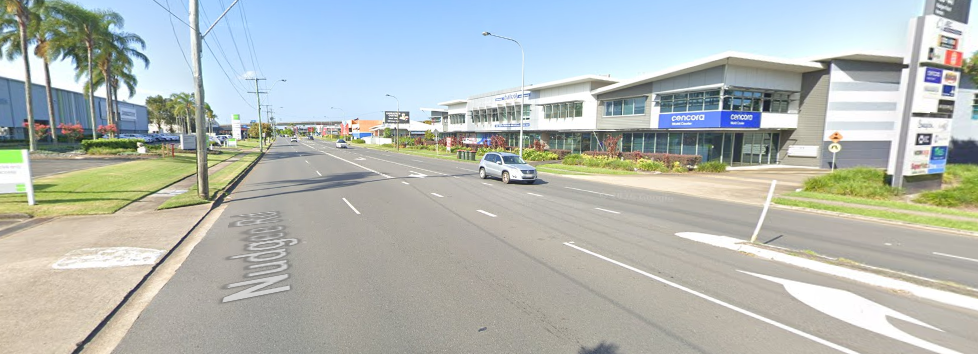
These aren’t treasures carefully excavated from a planned archaeological dig. They’re survivors of an extraordinary rescue mission that began during Brisbane’s catastrophic 2011 floods, when a burst water main on William Street sent tens of thousands of historical artefacts cascading past the convict-built Commissariat Store, one of Queensland’s oldest buildings.

As emergency crews worked to restore access to one of the city’s major streets, the University of Queensland Archaeological Services Unit faced a race against time to salvage what they could before the road reopened. The result is what’s now known as the William Street assemblage, a collection of everyday objects from the 1870s to 1890s that offers an intimate glimpse into early Brisbane life during its transformation from penal settlement to thriving river port capital.

Among the recovered items are clay pipes and rum bottles, ceramic dolls and a bone toothbrush, and even a chamberpot. These objects tell stories of the ordinary people who built the city—fragments of lives that might otherwise have been lost forever beneath the bitumen.

2011 Floods
Photo credit: Google Street View

For fellow student Elisha Kilderry, the experience of handling these artefacts is surreal. She’s piecing together a geometric viridian green chamberpot once used by people who lived on the same streets she walks today.

Initially, Kilderry imagined her archaeology career would take her to Europe or remote Indigenous cultural heritage sites. Instead, she finds herself engrossed in the quotidian details of colonial Brisbane life.

The timing of this cataloguing work couldn’t be more relevant for Brisbane. As the city prepares for the 2032 Olympics, Queensland Museum archaeology curator Nick Hadnutt says the city is on the brink of a boom in salvage archaeology. Massive infrastructure projects—including the proposed 63,000-seat stadium at Victoria Park, a site heritage-listed for its rich Indigenous, colonial and multicultural history—will churn up vast amounts of soil, potentially revealing countless more fragments of Brisbane’s past.

University of Queensland lecturer Dr Caitlin D’Gluyas organised the first hands-on cataloguing experience for students this January, with many more applicants than available positions. She says the collaborative nature of archaeology creates unique bonds between participants.

While the William Street objects hold limited scientific value due to their violent dislodgement—the archaeological context that usually provides crucial information was destroyed by the flood—they were acquired by the museum for more emotive reasons.

One particularly poignant artefact demonstrates this tangible connection to the past: a small ink bottle from the heritage-listed government printing house. It still contains a dash of ink—an exquisite midnight shade—last used over a century ago, perhaps to print an act of parliament. When students used a paper towel to clean it, the ancient ink still stained the cloth.

For student John Duckett, 21, from Rockhampton, who previously volunteered on a Bronze Age brewery dig in Norfolk, England, there’s something irreplaceable about this physical connection to history.

As Brisbane transforms for its Olympic future, these students are working against the clock to preserve fragments of its colonial past. With major infrastructure projects looming, the question isn’t whether more historical treasures will be unearthed—it’s whether we’ll be ready to catch them when they surface.


Read: Hendra Residents Challenge Mega Childcare Centre on Flood-Prone Site


The lesson from William Street is clear: Brisbane’s history lies waiting beneath our feet, vulnerable to the next flood, the next burst pipe, or the next stadium excavation. In Hendra, a dedicated team is ensuring that when those fragments emerge, they won’t be lost to time.

Published 12-February-2026

Hudson Road Albion Apartment Tower Proposal Details 12-Storey Build at Moore Street Corner

Plans propose a new Albion apartment tower on Hudson Road, with a twelve-storey residential building planned for a prominent corner site near Moore Street.


A development application seeks approval for a high-density apartment building at 32 and 34 Hudson Road, Albion, which would add eighty-eight new homes to the suburb. The site sits opposite established mixed-use areas and within walking distance of Albion train station, cafés and everyday services, positioning the project as a residential infill development rather than a greenfield build.

What is Proposed for Hudson Road

The proposal involves consolidating two adjoining allotments at the Hudson Road and Moore Street corner into a single development site of about 1,548 square metres. Plans show a twelve-storey building with a total height just under forty-five metres.

Albion apartment tower
Photo Credit: DA A006923631

The development includes eighty-eight apartments made up of one, two and three-bedroom layouts. Most of the homes are two-bedroom units, with smaller numbers of one and three-bedroom apartments aimed at a mix of singles, couples and families. Private balconies are included for each apartment, with sizes varying depending on the unit type.

The building includes three basement levels that provide one hundred and twenty-four car parking spaces for residents and visitors. The plans also include bicycle parking, storage and building services areas.

Ground Level and Shared Spaces

At street level, the building addresses both Hudson Road and Moore Street, with the main lobby located on the corner. The ground floor also includes a co-working space for residents, visitor parking and landscaped entry areas intended to soften the building’s interface with the street.

Communal facilities are spread across the podium and rooftop levels. Plans include shared open space, landscaped areas, a rooftop garden, swimming pool and barbeque facilities. The design positions these spaces to provide outlook and separation from surrounding properties while giving residents access to outdoor areas within the building.

Design and Local Context

Architectural plans describe a contemporary tower with articulated façades, recessed balconies and varied materials to break up the building’s bulk. The design responds to Albion’s ongoing shift toward higher-density living, particularly around major roads and transport corridors.

Albion apartment tower
Photo Credit: DA A006923631

The Hudson Road site sits within an area already transitioning from older industrial and commercial uses to mixed-use and residential development. Nearby approvals include taller residential and mixed-use projects along Albion Road and within the wider Albion Exchange precinct, placing the proposed building within an emerging high-density pocket of the suburb.

Traffic, Access, and Infrastructure

The proposal provides vehicle access from both Hudson Road and Moore Street, using the site’s dual frontage. The design directs basement parking access internally, reducing reliance on on-street parking.

The application notes the site’s proximity to public transport, including Albion train station, as well as bus routes and nearby cycling connections. A sustainable travel plan accompanies the proposal, encouraging reduced car reliance through bicycle facilities and access to local services.

Infrastructure reports submitted with the application confirm the site already connects to existing water, sewer and stormwater networks, with the design including on-site detention to manage runoff.

Community Concerns

One formal objection has been submitted in response to the application. The submission raises concerns from an adjoining property owner on Moore Street, focusing on potential impacts to an established trade and business use next door.

Albion apartment tower
Photo Credit: DA A006923631

Issues raised include traffic movements on Moore Street, parking overflow, construction disruption, building height and the relationship between residential living and nearby commercial activity. The objection also questions setbacks, overshadowing and servicing arrangements given the proximity of the proposed building to the neighbouring site.vas

The application material addresses these matters through traffic, noise and air quality assessments, along with proposed building setbacks, acoustic treatments and on-site servicing arrangements. The assessment process will consider these issues.

What Happens Next

The assessment will consider the Albion apartment tower proposed for 32 and 34 Hudson Road against the area’s planning framework, including building design, transport, amenity and neighbourhood character.

If approved, the project would add a substantial number of new homes to Albion in a location already earmarked for higher-density living close to transport and services.

More information is available at DA A006923631.


Published 06-February-2026.

Family-Owned Manufacturer in Eagle Farm Secures Major Export Deal

An Eagle Farm manufacturer has secured a $12 million supply contract with the United Arab Emirates, adding a major Middle Eastern deployment to an export footprint that already spans more than 30 countries.


The agreement will see Brisbane-designed 4×4 equipment from Tough Gear Trading delivered into one of the world’s harshest operating environments. While the company is no stranger to overseas markets, the UAE contract stands out for its scale and logistical complexity, involving fleet-level delivery rather than individual product shipments.

The deal is expected to support skilled manufacturing and project roles in Brisbane, reinforcing the city’s position as a base for specialised, export-focused engineering rather than signalling a first step offshore.

Founded in 2015, Tough Gear Trading is a Brisbane-based, Australian-owned manufacturer supplying vehicle systems to commercial, mining, humanitarian and defence-related clients. Although relatively young as a company, its operations draw on more than 28 years of industry experience across the 4×4, military and heavy-duty vehicle sectors.

Founder Gary Turner began the business as a single-operator venture, before expanding it into a multi-market operation capable of managing large-scale vehicle fit-outs and international deployments.

Today, the company operates across multiple export markets, with projects ranging from individual vehicle builds to full fleet mobilisation. Rather than focusing solely on component supply, the business specialises in end-to-end delivery, coordinating design, manufacturing, compliance and transport for vehicles that must operate reliably in extreme conditions.

Turner said the company’s competitive edge lies in its ability to manage complex, cross-border projects rather than simply shipping products offshore, noting that large contracts often require coordination across manufacturing, logistics and regulatory systems, particularly when vehicles are being delivered into remote or high-stress environments.

The Queensland Government pointed to the UAE contract as an example of targeted trade engagement rather than broad promotional activity, saying recent efforts have focused on identifying markets where Queensland manufacturers already have technical credibility and the capacity to deliver at scale.


Minister for Trade Ros Bates said the state’s approach aims to support companies that are already investing in export capability rather than encouraging speculative expansion, with an emphasis on backing businesses with proven track records so public support delivers measurable commercial outcomes for local industry.

Published Date 05-January-2026

Ascot Crime Prevention Focus Targets Home And Vehicle Security

Police in Ascot have focused on home and property security messaging during high-visibility patrols, reminding residents to review everyday steps that can reduce opportunistic crime.


High-Visibility Patrols Across Key Streets

On Tuesday, 3 February 2026, police from the Gateway Crime Prevention Unit attended Racecourse Road, Allen Street and Balowrie Street in Ascot. The activity included high-visibility foot patrols, conversations with residents, and the distribution of crime prevention information.

Police advised that most property and vehicle crime is opportunistic and can occur at any time of the day or night.

Ascot crime prevention
Photo Credit: QPS

Ascot Home Security Advice Shared With Residents

Residents were encouraged to regularly assess their home security, introduce targeted measures where needed, and adjust daily habits to reduce risk. Key principles promoted include making it easy for an offender to be seen, making it difficult to gain entry, making it difficult to exit with property, and making it difficult to gain benefit from stolen items.

A layered assessment approach was promoted, starting from the outside of the home and working inward.

home security
Photo Credit: QPS

Layered Checks Residents Can Apply

The Home Security Guide outlines six layers for reviewing home security, covering the external perimeter, access points such as doors and windows, internal security features, security systems, protection of valuables, and personal security behaviours.

The guide prompts residents to consider visibility and identification, including clearly visible house numbers and trimming vegetation that may conceal doors and windows. It also suggests sensor lighting in high-risk areas to alert residents to movement outside at night.

property crime
Photo Credit: QPS

For entry resistance, the guide highlights securing external doors and frames with adequate locks and other security features, and protecting windows with measures such as locks or security screens. It also prompts residents to secure other access points, including roof access points, access holes and garage doors, and to keep outside areas clear of items that could be used as ladders.

The guidance also covers internal controls such as internal door and window locks, keeping keys removed from locks, and ensuring the door from the garage into the house is lockable. It lists security systems such as CCTV cameras and alarms, including maintenance considerations and the ability to alert residents for follow-up action.

Property Protection And Reporting Options

The guide prompts residents to keep keys and valuable items out of sight, ensure installed safes are securely anchored, and consider property identification and recording practices. It also outlines storage requirements for licensed firearms and ammunition.


Police encouraged anyone with information to report via Policelink’s online suspicious activity form, available 24 hours a day, or report anonymously through Crime Stoppers by phone or online.

Published 4-Feb-2026

Albion Schoolboy’s 1958 Fossil Find Confirmed as Australia’s Oldest Dinosaur Footprint

A dinosaur footprint collected by a schoolboy at a quarry in Albion in 1958 has been confirmed as Australia’s oldest known dinosaur trace fossil, reshaping understanding of the country’s prehistoric timeline and securing a lasting scientific legacy for the suburb.


The Find at Albion

In 1958, Professor Bruce Runnegar, then a Brisbane Grammar School student, visited Petrie’s Quarry at Albion with school friends and removed a slab of fine-grained shale bearing a clear footprint impression. Born in Brisbane, Professor Runnegar was already familiar with the quarry through earlier fossil-hunting visits.

At the time, the markings were suspected to be dinosaur tracks, but no formal study followed. No photographs or measurements were taken, and the slab was removed from a newly exposed track surface without documentation. In subsequent decades, residential development rendered the original quarry site permanently inaccessible, eliminating any opportunity to revisit the footprint in situ.

Petrie’s Quarry
Caption: Petrie’s Quarry, Albion: Historical views of the quarry from the early twentieth century, a 1936 aerial photograph, and a 1959 geology excursion show the sandstone workings where the dinosaur footprint was recovered from the quarry’s north-western corner.
Photo Credit: Alcheringa: An Australasian Journal of Palaeontology 

Albion’s Geological Setting

Long before Albion became a residential inner-north suburb, the area was defined by prominent sandstone bluffs and extensive quarrying. Petrie’s Quarry was worked from the nineteenth century and was known among geologists for its Triassic rock layers and fossilised plant material.

The quarry cut through the Aspley Formation, a Late Triassic geological unit dating to around 230 million years ago. Sandstone extracted from the site was later used in construction across Brisbane, embedding material from Albion’s deep geological past into the city’s built environment. By the mid-twentieth century, the quarry remained accessible to students and amateur collectors, even as urban development expanded around it.

Australia’s oldest dinosaur trace fossil
Caption: Ichnofossils from Petrie’s Quarry, Albion: The dinosaur footprint and associated tail trace from the Aspley Formation are shown alongside elevation maps, schematic interpretations, and a life reconstruction of the trackmaker scaled against a human figure.
Photo Credit: Alcheringa: An Australasian Journal of Palaeontology 

From Schoolboy to Scientist

The fossil remained in Professor Runnegar’s care for decades. He went on to study at The University of Queensland, before building an academic career that included teaching and research positions at the University of New England in Armidale and later at the University of California, Los Angeles. Throughout that time, the Albion footprint travelled internationally as part of his teaching collection.

Now 85, Professor Runnegar is a UQ Honorary Professor and a co-author of the research that formally documented the fossil. The continuity between the schoolboy who collected the footprint and the academic who later helped describe it underpins the specimen’s eventual recognition.

dinosaur footprint
Caption: The 18.5-centimetre dinosaur footprint was collected at Petrie’s Quarry in Albion by a teenager in 1958 and remained unstudied for more than six decades.
Photo Credit: The University of Queensland

Formal Scientific Recognition

The footprint was formally examined decades later by Dr Anthony Romilio, a palaeontologist with the Dinosaur Lab at The University of Queensland. Using modern digital documentation and analytical techniques, the specimen was studied in detail for the first time.

The analysis confirmed the footprint dates to the Carnian stage of the Late Triassic period, approximately 230 million years ago, and originates from the Aspley Formation. This places the track significantly earlier than any previously confirmed dinosaur evidence in Australia, establishing it as the earliest known dinosaur trace fossil in the country.

The footprint measures 18.5 centimetres and preserves the impression of a small, two-legged dinosaur consistent with an early sauropodomorph, a primitive relative of later long-necked dinosaurs. Modelling indicates the animal stood about 75 to 80 centimetres at the hip, weighed roughly 140 kilograms, and was capable of relatively fast movement for its size.

University of Queensland
Caption: Dr Anthony Romilio used specialised software to recreate a three-dimensional cast showing how the Albion dinosaur footprint would have appeared when it was first formed.
Photo Credit: The University of Queensland

Albion’s Enduring Legacy

The research established the footprint as the first confirmed dinosaur fossil found within an Australian capital city. With Petrie’s Quarry long redeveloped, the specimen represents the only surviving dinosaur evidence from that Albion locality.

The fossil is now housed at the Queensland Museum, where it is available for ongoing research. The formal scientific description was published in Alcheringa: An Australasian Journal of Palaeontology in February 2026.


What began as an undocumented schoolboy discovery at an Albion quarry has since become a foundational reference point in Australia’s dinosaur history, linking a small inner-Brisbane suburb to one of the earliest chapters of life on the continent.

Published 3-Feb-2026

Local Hero Recognised in 2026 Australia Day Honours for Mental Health Work

The leafy streets of Ascot are home to a new Member of the Order of Australia, Peter Lawrence Flynn, who was recognised for his tireless efforts to bring mental health support into the local community.


A New Approach to Care

mental health
Photo Credit: Mater Hospital

The announcement came during the 2026 Australia Day Honours, marking a significant moment for the Brisbane region. While many medical awards focus on hospital work, Mr Flynn has spent years making sure help is available where people live and work. 

By focusing on his home suburb of Ascot and the surrounding areas, he has helped build a system where mental health support is not just a clinical service but a part of everyday community life.

Strengthening Medical Research

The Association of Australian Medical Research Institutes recently praised Mr Flynn for his deep connection to the nation’s scientific community. His work with Mater Research in South Brisbane has changed how the institute handles healthcare. 

Instead of keeping research behind laboratory walls, Mr. Flynn helped ensure that new scientific discoveries are turned into practical programmes for patients. He has been a driving force in making sure that mental health checks are a normal part of treating long-term physical illnesses.


A Legacy of Local Support

As a leader and donor, Mr. Flynn’s influence is felt most strongly through his hands-on role with the Mater Foundation. He has acted as a bridge between big medical institutions and the people who need them most. His financial support and guidance have specifically boosted neuroscience and healthcare delivery. 

By prioritising integrated care, he has helped create a world where a person’s mental well-being is treated with the same importance as their physical health. This local commitment ensures that families in Queensland have access to world-class care right in their own backyard.

Published Date 31-January-2026

Millions Allocated for Brothers Rugby Club and Fire Department Headquarters in Brisbane Budget

Brisbane residents will see a massive transformation in local community facilities and emergency services as officials allocated over $33 million toward the Games On! Brothers Rugby Club upgrades at Crosby Park and a complete refurbishment of the Queensland Fire Department State Headquarters.


Strengthening Local Roots and Safety

Brothers Rugby Club
Photo Credit: Google Maps

The 2025–26 State Budget has prioritised the liveability of Brisbane suburbs by funding projects that directly affect how people spend their weekends and how they are protected during emergencies.

At Crosby Park in Albion, a $6 million grant is slated for the Brothers Rugby Club to modernise their clubhouse and changing rooms. This project aims to provide local athletes and families with better spaces to gather, replacing older facilities with something more suitable for a growing sporting community. 

Nearby, the Queensland Fire Department State Headquarters is preparing for a $27.5 million renovation. This significant investment ensures that the people managing the state’s emergency responses have a modern, efficient base to coordinate fire and rescue operations across the region.

A Grassroots Legacy for 2032

The investment in local sport is part of the broader Games On! initiative, a $250 million program designed to ensure that the lead-up to the Brisbane 2032 Olympic and Paralympic Games benefits everyday Queenslanders. Unlike the large stadiums built for elite competition, this program focuses on the “heart and soul” of the community—the grassroots clubs where children first learn to play. 

By upgrading over 100 local facilities across the state, the government is focusing on creating female-friendly changing rooms, better lighting for night games, and modern clubhouses that can serve as community hubs for decades. This infrastructure works hand-in-hand with the Play On! program, which provides $200 vouchers to families to help cover the rising costs of registration and equipment.

A Focus on Health and Housing

Brothers Rugby Club
Photo Credit: Google Maps

Beyond the sporting fields and office buildings, the broader region is set to receive a substantial boost in healthcare capacity. Several major hospitals, including the Princess Alexandra and the Queen Elizabeth II Jubilee, are scheduled for expansions that will add hundreds of new beds and improve parking for visitors and staff. These changes are intended to make it easier for families to access medical care close to home. 

At the same time, the government is moving forward with plans to build more than 480 new social homes across Brisbane. This housing initiative is part of a larger long-term goal to provide stable living conditions for thousands of residents over the coming decades, backed by a $156.7 million investment to help those in need of a permanent roof over their heads.


Better Roads and Brighter Classrooms

Daily commutes and school runs are also a major part of the new funding plan. One of the busiest spots in the city, the intersection of Gympie Road and Beams Road, will undergo a major upgrade to help the tens of thousands of drivers who use it every day get home faster. Public transport users in Hamilton and Northshore can expect better connections with the expansion of the Gold CityGlider service. 

Meanwhile, schools like Buranda State and Red Hill Special School are receiving tens of millions of dollars to build new classrooms and refurbish existing spaces. These projects ensure that local students have the right environment to learn and grow, rounding out a budget that touches almost every aspect of daily life for Brisbane families.

Published Date 31-January-2026

Ascot Home Invasion Case Continues After Teen Granted Bail

An Ascot home invasion remains before the authorities after a woman was seriously injured during the alleged theft of her car, with one of the accused teenagers now released on bail.


Background And Incident

The incident occurred in the early hours of 10 September 2025 at a residential property on Hopetoun Street, Ascot. Police allege three teenagers entered the property and accessed an apartment complex garage where a BMW was parked.

The vehicle’s owner, Emma Trillo, confronted the group at about 4:30 a.m. as the car was being taken. During the confrontation, the BMW was allegedly reversed into her, knocking her to the ground as she attempted to stop the theft. Ms Trillo was taken to hospital following the incident.

Ascot home invasion
Photo Credit: QPS/Facebook

Injuries And Ongoing Recovery

Ms Trillo sustained significant injuries, including a broken hip and lumbar spine fracture. The court later heard she also suffered fractures to her pelvis and fifth lumbar spine, along with cuts and bruising.

Months after the incident, she continues to recover and has described lasting physical impacts, including nerve damage to her leg and a prolonged period requiring mobility aids. While some injuries have improved, her rehabilitation remains ongoing.

Charges And Court Proceedings

Three teenagers were charged in connection with the Ascot home invasion, including Leo Angelo Matar, who had recently turned 18 at the time. Two 16-year-old co-accused were also charged.

Matar faces charges including robbery in company with personal violence, entering a dwelling and committing indictable offences, and unlawful use of a motor vehicle in company. Police also allege the group was involved in other offences earlier that same morning, including a burglary in Hawthorne and the unlawful use of a Mercedes stolen from Greenslopes.

Brisbane home invasion
Photo Credit: QPS/Facebook

Bail was initially refused in September 2025. However, in January 2026, Matar was granted bail in the Brisbane Supreme Court after prosecutors acknowledged difficulties identifying him at the scene, including masked individuals on CCTV and forensic testing not yet finalised.

Bail conditions require him to live with his mother on the Gold Coast, comply with a night-time curfew, avoid Brisbane, and seek medical treatment.

Victim Notification Issue


Ms Trillo later said she was not informed ahead of the bail application. A victims’ advocacy representative attributed the missed notification to an administrative oversight. Court proceedings against the accused are continuing.

Published 26-Jan-2026

Four-Decade-Old Land Acquisition Set to Deliver Huge Return for Hendra Family

A savvy land acquisition made more than 40 years ago is poised to deliver a substantial financial outcome for a Hendra family, though the person who made the original deal will not share in the proceeds.


Photo Credit: Ray White Ascot

The property at 63 Sefton Road in Hendra has been listed with a price guide of $3.99 million, according to information provided by Ross Drewe, whose family has owned the home since 1985.

Photo Credit: Ray White Ascot

The site’s value stems largely from its unusual size. The original owner expanded what was a standard 32-perch block to more than 44 perches by purchasing a strip of land from a neighbouring property. This strategic move created a 1,122-square-metre parcel – roughly equivalent to three modern residential blocks combined.

Photo Credit: Ray White Ascot

The single-storey home, constructed by Griffin and Knowlman in the 1970s, features two independent units built on a slab. Mr Drewe said his father made modifications to the residence after the family purchased it, including opening up the breakfast room with a servery hatch, skylight and glass door leading to the back lawn.

According to Mr Drewe, the lounge area features two large double glass doors overlooking the front lawn. He described it as a comfortable space where his mother spent time in her later years when mobility became more difficult.

Photo Credit: Ray White Ascot

The property’s positioning on the larger-than-average block provides green space with lawn and shrubs surrounding all four sides of the house, Mr Drewe noted.

Mr Drewe and his two siblings are proceeding with the sale following their mother’s death in 2024 and their father’s passing approximately four years earlier.


Ray White Ascot principal Damon Warat is handling the sale.

Published 25-January-2026

Restaurant Closures Leave Vacancies Along Albion’s Sandgate Road

Several hospitality venues along Sandgate Road in Albion have closed or changed hands, with some premises left set up and vacant.


Tables Set, Doors Closed

Big Belly, on Sandgate Road in Albion, closed without warning just before Christmas, with indoor tables still set and the menu left displayed at the entrance.

Further along the strip, Little Lamb Albion remained closed more than a year after shutting, with items including glassware, fridges and an EFTPOS machine still visible inside.

Albion restaurant closures
Photo Credit: Google Maps

More Closures Across The Precinct

Vaquero Dining, a Spanish restaurant located nearby, closed in October 2025 despite strong reviews. Nutmeg Indian Cuisine also closed in 2023, adding to a run of hospitality turnover along the strip.

Sandgate Road Albion
Photo Credit: Google Maps

Tenancies Shifting And Leases Ending

A wine bar beside Olive & Thyme changed operators a few weeks before the report, after the previous owner exited.

Nearby on Collingwood Street, Brewtide Brewery announced in September it would not renew its lease after four years of trading.

Costs, Competition And Capacity

A long-running local operator cited ongoing increases in rent, interest rates, produce costs and wages as continuing pressures since the pandemic period.

Retail analysis referenced in the reporting suggested the Sandgate Road strip may only be able to support a limited number of restaurants, particularly where long-established venues have remained in place for decades.

Albion restaurant closures
Photo Credit: Google Maps

What People Are Saying

Some community responses focused on affordability and the number of venues competing in the same area, while others clarified the closures related to Albion, not similarly named venues operating in other suburbs.

What Happens Next


Vacant shopfronts were visible along the Sandgate Road strip at the time of the walk-through, with several spaces advertised for lease, indicating further change may still be underway.

Published 20-Jan-2026