Ascot residents will have another opportunity to discard their bulky unwanted items and crawlers may again come out for another week of treasure finding as the annual Kerbside Collection returns this 12 August 2019.
What you can leave for Kerbside Collection
Before you start sorting and packing your large household items for discarding, please check the list of acceptable items:
Photo Credit: Alexas_Fotos / Pixabay
bath and laundry tubs;
bicycles and sporting equipment;
carpet and rugs;
electronic waste such as televisions and computers;
furniture and white goods like fridges and stoves;
small household appliances including fans and toasters;
wood products that are less than 1.5 metres.
These acceptable items should be on the kerbside by 6:00 a.m. at the start of the collection period. Illegal dumping fines may apply if you leave your items on the kerb prior to the announced collection date.
The following are considered as unacceptable items and illegal dumping fines may apply if these materials are not removed within seven days of the notified collection period:
bricks and concrete
commercial builders waste
car parts and tyres, including car batteries
dirt and stones
garden waste (e.g. trees, grass, potted plants)
gas bottles
general household waste (e.g. food scraps)
glass and mirrors
hazardous wastes (e.g. chemicals, oil, asbestos)
household waste that normally goes into your waste or recycling bin
Liquids
Reminders for discarders
The Council reminds residents discarding their hard rubbish to keep footpath or roadway clear and safe by keeping the pile tidy on the kerb and not to place sharp or dangerous objects, or piles larger than two cubic metres.
Also, refrigerator and cupboard doors should be removed, as living creatures or a child can get trapped inside and only put items for collection that can be lifted easily and safely by two people.
The Council will not collect piles larger than two cubic metres which is about equal to a small box trailer load.
Lastly, please sort your items into separate piles to speed up the collection process and increase reusability of the items.
Alternatively, you may donate your useable items to any charitable institutions or not-for-profit organisations that can reuse or recycle them like GIVIT, NACRO, and the Council’s tips shops operated by the Endeavour Foundation.
Photo Credit: engage.burnside.sa.gov.au
Kerbside crawlers best practices
Kerbside collection offers opportunities for scavengers to turn these otherwise rubbish finds into gold, but whilst the Council encourages recycling, one must observe certain etiquette:
As a courtesy, if you find something useable, try to seek permission from the homeowner first. However, let’s be respectful of their time and privacy and avoid asking too many questions about the item or if they have anything more to discard for you.
Think safety. Try not to break anything, especially those with parts made of glass, while foraging through the pile.
Take the entire set. If you have little room left in your truck, it is better to leave the dining set and let someone else take advantage rather than take only one chair.
Be respectful, tidy up before your leave and put back the items you decide not to take exactly where you found them.
Some items may not be worth the trouble and thus should be avoided, such as:
Mattresses and bedding. You don’t want to be bringing home bed bugs, head lice, and fungi, do you?
Furniture made from chipboard or medium-density fibreboard. They would be difficult to renovate and reuse as compared to those made from solid timber.
Rooklyn, a century-old Ascot mansion which was owned by the same family for almost 50 years has finally sold for $3.2 million after being listed for three-and-a-half years.
Rooklyn was originally bought in 1972 for $46,000 and has stayed tightly held until its owners decided to downsize. Built in 1914, this grand residence sits on a 943-sqm corner block on Sutherland Avenue, a much-coveted and one of the most expensive streets in Brisbane.
The stately home is described as among those rare houses where all of the original features have been kept intact and maintained with loving care, such as the original terrazzo floor in one of its bathrooms.
Photo Credit: REA Group Ltd. / realestate.com.au
The home boasts of traditional character features including polished timber flooring, soaring ceilings, bay windows, decorative cornicing, chandelier, and fireplaces.
Photo Credit: REA Group Ltd. / realestate.com.au
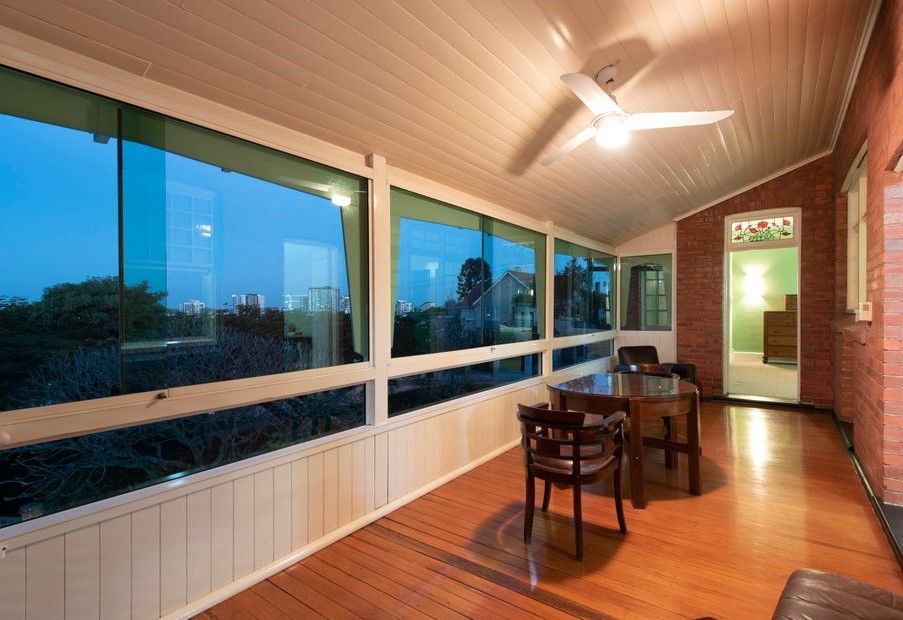
In contrast to the formal lounge area, the informal lounge and dining rooms have been updated with contemporary features that perfectly captures natural light and cool cross breezes.
Photo Credit: REA Group Ltd. / realestate.com.au
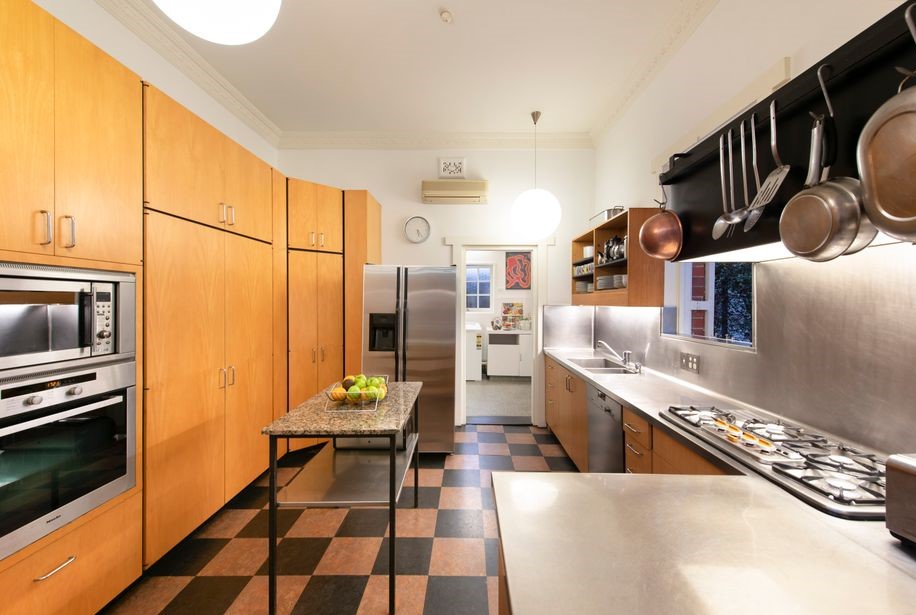
The adjoining gourmet kitchen features stainless steel benchtops, Miele oven and dishwasher, gas cooktop, and array of cabinetry.
Photo Credit: REA Group Ltd. / realestate.com.au
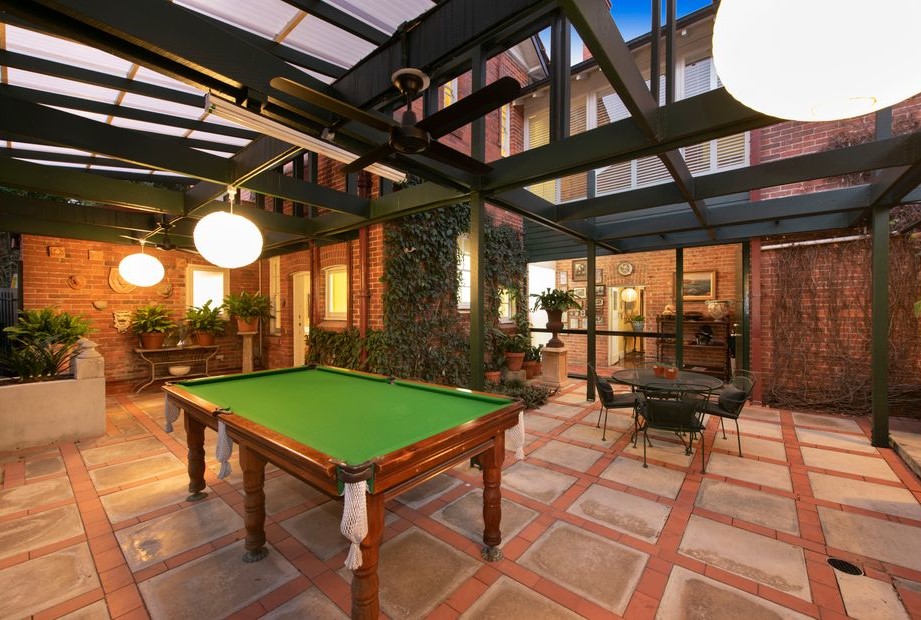
On the other hand, the rear alfresco patio is Tuscan inspired featuring exposed beam ceiling and vine covered walls. Being partially covered, it still manages to capture enough warmth making it a perfect outdoor entertaining area.
Photo Credit: REA Group Ltd. / realestate.com.au
Located on the ground floor is a guest’s retreat with spacious bedroom and bathroom whilst additional four bedrooms are situated on the upper level.
Photo Credit: REA Group Ltd. / realestate.com.au
The master suite, on the other hand, features a bay window and private ensuite with dressing room.
Other features of the Ascot mansion include a 943sqm corner block with wide frontages to Sutherland Avenue and Windermere Road, a 4-car accommodation, spacious study, large laundry with external access, zoned ducted air conditioning on upper level, and a water tank.
AstroJump Teddy Bears’ Picnic at the Races, the fun-filled, annual family event in Ascot, is here again! This is a never-miss affair for the whole family as exciting games and entertainment for the kids and kids at heart have been lined up at the Eagle Farm Racecourse.
Happening on Saturday, the 27th of July 2019, activities at the Teddy Bears’ Picnic will start at 10:30 a.m. and run until 6:00 p.m. This year’s highlight will be the new Astro Jump Inflatable World featuring challenging obstacle courses, castles and slides.
Grown-ups attending the picnic will also have a fun time as there will be nine live races throughout the day. Be sure to familiarise yourself with the map below before you head to the venue so that you can plan your visit.
Photo Credit: Brisbane Racing Club
If this is your first time at the picnic, take a peek from this video from last year so you’ll see just how much fun it was.
Tickets to the Teddy Bears’ Picnic range from $5 to $100. Purchase this in advance online.
Weekly mortgage repayments for a property in Ascot are almost twice the cost to rent per week, which makes renting in this area cheaper than buying, the latest analysis by Domain says.
Brisbane, however, has more suburbs where it’s more affordable to buy than to rent, according to Domain’s study of mortgage repayments based on the median house or unit price for the suburb. The analysis assumed an interest rate of 3.5 percent and a 20 percent deposit and excluded costs like council rates and transfer duties.
The suburb of Waterford in Logan showed the biggest difference between the cost to buy and cost to rent. The weekly mortgage repayments for a house in Waterford is $367, which is cheaper by $33 compared to renting weekly. Bellmere, Loganholme, Crestmead, and Redbank Plains make up the top five locations where it is cheaper to buy than to rent.
On the flipside, expensive suburbs like New Farm, Ascot, and Clayfield where buyers are willing to pay a premium and rental market struggles to grow, it is way cheaper to rent than to buy.
Renting in Ascot, for instance, is $641 cheaper at $650 per week compared to a weekly mortgage repayment of $1,290. On the other hand, realestate.com.au reports that the median weekly rent price in Ascot is $755, based on 94 listings from 1 July 2018 – 9 July 2019..
Experts have observed that the overall trend across capital cities is for rent to be more expensive in the suburbs where houses are more affordable, which could be attributed to the difficulties associated with buying. Whilst interest rates are coming down, the report says, the bigger challenge, especially for lower-income families, is saving up for the deposit
New Farm leads the list of suburbs where it is more affordable to rent than to buy at $660 per week, that is a huge difference of $838 when compared to the weekly mortgage repayment of $1,498. Auchenflower, Clayfield, and Bulimba completes the top five list, after New Farm and Ascot.
Whilst most of these suburbs command a median house price of over $1million, experts say that interstate buyers find great value in entering into these markets compared to Sydney and Melbourne.
Whilst real estate prices in Ascot and Hamilton are amongst the highest in Brisbane, most residents don’t know about the diverse and fascinating history of the area. For example the connection of Ascot’s name to the racecourse, the 154-year history of the Hamilton Hotel, the chaos of keeping the Eagle Farm Women’s Prisoners away from the men, the role of Brett’s Wharf in WW2, local resident Sir Charles Kingsford-Smith, the evolution of Racecourse Road and many other fascinating evolutions.
The Ascot and Hamilton Heritage Trail is a 3.5-km walk, including 18 points of interest that help illustrate the development of both Ascot and Hamilton. The trail starts off just outside the Hamilton Hotel and ends at the entrance to the Eagle Farm Racecourse.
Visitors who want to learn more about the stories and events that shaped the history of the area can check out Brisbane City Council’s Gallivant Through Ascot and Hamilton Heritage Trail brochure. The document also includes more information on the location of public transport and access for people with limited mobility. Take note that some sections of the heritage trail are steep and may be difficult for some visitors to access.
Brief History of Ascot
The evolution of Ascot officially started after the establishment of the famous racecourse in 1865 by the Queensland Turf Club. The development made the area more attractive and further helped to define its distinctive character. The land was granted to the club by the Colonial Government in 1863. Subsequently, the first race meeting was held two years later.
The name ‘Ascot’ used to be a reference to the famous English racecourse. As more people visited the racecourse, Ascot became more closely associated with this part of Brisbane. The rail line was then extended from Eagle Junction to Racecourse Station in 1882 and the station later adopted the name Ascot in 1897.
Ascot and Hamilton Heritage Trail
The Hamilton Hotel
Hamilton Hotel, Hamilton, ca. 1929. (Photo credit: John Oxley Library, State Library of Queensland. Negative number: 1902)
Gustavus Hamilton established the hotel in 1865 and named it The Hamilton. The hotel then became a reference point in the district. Not long after, the area around the hotel adopted the name The Hamilton.
Eagle Farm Women’s Prison
At first, female convicts were held in the Female Factory, on the site which is now occupied by the General Post Office on Queen Street.
The factory was surrounded by high stone walls to limit fraternisation with men, but this proved to be ineffective. Authorities then decided to move the female convicts to Eagle Farm, away from the attention of male convicts as well as soldiers, who were forbidden from crossing Breakfast Creek.
The site of the Eagle Farm Women’s Prison was only accessible through the convict-hewn track which is now known as the Kingsford Smith Drive. The women’s prison may no longer be standing today, but it is an important archaeological site located about two kilometres away from Schneider Road.
Brett’s Wharf and the Apollo Barge Assembly Depot
Brett’s wharves at Hamilton taken about 1953. (Photo credit: John Oxley Library, State Library of Queensland. Negative number: 43721)
Did you know that Hamilton, Ascot, and Eagle Farm experienced some of the most intense war-time activity seen in Australia during World War II?
Following the Japanese attack on Pearl Harbour on 7 December 1941, US forces were redirected to Australia. Brett’s Wharf played an important role as the receiving dock for the US Air Force’s unassembled aircraft.
Substation No. 12
Built at a time when electric trams travelled to Hamilton, Substation No. 12 is one of only two substations built in Brisbane that combined the substation functions for both the electricity supply and the tramway system.
The Hamilton substation was the first of this type of installation to be built in Brisbane in 1947. Meanwhile, the other Substation No. 42 on Waterworks Road at Ashgrove, was built in 1948. Such a dual facility was an unusual but efficient use of a site, as it incorporated both types of substations within a single building.
By the 1960s, the Council viewed trams as an inefficient, expensive, and inflexible form of public transport. This lead to the decision to discontinue the service across Brisbane in 1969.
Kingsford Smith Drive
Sir Charles Kingsford-Smith.(Photo credit: John Oxley Library, State Library of Queensland. Negative number: 52185)
In 1953, this road was renamed Kingsford Smith Drive in honour of one of Australia’s most important aviators. Sir Charles Kingsford-Smith was born in a house near the corner of Riverview Terrace and Hamilton Road.
This structure was built in 1920 as the Hamilton Town Hall and Hamilton Town Council Chambers.Brisbane architect, MT Stanley designed the hall which became the venue for Council business community meetings and social occasions like dances.
After its use as a community hall ended, residents petitioned for it to become the site of a School of the Arts, a move that did quite succeed. Today, it is the site of a public library.
Tivoli Gardens Theatre
Opened in 1907, the Tivoli Gardens was a popular, open-air Vaudeville theatre in Brisbane and is famous for its Vaudevillian acts. Miss Bella Sutherland, a famous performer on the vaudevillian circuit both in Australia and internationally, established the theatre.
The 1,000-seat, canvas theatre served theatre enthusiasts for eight years. Times changed and with the advent of cinema, the Tivoli Gardens Theatre was converted for use for cinema screenings until it finally closed in 1921.
St Augustine’s Anglican Church
Photo credit: staugseq.com.au
The brick church was completed in 1920 as St Augustine’s Thank-offering and War Memorial Church.
Queensland artist, William Bustard designed the artistic church windows.He was popular for his work with stained glass. Examples of his works in Brisbane can be seen in St John’s Anglican Cathedral, St Stephen’s Catholic Cathedral, and Brisbane City Hall. The set of windows in St Augustine’s are considered to be the only remaining complete set of Bustard’s windows.
Racecourse Road
Racecourse Road was the direct path from the river to the racecourse.
In the late 1800s, only a few houses dotted between the river and the racecourse. These include residences to two sharebrokers, a cabinet maker, and two horse trainers.
In the early 20th Century, the Racecourse Road quickly evolved into a busy street, lined with more houses, shops, and businesses, with electric trams running back and forth.
Lynford is considered as one of the finest examples of Tudor Revival homes in Brisbane. The stately, heritage-listed residence on Windermere Road is made of brick, stonework, stucco, and timber with a distinctive gabled roofline.
It was designed and built in 1928 by notable architect E.P Trewern. It has been subsequently renovated by Brisbane-based architect Richard Groves to accommodate modern inclusions.
Windermere
Windermere house at Ascot, Queensland. (Photo credit: John Oxley Library, State Library of Queensland. Image number: 27279-0001-0001)
The grand residence was built around 1886 for a politician named J.G. Appel. Prominent architect, Richard Gailey designed the Windermere house.
Chateau Nous
Built in 1938, this exceptional example of Functionalist architecture is reminiscent of the glamorous 1930s Hollywood parties. The American-educated Douglas Roberts designed the house, whose simple, geometric style was a far cry from the traditional “timber and tin” residences in vogue at the time.
In what was considered “ultra-modern” at the time, the house had an all-electric kitchen, which was designed in a utilitarian, minimalist manner. Remarkably, it also had an electric dumb-waiter which enabled meals to be delivered to the breakfast room upstairs.
A sizeable air raid shelter was even built in the yard to protect the family from World War II bombing runs.
The original owners left Chateau Nou in the 1960s but it remains a private residence to this day.
Nyrambla
Nyrambla epitomises the development of Ascot in the late 1800s when grand residences were built on the apex of the suburb’s hills. The 2-storey residence was designed in 1885 by James Cowlishaw, an early Brisbane architect.
Owned by bank manager Henry P Abbott, Nyrambla was originally built on 15 acres of land before portions of it were divided off to make up surrounding streets, two of which have been named Henry and Abbott in commemoration. Today, Nyrambla is a private residence.
Tattersalls Lodge
Built in the 1890s, this house was used as accommodations for horse trainers and their families. Before the house was built, it was originally the site of the Tattersalls Stables, which was leased to trainers of prizewinning horses because of its close proximity to the Eagle Farm Racecourse.
At the turn of the 20th century, the house changed hands and became FitzGrafton Lodge, owned by James McGill a respected horse breeder and grazier, who bequeathed it to his son upon his death. McGill Avenue, a road adjacent to the racecourse, was named after this family.
Like Nyramble, Tattersalls Lodge is privately owned.
Hamilton Fire Station
Firefighters posing in their vehicle in front of Hamilton Fire Station. (Photo credit: John Oxley Library, State Library of Queensland. Image number: 97520)
Most of the housing stock in Brisbane in the late 19th Century consists of timber. As more houses emerged in the developing area, the locality needed a permanent fire station that services Ascot and Hamilton. The Hamilton Fire Station was then built in 1920.
Ascot Railway Station
Originally called Racecourse Station, the line from Eagle Junction to Ascot Station was opened in 1882. The extension of the line provided race-goers with an efficient way to get to and from the races as the trains exclusively run for race days.
Eagle Farm Racecourse
Avid race-goers, did you know that the first race meeting was held at the Brisbane Racecourse in 1865? The former Brisbane Racecourse is now popularly known as Eagle Farm Racecourse. Today, Eagle Farm Racecourse remains to be Brisbane’s premier racecourse.
Camp Ascot
Photo Credit: The Queenslander/Wikimedia Commons
As mentioned earlier, Ascot has been extremely active during World War II. In fact, Eagle Farm Racecourse became the first US camp established in Australia.
These historic sites and events have undeniably influenced the suburbs of Ascot and Hamilton. Looking for some things to do in Ascot or Hamilton? Why not go on a historic walk and check out the Ascot and Hamilton Heritage Trail.
Charter Hall has acquired the Brisbane City Council Bus Network Terminal on Schneider Road in Eagle Farm, for $102.5 million. The bus terminal currently caters to about 8 million customers per annum,
Two Charter Hall funds – Charter Hall Long WALE REIT (CLW) and Charter Hall Education Trust (CQE) split the purchase at $51.25 million each, reflecting a passing yield of 5 percent and fixed annual rental increases of 2.5 percent.
“This property is an excellent addition to the CLW portfolio, with a 19.2 year WALE, triple net lease to a Government tenant and is very well located in a prime industrial precinct with excellent accessibility to major motorways and the Brisbane Port,” Fund Manager for the REIT – Avi Anger said.
“This acquisition continues to demonstrate our ability to secure high quality property on long leases to tenants with strong financial covenants that enhances portfolio quality,” Mr Anger said.
Photo Credit: Brisbane City Council / Flickr
Considered as prime industrial social infrastructure asset, the latest investment is bolstered by a triple net lease to the Brisbane City Council, with 19.2 years remaining and has potential for high underlying land value growth, which CQE said is consistent with its value drivers and trademark attributes.
“The Bus Network Terminal is consistent with CQE’s Social Infrastructure investments where, via Government financial sponsorship, an essential service that supports, amongst other things, employment generation and its sustainability, is provided to communities,” Head of Social Infrastructure and CQE Executive Director, Nick Anagnostou said.
Located in the tightly held and land constrained prime industrial TradeCoast precinct, the 6-hectare Brisbane City Council Bus Network Terminal was developed in 2013. The terminal facility supports about 24 percent or 8.1 million customers per annum, of the total Brisbane Bus Network.
Are you a fan of the Tonkotsu ramen at Taro’s Ramen in Ascot? Would you like an equally flavourful, vegan version?
If you’re hungry for a hearty bowl of vegetable-based ramen, then Taro’s Ramen’s vegan version should satisfy your craving.
Taro’s vegan ramen is a lighter and creamier version of their best-selling Tonkotsu ramen, that rich broth made from Bangalow sweet pork bone cooked for two days.
Although vegan ramen is not offered at their Ascot location, you can take a 6-km ride to their location along Queen St in CBD to savour their rich broth.
Taro’s vegan ramen was first offered in their Edward St location, but it had to close to pursue the development plans for the building, with Chef Taro Akimoto taking to Facebook the closure of the shop.
“The Vegan Ramen venture has been a fun and interesting journey and we may revisit this brand at a later date,” Chef Akimoto wrote in a Facebook post.
The ‘noodle master’ launched vegan ramen with hopes of bringing something new to the Brisbane food scene just like when he opened his first shop.
In addition to plant-based broth, Taro offers house-fermented, gluten-free, and vegan kimchi and the triple decker dorayaki or pancakes made with soy and rice flour.
Taro currently has four locations across Brisbane and one is at 145 Racecourse Rd in Ascot. The Ascot kitchen will still continue with its usual menu, offering a range of Japanese dishes for lunch and dinner seven days a week.
For more information about Taro’s Ramen – Ascot, visit their website or check out their Facebook page.
Morgan Street in Ascot ranked high among the most in-demand streets in Queensland, the latest realestate.com.au study says.
The latest research has revealed the list of Qld’s streets where most property buyers want to live. Dauphin Terrace in Highgate Hill turned out as the most popular street for would-be buyers in Queensland and the 11th most in-demand in Australia. Regent Street in Elsternwick is the country’s most sought-after street.
Among the 20 most popular streets in Queensland, Morgan Street in Ascot is ranked 10th. On the other hand, the most in-demand streets in Ascot according to realestate.com.au are:
Morgan St
Sutherland Ave
Mayfield St
Crosby Rd
Henry St
Ascot St
Abbott St
Baldwin St
Bale St
Yabba St
Joining Dauphin Terrace in the list of QLD’s 10 most popular streets: Ladds Ridge Road, Burleigh Heads; Ashfield Street, East Brisbane; Glauca Street, Burleigh Heads; Bronhill Street, Currumbin Waters; Timana Avenue, Mermaid Waters; Bridgeman Road, Bridgeman Downs; Hethorn Street, Coorparoo; Dobell Street, Indooroopilly; and Morgan Street, Ascot.
Majority of residents in Morgan Street are comprised mainly of people aged 50 and over (more than 30 percent) and children under 18 years of age (about 30 percent), according to realestateVIEW.com.au. Morgan Street appears to be quite a wealthy neighbourhood with a median monthly household income of $17,230.
The last time a property in Morgan Street was sold was in February 2018, according to domain.com.au. The 2-bed, 2-bath house was originally purchased in 1987 for $130,000. It was sold for $1.28 million, for a 30-year annual growth of 7.86 percent. About 71 percent of homeowners have been living in Morgan Street for 10 years or more, the Domain data said.
The most sought-after streets across Australia were determined after analysing views per property listing per day data, over the three-year period up to 31 March 2019. Only those suburbs with at least five listing during the covered period were considered in the study.
Walkability and proximity to the CBD and amenities are said to attract many buyers to these streets. Other buyers looked into these streets mostly for inspiration and ideas, according to the study.
Experience a different vibe at this year’s Brisbane Racing Carnival in Ascot, as a 48-ft Riviera Sports Yacht will be docking at the new Trackside Marina at the centre of the Eagle Farm Racecourse.
Inspired by the French-Riviera, the most exclusive party will be happening at this luxury yacht, where guests may enjoy the non-stop flow of champagne, premium alcoholic drinks and other beverages from 11:30 a.m. to 4:30 p.m.
Gourmet cocktail dishes will also be served at this grand party, whilst guests take pleasure watching the races in the most comfortable seats with unequalled visibility of the day’s events. However, plasma screens will also be all around the yacht so that guests can cheer on their favourites wherever they may be lounging and resting.
Guests who would like to indulge and reward themselves in this opulence may book a ticket to be at this new Trackside Marina unveiling on two Saturdays:
Kirin States Day on 25 May 2019
TAB Stradbroke Day on 8 June 2019
Ticket prices to gain special private access to this luxury yacht at the Trackside Marina is at $440 per person for members of the Brisbane Racing Club and $450 for non-members.
Photo Credit: Brisbane Racing Club/Facebook
To take this party to the next level, groups may also rent a Private Cabana at the Trackside Marina for $550 per person, where a personal staff will be at your service.
However, it’s not every day that we get to see a house in Ascot listed for sale with a free luxury car and a wine cellar with 2,000 bottles, like ‘Belvedere,’ a four-storey home at 15 Tower Street now being sold for $8.8 million.
NGU Real Estate CEO Emil Juresic said this kind of listing need something special so they decided to give away a Lamborghini Huracan LP 580 with it.
Lamborghini Huracan in Verde Mantis Pearl (Photo credit: NGU Real Estate)
The 900-sqm Queenslander-inspired residence sits on a 1,047-sqm prime Ascot land. It has five bedrooms, six bathrooms, three powder rooms, and seven fully secure car spaces with storage.
It also has three powder rooms, rooftop terrace, multiple living/dining areas, home theatre, office, gym, sauna, two pools, and its own lift that provides access to three levels.
Positioned high on the northern slope of Bartley’s Hill, the mansion offers stunning views of Mt Cootha, Glasshouse Mountains and across Moreton Island from every level.
Built and developed by Zephyr Industries, the extravagant mansion is based on a rebuilt 1920s house and features modern amenities such as voice-activated lights.
Belvedere’s temperature controlled wine cellar (Photo credit: NGU Real Estate)
In addition to a Lamborghini valued at $460,000, the new owner will have a temperature controlled wine cellar with a tasting room and two separate wine fridges.
The wine cellar will have a complimentary 150-litre barrel of Barossa Shiraz and a 150-litre barrel of Mclaren Vale Montepulciano.
The house has been for sale since mid-April and has already attracted plenty of attention. It is still on the market as of press time.