

Queensland Loses the PGA Championship for First Time in 26 Years as Royal Queensland Prepares for 2032

The BMW Australian PGA Championship will leave Queensland for the first time since 2000, with the 2026 edition heading to The Lakes Golf Club in Sydney after Brisbane’s Royal Queensland Golf Club enters a significant phase of upgrades in preparation for the Brisbane 2032 Olympic and Paralympic Games.


The tournament, one of Australia’s most prestigious golf events, will run from 26 to 29 November at The Lakes in Sydney’s eastern suburbs, marking the first time New South Wales has hosted the PGA Championship in almost 30 years. The move brings to an end a 26-year Queensland run that has wound through three iconic venues and helped grow the event into a genuine global drawcard.

For Eagle Farm locals and Brisbane golf fans who have watched the PGA attract up to 50,000 spectators across four days at Royal Queensland over the past five years, the temporary departure stings. But tourism and events leaders are confident the championship will return to Queensland once the Olympic upgrade work is complete.

Why Royal Queensland Had to Step Aside

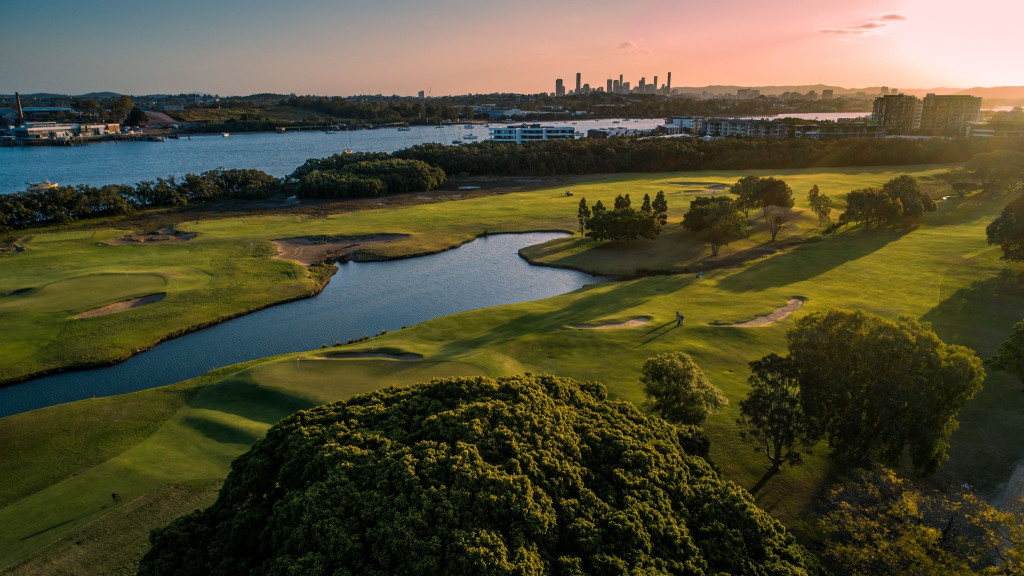
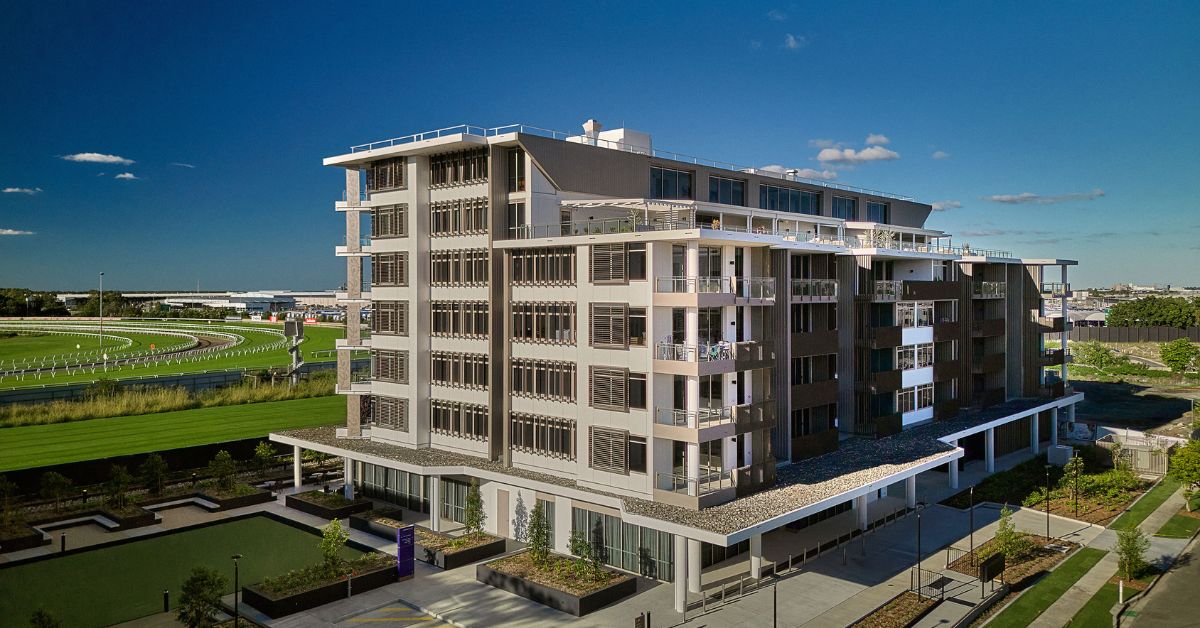
Royal Queensland will add a new nine-hole layout, a riverside pavilion, and enhanced training and recreational facilities as part of its approved masterplan, with the club confirmed as the venue for men’s and women’s golf events at the 2032 Olympic and Paralympic Games. The club was granted its Royal Charter by King George V in 1921 and has hosted the Australian Open three times, but the scale of the Olympic preparation work now underway makes it unsuitable as a PGA host venue in the near term.

The search for an alternative Brisbane home for the 2026 PGA Championship came up short. No venue within Queensland was found that could comfortably accommodate the event’s full footprint, including the 50,000 spectators across four days, the on-course infrastructure and the operational requirements the tournament now demands at its current scale.

Tourism and Events Queensland CEO Craig Davidson said the venue change reflected Royal Queensland entering a significant phase of works to ensure the course met future world-class standards. “TEQ has a strong and longstanding partnership with the PGA and remains committed to ongoing discussions about future event opportunities for Queensland,” he said.

Tourism Minister Andrew Powell said a temporary relocation was expected given the upgrade timeline. “Queensland continues to lead as Australia’s events capital, with major upgrades to be delivered at Royal Queensland Golf Club ahead of Brisbane 2032,” he said. “We welcome future opportunities to see it return once the upgraded course is complete.”

Twenty-Six Years of Queensland Golf

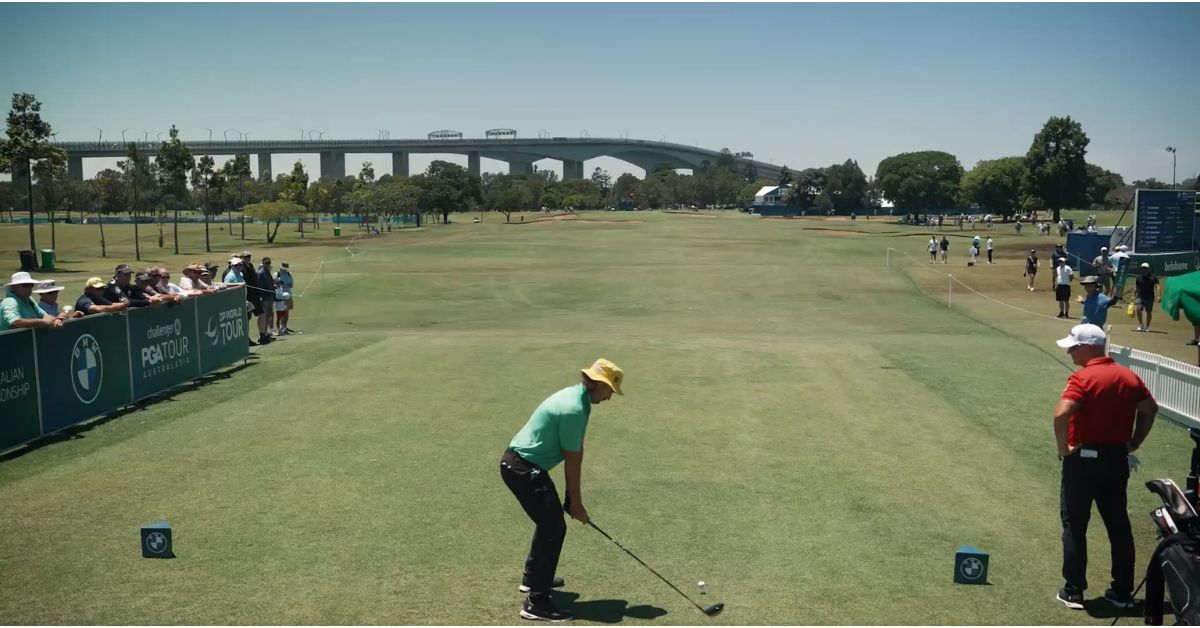
The PGA Championship has been held in Queensland continuously since 2000, initially at Royal Queensland before moving to Hyatt Coolum, later renamed Palmer Coolum, for 11 consecutive years from 2002 to 2012, then to Royal Pines on the Gold Coast from 2013 to 2019. The event returned to Royal Queensland for 2021 and has remained there for the past five editions, building the tournament’s international stature alongside its co-sanctioning with the DP World Tour.

Photo Credit: DP World Tour/X

The BMW Australian PGA Championship launches the DP World Tour’s Race to Dubai each season and has become a key part of Australia’s sporting summer, with the world’s leading players regularly making the trip for what is now a genuinely global event. PGA of Australia CEO Gavin Kirkman described the move to Sydney as an exciting opportunity.

“We are delighted to have the opportunity to partner with NSW authorities in bringing the BMW Australian PGA Championship back to Sydney,” he said. “The city is synonymous with world-class sporting events and we are thrilled that we are able to return to The Lakes Golf Club.”

The Lakes is a three-time previous host of the BMW Australian PGA Championship and has staged eight editions of the Australian Open, which it last jointly hosted in 2023.

Queensland Golf’s Broader Picture

While the PGA Championship heads south, Queensland’s women’s golf calendar is growing stronger. The 2026 Australian WPGA Championship was held at the Palms Course at Sanctuary Cove Golf and Country Club on the Gold Coast from 19 to 22 March, offering a $600,000 prize purse and co-sanctioned with the Ladies European Tour, with plans to build the event further as a major in its own right.

The PGA of Australia said it was focused on building momentum with the championship for the long term. “The BMW Australian PGA Championship has become a standout event on the DP World Tour and a key part of Australia’s sporting summer,” a spokesperson said. “Planning for future editions of the event is focused on building on that momentum and delivering an even better experience for players and fans.”

With Royal Queensland’s upgraded course and expanded Olympic-standard facilities expected to be complete ahead of 2032, Queensland golf’s flagship event has every reason to come home.


Published 17-April-2026

Nyrambla: The Ascot Mansion That Hid WWII Codebreakers

Spying in Ascot might sound unlikely—but one historic mansion once played a key role in World War II intelligence. Nyrambla, on Henry Street, was secretly used by Allied codebreakers to decode Japanese military messages, helping shape the course of the war.

A Banker’s Home

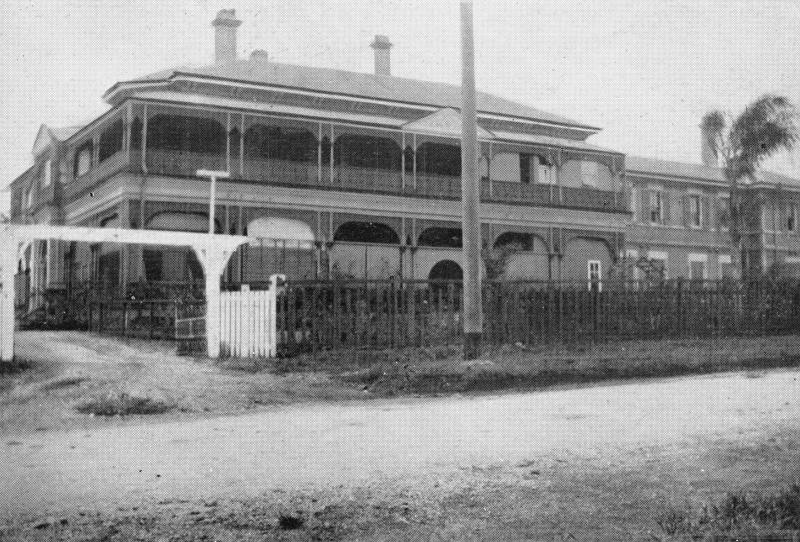
More than a century after it was built, Nyrambla still stands proudly at Henry Street in Ascot, after having been many things to many people — home to a banker, an alderman, prominent society personalities, even serving as headquarters for code-breakers in the Second World War.

Nyrambla was originally built in 1885 during a time when grand residences were built on the apexes of the hilly suburb of Ascot. 

Designed to be a two-storey family house by Brisbane architect James Cowlishaw, Nyrambla took up three large estates spanning from Windermere and Lancaster Roads. It had separate structures for the servants and the stables.

The house was designed for the manager of the Australian Joint Stock Bank, Mr Henry P Abbott.

Per historical records from Brisbane’s Local Heritage places, the Abbotts came from a family of wealthy sheep ranchers in New South Wales and named their home “Nyrambla” after a station owned by Mrs Abbott’s side of the family.  

Shortly after Mr Abbott’s retirement from banking, his family decided to return to Sydney where he died in 1903. When the Abbotts left, the Australian Joint Stock Bank rented out the mansion to Mr Patrick Perkins, a Member of the Legislative Assembly of Queensland who came from a family of Irish brewers.

The Subdivision of Nyrambla

By the early 1900s, Nyrambla was subsequently divided to include more tenants thus creating Henry and Abbott streets around the 15-acre estate, as it has existed today. Mr T. Herbert Brown, the son-in-law of Sir Samuel Griffith, the inaugural Chief Justice of Australia, lived in one of the properties with his wife. 

Nyrambla undated photo
Photo Credit: John Oxley Library, State Library of Queensland

The bank then advertised and sold the estate in allotments of different sizes. An acre of the site with the original house was acquired by Edward David Miles, an alderman in Charters Towers and a Member of the Queensland Legislative Council. 

old advert for Nyrambla
Photo Credit: Trove/National Library of Australia

Ten years after owning Nyrambla in the mid-1920s, the Miles family sold the property to George Willoughby Whatmore of Centennial Hall Ltd and the Willoughby Trust Ltd. Generations of Mr Whatmore’s family owned Nyrambla, including Brisbane socialite Andree Daws, Mr Whatmore’s great-great-grandchild, until her death in August 2020. 

society announcement
Photo Credit: Trove/National Library of Australia
Nyrambla undated photograph
Photo Credit: Trove/National Library of Australia

Converting Nyrambla into Flats

In 1929, or roughly four years after their patriarch’s death, the Whatmore family agreed to convert Nyrambla from a sprawling mansion into six flats with Cunningham & Jones overseeing the construction. From its main entrance on Yabba Street, the house could now be accessed through Henry Street, much like it is today.

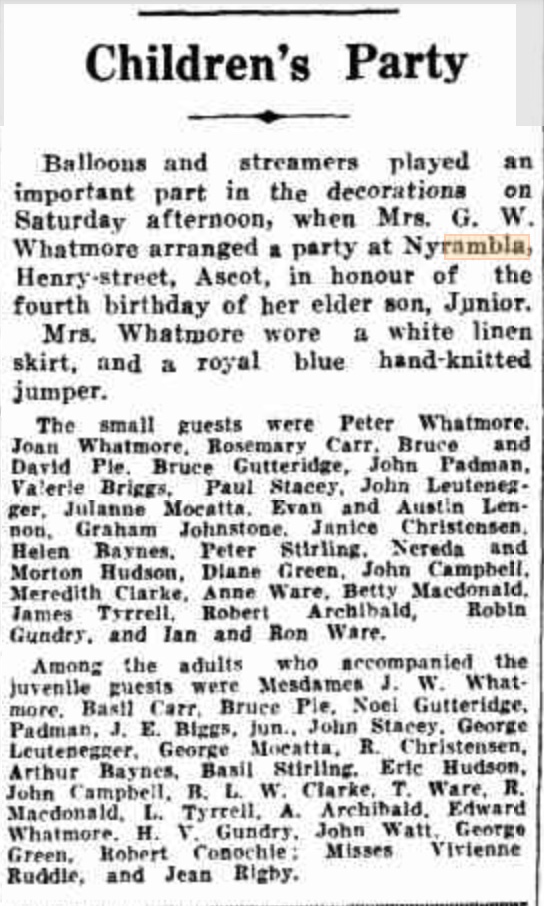
The flats remained family homes, where numerous social events took place among Ascot’s elites. 

event clipping
Photo Credit: Trove/National Library of Australia
children's party clipping
Photo Credit: Trove/National Library of Australia

…Then it Became a Spy House

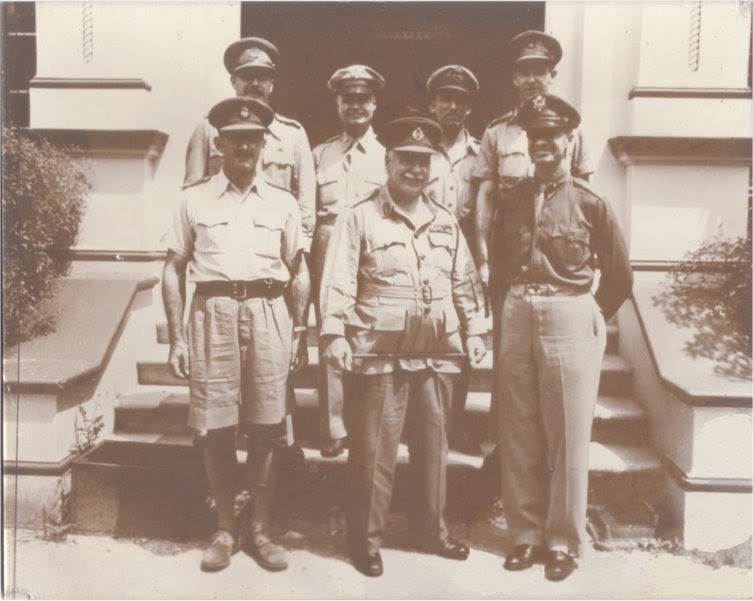
Then in the 1940s, the government requisitioned Nyrambla as a spy house for the Allied Forces led by U.S. General Douglas MacArthur and Australian General Thomas Blamey.

For the next three years, the 18 enlisted servicemen and six officers of U.S. 837th Signal Service Detachment and members of the Australian Women’s Army Service (AWAS) and cryptanalyst from the Australian Cypher Section worked at the back garage to decipher intercepted Japanese codes using a Typex machine and IBM tabulators. The decoded messages were transmitted to Allied bases from all over the world.

World War II officers at Nyrambla
Photo Credit: Ozatwar.com

“At Nyrambla, Central Bureau decrypted a Japanese Army Air Service signal intercepted by No. 51 Wireless Section at Darwin. The signal contained the Commander-in-Chief of the Combined Japanese Fleet, Admiral Isoroku Yamamoto’s itinerary for his forthcoming trip to Rabaul. As a result, on 18 April 1943, Yamamoto’s aircraft was intercepted off Bouganville by US P-38 Lightning fighters and he was killed. In May 1943, the 837th Signal Service Detachment was renamed Special Intelligence Service led by Colonel Harold Doud,” per historical accounts from the Queensland WWI Historic Places. 

Nyrambla Today

Nyrambla through the years
Photo Credit: Lost Brisbane

In its modern existence, the former spy house became a nine-bedroom house with seven bathrooms, six-car garage spaces, two sunrooms, with a living room area on the second floor. It had a separate guest wing as well as an art studio for its last Whatmore descendant, the Daws. 

Nyrambla interior photos
Photo Credits: Lost Brisbane, Ray White Real Estate, Facebook

Despite countless renovations, Nyrambla kept most of its late Victorian features with a hipped corrugated iron roof, iron cresting and finials, and street-facing gable. Each story of the house is featured with a verandah with a metal curved roof in the typical fashion of 19th-century dwellings.

The verandah levels are fortified with timber posts and top rails with cast-iron balusters, whilst tall, vertical arched windows are featured on the right sidewalls. The house itself is an elongated rectangular structure with U-shaped wings on the backside where the kitchen, the breakfast room, and the maid’s quarters are located. 

The long rooms of the main house are divided using folding doors. Six bedrooms and a sitting room fill up the spaces on the second floor, whilst several fireplaces with tiled hearths and marble mantelpieces are found all over the house.

New Owners

The Central Bureau consisting of soldiers from Australia, the USA, Britain, Canada, and New Zealand used Nyrambla until 1945, whilst titles to the property stayed with the Whatmore family. Over seven decades, Nyrambla was called home by many tenants, who were Brisbane VIPs like Jan Powers, Billie Brown, and Blair Edmonds.


A private investor acquired this Ascot historical treasure in May 2021 for nearly $9 million after tight competition among interested buyers. 

Updated 15-April-2026

New Schneider Road Shared Path Fills Key Gap in Moreton Bay Cycleway at Eagle Farm

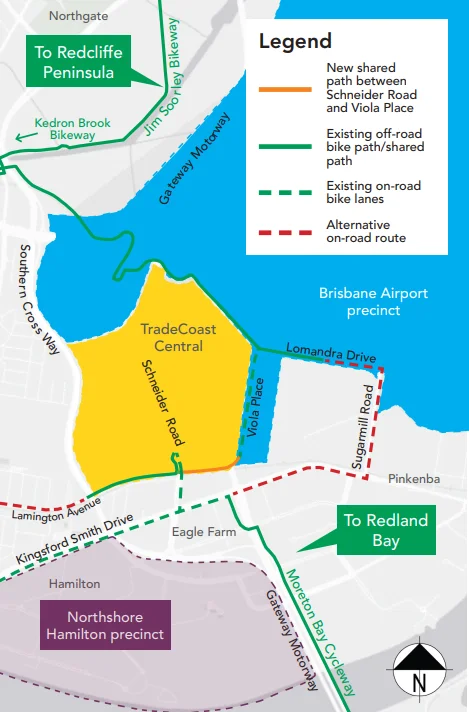
A new 600-metre shared path connecting the Moreton Bay Cycleway at the Schneider Road underpass in Eagle Farm to the Brisbane Airport precinct at Viola Place is now open, closing a long-standing gap in the cycling network that had frustrated northside riders for years.


The path, completed in late January 2026 after construction began in May 2025, gives cyclists, walkers and scooter riders a safe, continuous off-road connection between Eagle Farm and the airport for the first time. Dozens of cyclists turned out on opening morning to celebrate the new link, with a free pop-up coffee station set up along the path to mark the occasion.

For Ascot and Eagle Farm residents who commute to the airport precinct or connect to the broader cycling network from the northside, the new path removes the last significant off-road gap on this stretch of the Moreton Bay Cycleway. For riders arriving from Brisbane’s southside via the Gateway Bridge, it completes a critical northern link that previously forced cyclists onto road shoulders or into detours to continue their journey toward the airport and TradeCoast Central employment areas.

A Route Through the Gateway Motorway Corridor

The new path begins at the existing cycleway at Schneider Road in Eagle Farm, passes under the Gateway Motorway, and connects to the existing bike lane and footpath at Viola Place inside the Brisbane Airport precinct. The network map shows how the connection slots into a broader web of routes: northbound from Viola Place, riders can continue along Lomandra Drive into the airport precinct, or pick up the Jim Soorley Bikeway toward Nundah, Northgate and the Redcliffe Peninsula. Southbound, the path connects to the Moreton Bay Cycleway running toward Redland Bay and the Gateway Bridge, as well as the Southern Cross Way off-road path and on-road options along Lamington Avenue and Kingsford Smith Drive toward Hamilton and Northshore.

Photo Credit: BCC

For Eagle Farm and Pinkenba workers, the Schneider Road connection also creates the first direct off-road cycling link to the TradeCoast Central precinct from the south, avoiding the need to navigate Nudgee Road or Sugarmill Road on-road.

What the New Path Includes

The shared path varies between 2.5 and 3 metres in width, comfortably accommodating cyclists and pedestrians travelling in both directions. The path features solar-powered LED lighting along its full length for safe travel at all hours, a reconstructed weir and new waterway crossing where the path crosses a drainage channel near the Gateway Motorway, a kerb ramp at the Viola Place end for smooth access to the airport’s existing bike lane and footpath, and wayfinding signage and line marking throughout to guide riders unfamiliar with the route. Landscaping and turfing are also included, with minor tree removals carried out in consultation with a qualified arborist during construction.

Connecting Eagle Farm to a 150-Kilometre Network

The Moreton Bay Cycleway spans 150 kilometres of Brisbane’s coastline, connecting the Redcliffe Peninsula, the Sandgate and Shorncliffe foreshore, and the Wynnum and Manly foreshore to one another and to major inner-city bikeways. The cycleway links to the Gateway Bridge Bikeway, Kedron Brook Bikeway, Jim Soorley Bikeway and Gateway North Bikeway, and when complete may become one of the longest cycleways on Australia’s east coast spanning three local government areas.

The Gateway Bridge shared path, free for pedestrians and cyclists, is a busy crossing point used daily by commuter and recreational riders connecting Brisbane’s southside to the northside. With the Schneider Road link now in place, a rider can cross the Gateway Bridge from Murrarie, continue through Eagle Farm under the motorway, and reach the Brisbane Airport precinct, the TradeCoast Central employment hub or the Jim Soorley Bikeway entirely on off-road paths. That seamless connection is what active transport advocates in the area have sought for some time.

Around 25,000 people travel to Brisbane Airport each day for work, a number expected to grow by around 20,000 over the next two decades. Brisbane Airport’s draft 2026 Master Plan includes a series of active transport initiatives across the precinct, aimed at giving workers lower-cost and healthier commuting options as the airport precinct expands.

How to Access the New Path

The new shared path is open at all hours. Riders approaching from the south can access the Schneider Road underpass from Kingsford Smith Drive via Lamington Avenue, or from the Moreton Bay Cycleway running north from the Gateway Bridge. Riders within the airport precinct can connect from Viola Place.

More information is available here. The project team can be reached on 07 3178 5413 during business hours, or 07 3403 8888 at any time.


Published 26-February-2026.

Man Charged Over Series of Traffic Incidents Including Ascot

A Bowen Hills man is facing 13 charges following a series of alleged traffic incidents across Fortitude Valley and Ascot last Thursday afternoon.


Queensland Police allege the 38-year-old was driving a white Kia Optima that collided with another vehicle at the intersection of Saint Pauls Terrace and Brookes Street in Fortitude Valley around 2.50pm on 20 February.

According to police, the driver left the scene and subsequently crashed into a parked vehicle at the intersection of Wickham Street and Light Street, also in Fortitude Valley.

When officers attempted to stop the Kia, police allege the vehicle continued along Anthony Street before colliding with a blue Holden Astra and a fence in Ascot.

The driver was arrested following the third collision. Police report that a search of the vehicle uncovered a black satchel containing crystal methylamphetamine and liquid gamma hydroxybutyric acid, commonly known as GHB.

Officers also allege the Kia had been reported stolen from a Hawthorne property on 17 February.

The man has been charged with multiple offences including entering a dwelling and committing an indictable offence, unlawful use of a motor vehicle, dangerous operation of a motor vehicle while adversely affected, and endangering a police officer when driving a motor vehicle.

Additional charges include damaging an emergency vehicle when operating a motor vehicle, three counts of serious assault of a police officer, possessing dangerous drugs, and unlicensed driving.

The accused has been remanded in custody and is scheduled to appear in Brisbane Magistrates Court on 23 March.


Police are encouraging anyone with information about the incidents to contact Policelink via the online suspicious activity form at www.police.qld.gov.au/reporting or by phoning 131 444. Information can also be provided anonymously through Crime Stoppers on 1800 333 000 or at www.crimestoppersqld.com.au.

Reference numbers: QP2600339195, QP2600313112, QP2600339752, QP2600339720

Published 25-February-2026

Ascot Crime Prevention Focus Targets Home And Vehicle Security

Police in Ascot have focused on home and property security messaging during high-visibility patrols, reminding residents to review everyday steps that can reduce opportunistic crime.


High-Visibility Patrols Across Key Streets

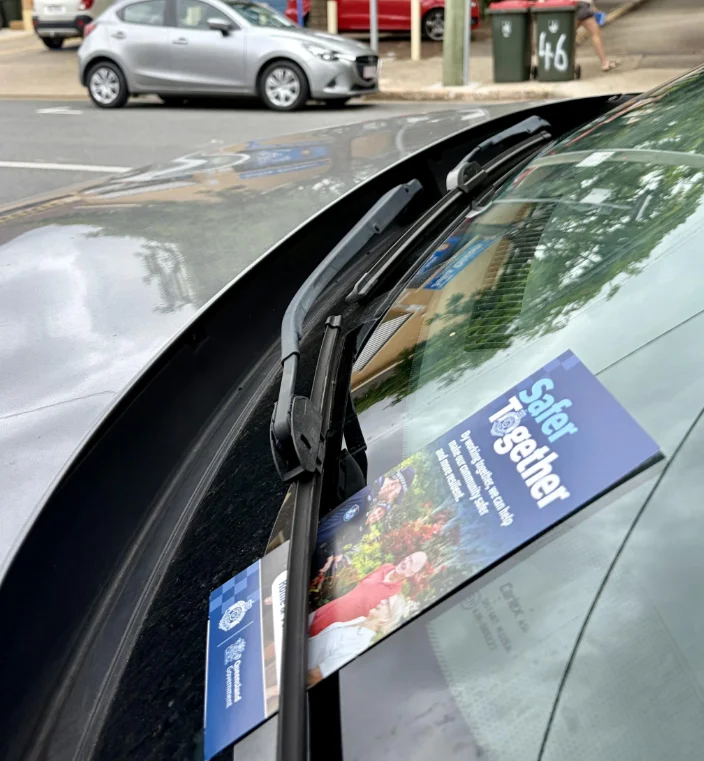
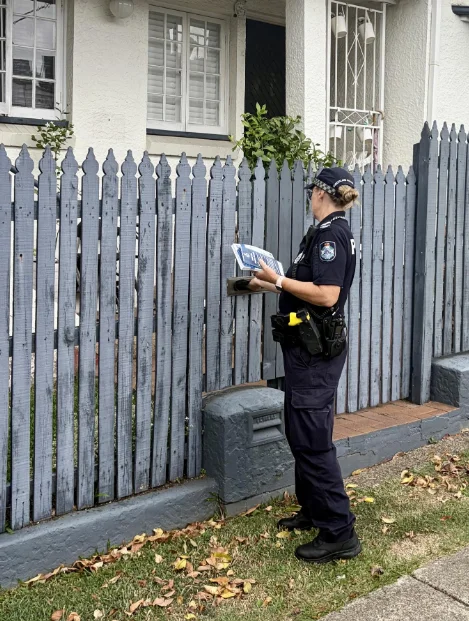
On Tuesday, 3 February 2026, police from the Gateway Crime Prevention Unit attended Racecourse Road, Allen Street and Balowrie Street in Ascot. The activity included high-visibility foot patrols, conversations with residents, and the distribution of crime prevention information.

Police advised that most property and vehicle crime is opportunistic and can occur at any time of the day or night.

Ascot crime prevention
Photo Credit: QPS

Ascot Home Security Advice Shared With Residents

Residents were encouraged to regularly assess their home security, introduce targeted measures where needed, and adjust daily habits to reduce risk. Key principles promoted include making it easy for an offender to be seen, making it difficult to gain entry, making it difficult to exit with property, and making it difficult to gain benefit from stolen items.

A layered assessment approach was promoted, starting from the outside of the home and working inward.

home security
Photo Credit: QPS

Layered Checks Residents Can Apply

The Home Security Guide outlines six layers for reviewing home security, covering the external perimeter, access points such as doors and windows, internal security features, security systems, protection of valuables, and personal security behaviours.

The guide prompts residents to consider visibility and identification, including clearly visible house numbers and trimming vegetation that may conceal doors and windows. It also suggests sensor lighting in high-risk areas to alert residents to movement outside at night.

property crime
Photo Credit: QPS

For entry resistance, the guide highlights securing external doors and frames with adequate locks and other security features, and protecting windows with measures such as locks or security screens. It also prompts residents to secure other access points, including roof access points, access holes and garage doors, and to keep outside areas clear of items that could be used as ladders.

The guidance also covers internal controls such as internal door and window locks, keeping keys removed from locks, and ensuring the door from the garage into the house is lockable. It lists security systems such as CCTV cameras and alarms, including maintenance considerations and the ability to alert residents for follow-up action.

Property Protection And Reporting Options

The guide prompts residents to keep keys and valuable items out of sight, ensure installed safes are securely anchored, and consider property identification and recording practices. It also outlines storage requirements for licensed firearms and ammunition.


Police encouraged anyone with information to report via Policelink’s online suspicious activity form, available 24 hours a day, or report anonymously through Crime Stoppers by phone or online.

Published 4-Feb-2026
Ascot Cat Socko Barred From CityCat Travel

A rescue cat named Socko from Ascot has been prevented from boarding Brisbane’s CityCat ferries, drawing attention to pet travel rules that permit dogs but exclude cats.


CityCat Pet Travel Rules Explained

CityCat and ferry services operate along the Brisbane River, connecting terminals from St Lucia through to Northshore Hamilton and forming a major transport option for daily travel.

In mid-2020, dogs were permitted to travel on CityCats and ferries following a six-month trial. Under these arrangements, dogs are allowed during off-peak weekday hours and throughout weekends, subject to conditions on restraint, location on board, and passenger safety.

Cats were not included in this policy change and remain excluded from CityCat services.

Ascot CityCat cat ban
Photo Credit: Sara & Socko/Instagram

Socko’s Experience On The CityCat

Socko is a rescue cat adopted in April 2025 by Sara Calle Herrera, who lives in Ascot. Since his adoption, Socko has regularly travelled outdoors around Brisbane in a carrier or on a leash, including walks and runs along public paths.

Sara became aware of the restriction after boarding a CityCat with Socko secured inside a carrier while remaining in an outdoor area. Ferry staff advised that cats are not permitted under current rules.

Socko the cat
Photo Credit: Sara & Socko/Instagram

Existing Pet Travel Rules

Current CityCat conditions allow accredited assistance animals and pet dogs to travel. Dogs must remain outside the ferry cabin, be properly restrained or enclosed, and travel only during approved times.

Cats are not listed as permitted pets, including those contained in enclosed carriers.

Brisbane ferries
Photo Credit: BCC

Impact On Everyday Travel

For Sara, the exclusion limits transport options when moving around Brisbane without a private vehicle, including trips such as veterinary visits. While she continues to travel by foot and car, the restriction reduces flexibility when using river transport.

The situation contrasts with arrangements in other Australian cities, where small pets are permitted on some public transport services when secured in suitable containers.

Community Discussion And Outlook

Public response to Socko’s experience has been mixed, with some questioning the difference in treatment between dogs and cats, while others raise concerns around allergies and onboard comfort.


No changes to CityCat pet travel rules have been announced.

Published 31-Dec-2025

Street Spotlight: Morgan Street, Ascot

Morgan Street in Ascot represents a fascinating example of post-war suburban development, with the street not even existing in 1936 when historical aerial photography captured the area. This relatively modern addition to Brisbane’s street network has evolved into a prestigious residential enclave that embodies the exclusive character Ascot is renowned for.


With an impressive 95% of properties being owner-occupied and residents staying an average of 14 years and 9 months, Morgan Street demonstrates exceptional stability and desirability. While 44% of residents have called the street home for more than a decade, the community reflects both established families and newer residents drawn to this sought-after location. The street’s property transaction history reveals the remarkable appreciation in Ascot’s real estate values, with properties that sold for $200,000 in 1981 now representing multi-million dollar investments in one of Brisbane’s most coveted suburbs.

Morgan Street, Ascot Residents

NUMBER OF PROPERTIES: 28 (24 houses, 4 others)
% OF OWNER OCCUPIERS ON STREET: 95%
AVERAGE TIME FOR OWNER OCCUPIERS: 14 years and 9 months
% OF PEOPLE 10+ YEARS: 44%

Morgan Street, Ascot – As It Looked in 1936

Morgan Street, Ascot in 1936

SOME RECENT SALES ON MORGAN STREET, ASCOT

Property AddressSale PriceSale Date
3 Morgan Street, Ascot$6,505,000Oct 2025
1 Morgan Street, Ascot$4,420,000Jul 2025

SOME TYPICAL PROPERTY SALES ON MORGAN STREET FROM YESTERYEAR

Property AddressSale PriceSale Date
19 Morgan Street, Ascot$200,000Apr 1981
6 Morgan Street, Ascot$380,000Aug 1992
3 Morgan Street, Ascot$485,000Nov 1992

SUBURB PROFILE

The median price of a 3 Bedroom House in Ascot in 2025 was $1,576,000
The median price of a 3 Bedroom House in Ascot in 2021 was $1,325,000
TYPICAL INCREASE OF A 3-BEDROOM HOUSE IN ASCOT SINCE 2021: $251,000

The median price of a 5 Bedroom House in Ascot in 2025 was $3,430,000
The median price of a 5 Bedroom House in Ascot in 2021 was $2,620,000
TYPICAL INCREASE OF A 5-BEDROOM HOUSE IN ASCOT SINCE 2021: $810,000

The median price of a 2 Bedroom Unit in Ascot in 2025 was $697,000
The median price of a 2 Bedroom Unit in Ascot in 2021 was $420,000
TYPICAL INCREASE OF A 2 BEDROOM UNIT IN ASCOT SINCE 2021: $277,000

The median price of a 3 Bedroom Unit in Ascot in 2025 was $1,106,000
The median price of a 3 Bedroom Unit in Ascot in 2021 was $625,000
TYPICAL INCREASE OF A 3 BEDROOM UNIT IN ASCOT SINCE 2021: $481,000


If you know Morgan Street, Ascot well and you have some anecdotes or details to add, please email us at editor@brisbanesuburbsonlinenews.com.au.

Redevelopment Aims to Preserve Heritage of Paddock and Members Stands at Eagle Farm Racecourse

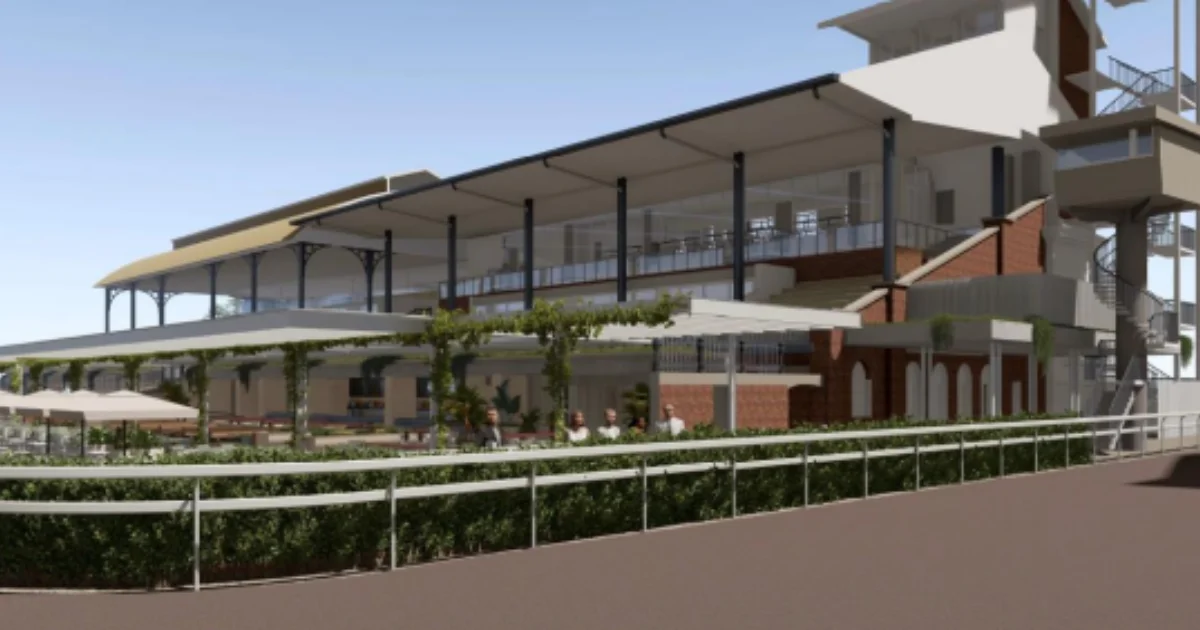
The Paddock and Members Grandstands at Eagle Farm Racecourse in Ascot are set for a major transformation, with a development application lodged to refurbish and modernise the historic structures while enhancing the overall race-day experience.


Read: Eagle Farm Racecourse Faces Urgent Redevelopment Deadline


Under the proposal (A006814732), patrons, jockeys, and stewards will benefit from upgraded facilities including new function rooms, stewards’ and jockeys’ areas, and modern amenities such as ice baths and spas. 

Photo credit: Brisbane PD Online

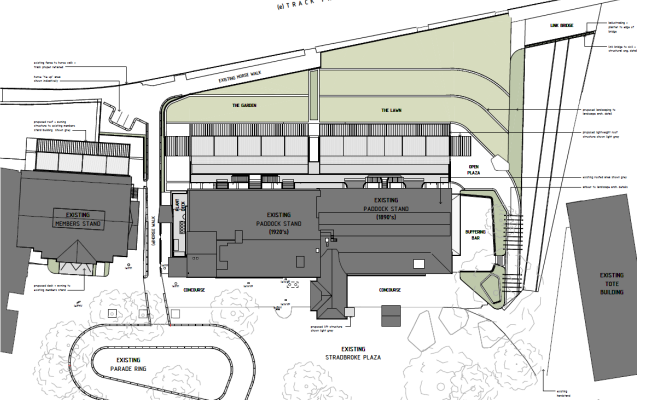
The project also features redesigned bar and dining spaces, new terraces, and a link bridge connecting the Paddock to the St Leger Precinct.

Site plan (Photo credit: Brisbane PD Online)

The winners’ enclosure will be reconfigured to improve spectator views, while landscaped garden beds, green roofs, and upgraded lawns aim to soften the site and provide attractive gathering areas. A new community hub is also planned, designed to bring people together for race days and other events.

Photo credit: Brisbane PD Online

As part of the redevelopment, some existing structures, including the John Power Stand, Steward’s Tower, and several trees, will be demolished. Despite the changes, planners stress the design will preserve Eagle Farm’s heritage character while delivering a contemporary upgrade that integrates with its historic surroundings.

History of the Grandstands

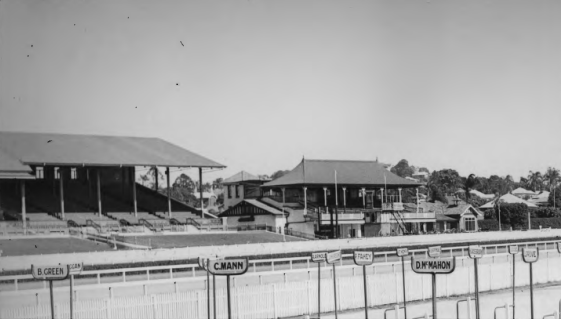
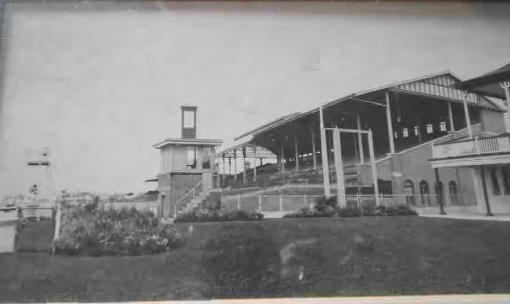
Undated photo of the completed Paddock Stand with the eastern edge of the 1924 Members Stand (Photo credit: Tote Archive/Brisbane PD Online)

Eagle Farm Racecourse, established in 1863 in Brisbane’s Ascot, has long stood as Queensland’s premier racing venue. Just 6 kilometres from the CBD, it became more accessible with the opening of Ascot railway station in 1882.

The Paddock Stand, designed in 1889–1890 by architects Hunter and Corrie in partnership with John H. Buckeridge, was a brick and iron grandstand completed in 1890. 

1936 photo of the Paddock Stand and the Members Stand (Photo credit: SLQ negative 65212/Brisbane PD Online)

Featuring a vaulted roof with a ventilated ridge, timber gables, and decorative cast-iron balustrades, the stand quickly became a focal point for racegoers. Its tiered seating faced the track, with a large open forecourt that encouraged both viewing and social interaction.

The Members Stand followed in 1904, and over the decades, both structures were extended and modified, most notably in the 1920s, when the Paddock Stand was lengthened in 1921 and the Members Stand expanded in 1925. These updates gave the grandstands a cohesive appearance, blending brick, rendered masonry, timber windows, leadlight details, and decorative arches.


Read: Eagle Farm Racecourse Enhances Accessibility with Stylish New Lift


More than a century later, the Paddock and Members Grandstands remain integral to Eagle Farm’s heritage and identity. The new redevelopment aims to carry this legacy forward, ensuring the structures continue to serve both racing enthusiasts and the broader community for generations to come.

Updated 25-November-2025

Ascot Woman Struck by Own Vehicle, In The Hospital After Home Invasion

An Ascot woman remains in hospital with leg and hip injuries after being struck by her own vehicle during a home invasion on Hopetoun Street in the early hours of 10 September.


The 34-year-old woman was taken to the Royal Brisbane and Women’s Hospital after a group of offenders allegedly broke into her property around 4:40am, attempting to steal a black BMW X3 from the garage.

Surveillance footage captured the moments leading up to the incident, showing a vehicle arriving at the front of the property before individuals approached the home. Police believe the group gained entry by breaking window louvres before accessing the garage.

Local resident Bella Zarganis was woken by the commotion from her nearby home. She described hearing loud male voices, followed by crashing sounds and a woman’s distressing screams that prompted her to rush to her balcony. From there, she witnessed a car speeding away down the street.

Another neighbour, who preferred not to be identified, arrived at the scene within minutes of the incident. He found the injured woman lying in her driveway, clearly having been struck by the vehicle. Other residents had already gathered to provide assistance before emergency services arrived.

According to witnesses, the homeowners were alerted by their dog and discovered the break-in in progress. By the time they reached the driveway, the garage door was already open, the front door had been damaged, and the offenders were attempting to reverse the stolen vehicle.

The woman’s husband attempted to pursue the fleeing offenders, leaving behind a scene with the couple’s second BMW still on the street, hazard lights flashing and doors open, with personal belongings scattered on the ground.

Witnesses reported seeing at least three offenders involved in the incident.

The break-in reflects broader concerns about property crime in Queensland. According to recent Australian Bureau of Statistics data, over half of motor vehicle thefts occur at residential properties, whilst a vehicle is stolen approximately every 11 minutes across Australia.

Queensland Police are continuing their investigation and are appealing for anyone with relevant dashcam footage or CCTV vision of the vehicle between 4:30am and 5:30am to come forward.

The incident highlights the strong community spirit in Ascot, with multiple neighbours responding quickly to assist the injured woman during the traumatic event.

Police investigations remain ongoing, and no arrests have been made at this time.

Anyone with information about this incident is encouraged to contact Queensland Police.

Published 10-September-2025

St Margaret’s Ascot Educator Named Among Australia’s Most Influential 2025

Kerry Daud, head of digital innovation and design at St Margaret’s Anglican Girls School in Ascot, has been named among Australia’s Most Influential Educators for 2025.


National Recognition for St Margaret’s Leader

The Educator magazine listed Daud among 50 professionals whose work has significantly influenced the Australian education sector in 2025. Supported by the Australian Boarding Schools Association, the recognition highlights those achieving measurable outcomes and sector-wide impact.

Role at St Margaret’s

Daud serves as Head of Faculty for digital innovation and design at St Margaret’s Anglican Girls School, where she leads technology integration, eLearning development, and digital literacy initiatives. She has also held leadership positions in curriculum design and literacy coaching in other Queensland schools.

Digital Hub for Students, Staff and Parents

At St Margaret’s, Daud established M@ggie’s Digital Hub, a platform for students, staff and parents featuring interactive lesson planning tools, AI prompt-writing support, video tutorials, wellbeing resources, and eSafety guidance. Within two days of launching, the hub’s AI section recorded more than 970 visits.

St Margaret’s Anglican Girls School
Photo Credit: St Margaret’s Anglican Girls School/Facebook

Addressing Gender Gaps in Gaming

In 2022, Daud founded the Girls in Gaming program to provide an inclusive, girls-led esports environment. The initiative links gaming to skills in project management, music, game design, and art. Competitions are held on campus with supervised play, vetted games, healthy food, and movement breaks. Since launch, participation has grown by more than 1,500 per cent, with tournaments in 2024 involving over 190 students from 15 schools.

Sector-wide Collaboration

Beyond her work at St Margaret’s, Daud is co-founder and vice president of the Queensland Schools Network for Emerging Technologies (QLDSNET), supporting over 30 schools in technology adoption. In 2024, she helped organise the Education in AI Conference for Independent Schools Queensland and QLDSNET, focusing on AI ethics, assessment integrity, and policy in education.

Ongoing Contributions and Recognition


Daud is recognised as an Adobe Creative Educator Leader and is a research fellow with the International Coalition of Girls’ Schools Global Action Research Collaborative for 2025–2026.

Published 12-Aug-2025