

Busy Sandgate Road in Ascot Could Soon Have a New Childcare Centre

Photo Credit: DA A006008025/BCC

A three-storey childcare centre could soon rise on busy Sandgate Road in Ascot, on property that used to be a service station.


Dan Band Holdings Pty Ltd lodged DA A006008025 in May 2022 detailing plans to redevelop the demolished service station as a childcare centre with a striking brick design. 

The facility has been designed to accommodate 69 kids who will be able to take advantage of six activity rooms, an elevated outdoor play area, and sections of undercover play areas. 

Childcare Centre Sandgate road
Photo Credit: DA A006008025/BCC

Urban Strategies helped with the building’s U-shaped layout that provides a piazza at the centre of the property, accessible to all the activity rooms. 

“This central piazza areas are seen to be a design which allows for increased interaction of children between play rooms whilst also being respectful of neighbouring properties through orientating a large play area internal to the site and hence minimising any potential acoustic concerns,” the development application stated. 

Childcare Centre Sandgate road
Photo Credit: DA A006008025/BCC

The childcare centre will be open from 7:00 a.m. to 7:00 p.m. during weekdays and will have 14 car parking areas. 

However, Council has asked for more information based on the initial assessment, given that the bulk and scale of the building exceeds the low to medium-density residential zone code of the area. The planners have been asked to amend the plans and reduce the building’s height and appearance which should be in line with the streetscape of Sandgate Road. 

Photo Credit: DA A006008025/BCC
Sandgate Road
Photo Credit: DA A006008025/BCC

In September, the planners filed for a Notice to Stop the Current Period for 130 days to prepare the amended plans. 


Meanwhile, the DA has received one submission from a resident opposing the childcare centre. 

“I oppose the development as the flow on effect of traffic issues this will cause on both Sandgate Road and Butler street will be extensive. Living on Butler street currently it is almost impossible to get a carpark outside my own house at the best of times let alone during school drop off and pick up (St Margaret’s) and this proposed child care centre will make the situation even worse,” the local stated.

Ascot Mansion with Batman Tunnel and Bear Cave Breaks Sales Record

Photo Credit: realestate.com.au

A luxurious six-storey Ascot mansion which went viral for its ‘Batman tunnel’ and its hidden ‘bear cave,’ has changed hands in a record-breaking private sale in Brisbane in September 2022. 


The Ascot mansion, located on 35 Morgan Street, was supposed to go under the hammer on 17 September 2022, with a number of global prestige buyers from London, the US, UAE, Egypt, Singapore, and Hong Kong all set to compete for it. Things changed however, when online videos of the house with the Batman tunnel and the bear cave blew up overnight. 

Batman tunnel Ascot mansion
Photo Credit: realestate.com.au

Days before the auction, an eager buyer snatched the property in a confidential sale, sealing the deal for more than $12 million. The identity of the new owner has not been made public.

The bear cave was actually a relatively new addition by the former owners. They knew that they could level up their Ascot mansion before putting it up for sale and they made significant additions to it, including a hidden entertainment area, accessible with a click of a button from a Shakespeare sculpture. It turned out to be just what the house needed to bring it up a notch from ‘special’ to ‘extraordinary and unique.’

Ascot mansion
Photo Credit: realestate.com.au

The cave led to a speakeasy private bar and beer taps, a pool table, a 12-panel TV wall, and a sound-proofed professional quality recording studio. The area also has a private gym that actually looks bigger than a commercial fitness club.

Photo Credit: realestate.com.au

Upstairs, the Ascot mansion has six bedrooms with their own walk-in closets with the top floor master’s bedroom boasting a panoramic view of Brisbane. 

Photo Credit: realestate.com.au

The property also has a two-bedroom private apartment for long-term or short-term guests at the lower level. This section has separate access and its own terrace, perfect for visiting families with kids.


The viral Ascot mansion was listed for under three weeks before it changed hands. It was previously owned and built by Brisbane builder Brett Walker, who sold the mansion with the Batman tunnel in 2017 for $8.8 million.

Thief Caught in the Act Thanks to Quick Action from an Ascot Resident

Photo Credit: QPS/Facebook

Thanks to the quick action of an Ascot resident, the authorities were to catch two thieves who entered a secured garage and took items from a vehicle inside it. 


The incident happened on Lapraik Street in Ascot on the evening of Sunday, 25 September 2022, where a neighbour observed two men in hoodies, who were also wearing face masks and gloves, as they tried to open some of the parked vehicles.

The concerned Ascot resident immediately called the Queensland Police Services (QPS to alert them of the troublemakers who were able to enter a secured garage. They managed to take some items from the car park inside.

However, the QPS arrived just in time to arrest the thieves, a 38-year-old man from Albion and a 24-year-old man from Morayfield. The pair are due to appear at the Brisbane Magistrates Court on Monday, 17 October 2022. 

Photo Credit: QPS/Facebook

QPS has the Ascot resident’s CCTV footage as a vital piece of evidence to ensure that the thieves will be behind bars for a long time.

Per the QPS: “Historically, investigators have benefited from CCTV systems in business or commercial premises. Recent advancements in technology, affordability and accessibility have resulted in more people choosing to utilise CCTV at their homes for safety and security.”

Incidentally, the QPS reminded residents to register their CCTV


Residents may report a crime by calling 1800 333 000 or online through Crime Stoppers

Mixed Reactions To Proposed Residential Building On Crosby Road

Plans to build a residential building on Crosby Road in Albion have been met with mixed reactions from locals.


Read: ‘Townhouses in the Sky’ Coming to Albion


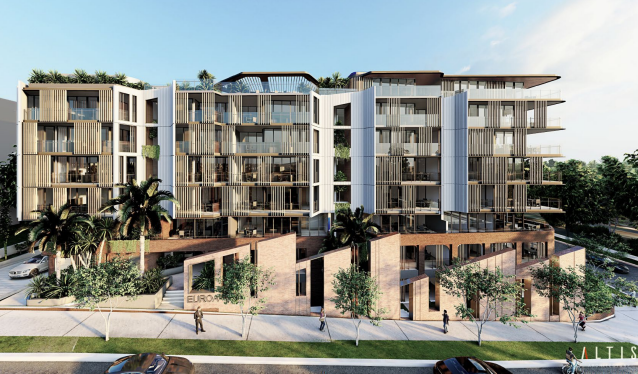
Developer Arden Property Group is seeking to build an eight-storey residential building with 76 apartments, with a mix of one-, two-, and three-bedroom dwellings at 56-60 Crosby Road, Albion.

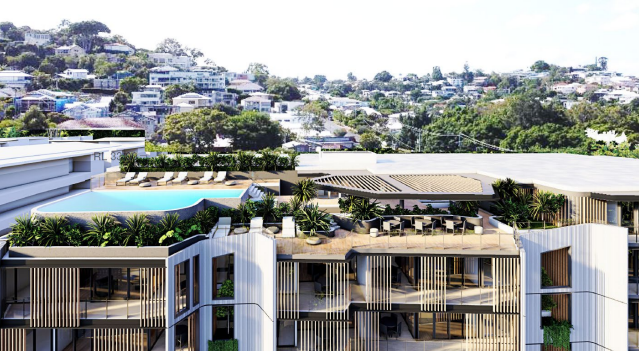
Designed by Altis Architecture, it features a rooftop recreation area with a pool and a sun deck. 

Crosby Road
Photo credit: Altis Architecture/BCC

There will be two levels of parking in the basement, which would provide 144 resident spaces and 20 dedicated visitor spaces for a total of 164 spaces.

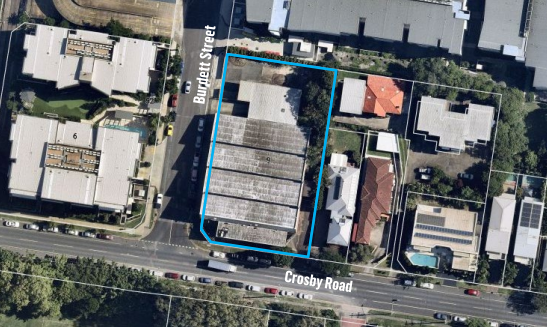
In addition to car parking, the applicant has proposed for bicycle parking with 84 resident spaces and 20 visitor spaces. Vehicle access will be via Burdett Street.

Locals’ Concerns

Crosby Road
Aerial image of site(Photo credit: BCC)

During the public notification held from August to September 2022, a number of residents have provided their feedback regarding the proposal.

“Housing is in short supply in the area and this new apartment complex will improve the quality of the surrounding area by removing an old disused factory,” said one resident.

“The amount of car parking provided in the basements of this development appears to be significant and well above what Council require,” shared another unit owner within Burdett St.

Whilst there are residents who supported the application, many expressed their objections, citing the bulk and scale, loss of natural light, congestion to the already built-up street parking, and privacy impacts of the proposed residential building. 

“Currently we have two large residential complexes in the street and with the addition of another, I am concerned that this will increase congestion immensely, also creating potential queuing issues for residents,” one local wrote.

Photo credit: Altis Architecture/BCC

In response to the residents’ concerns, the developer said development results in an appropriate bulk and scale, with a highly articulated built form and substantial portion of the site reserved for deep planting.

With regard to privacy and amenity impacts concerns, the applicant claimed that the building was ‘carefully designed to avoid overlooking’ through strategic window and viewing portal placement, use of architectural screening, and significant deep planting buffers. 


Read: Tattersalls Lodge: A Heritage-Listed Ascot Asset With Ties to Queensland Racing


To learn more about the proposed development in Crosby Road, Albion, see Brisbane City Council’s PD Online with the reference A005998885.

Esteemed Brisbane Architect E.P. Trewern: the Man Behind Notable Homes in Ascot and Nearby Suburbs

14 Kitchener Road, Ascot | Photo Credit: UQ Library

Get to know Eric Percival “Percy” Trewern, professionally known as E.P. Trewern, architect extraordinaire. He is the man behind the name that people in the real estate and housing industry equate with well-designed homes found in suburbs like Ascot, Hamilton, and Clayfield, where they command a premium for style, function, and the distinctive Trewern aesthetic. 

Eric Percival Trewern rose to prominence in Queensland as a domestic architect during the interwar period. Prior to that time, he had already designed commercial and industrial buildings.

Mr Trewern grew up in a Cornish mining community in Bendigo. His parents instilled values of handwork and endurance in their sons, Eric being the eldest of three. 

As a young man, Mr Trewern loved to sketch and paint with watercolours. He became an art student of Arthur Thomas Woodward, a British painter, and an apprentice of John Beebe, a Bendigo architect.

At that time, formal training in architecture was not accessible in Bendigo but that didn’t dampen Mr Trewer’s enthusiasm to learn. He studied relevant courses at the School of Mines. Whilst under Beebe, he worked on building hotels, shops, and warehouse projects, as well as the Bendigo Hospital. 


Around 1914, the Trewern family decided to move to Queensland for better opportunities. His parents also thought he could establish a successful career as an architect in Brisbane.

EP Trewern
Photo Credit: Digital Archive of Queensland Architecture

After working as a draftsman at both the e Department of Agriculture and the Department of Public Works, Mr Trewern also earned his architecture qualifications at 21 years old and was elected into the Queensland Institute of Architects.

Queensland Architects
Photo Credit: Digital Archive of Queensland Architecture

One of the First Trewern Residences in Ascot

After years of working for the Government, Mr Trewern decided to become an independent designer and set up his private practice. From 1920 to 1922, he worked on two brick houses in Ascot and Hamilton. He become an advocate for brick houses than timber homes because they were cheaper, sturdier, and could provide either coolness or warmth to the house, depending on the weather.

In 1922, he designed a house for the wealthy Arthur H. Perry, a hardware retailer, along 14 Kitchener Road in Ascot. This had a living room flowing into the dining room, which included a brick fireplace. The house last went on the market in 2020 for $3.6 million and still has details of Trewern’s California Bungalow designs with brick piers and concrete beams. 

Ascot EP Trewern
Photo Credit: UQ Library
Ascot 14 Kitchener
Photo Credit: realestate.com.au

Other Homes in Ascot

The architect also designed the remodelled the home on 21 Towers Street for Mr Thomas Brown (circa 1926) before it was demolished many years later. 

In 1928, Mr Trewern built another house on 6 Bale Street in Ascot for the family of Mr Norman A.D. Harris. The house still remains standing today and has been off the market since the 1980s. 

6 Bale St Ascot
Photo Credit: UQ Library

Another Trewern-designed residence can be found along 22 Yabba Street and was originally built for Mr John F. Church. It was last sold in 1999 for $1.22 million.


The house on 12 Ascot St was built for Dr Graham Sutton in 1931 and was called the Hampton Wick. The Tudor-style house had its own waiting room for the doctor’s patients, which has been restored as a multipurpose room. The house has been updated with glass panels and skylights when it sold for $3.4 million in 2021.

Ascot St
Photo Credit: UQ Library
Ascot St Current
Photo Credit: Google Maps

Along 42 Kitchener Road is Daneshill, the brick house built for Ms Agnes E. Noble. The property exudes timeless elegance and is considered one of the landmark residences in Ascot. It went on the market for the first time after 40 years in 2020 and sold for $1.9 million. 

42 Kitchener Ascot
Photo Credit: Google Maps

Suffer from Chronic Back Pain or Osteoporosis? A Newly Launched Service in Ascot Offers New Treatments

Photo Credit: Supplied

Chronic back pain has become endemic in society and so the recent Brisbane launch of a brand new service called Kieser, at 1 Zillman Rd in Ascot, will bring relief to many.


From golfers, gardeners, and sports people, to those lifting and carrying heavy items and to people who harm their back with bad posture or poor technique in the gym, Kieser has developed a process combining physio with specially developed machines to strengthen the support structure and enable an injury to be treated.

“Nearly half of all Australians have one or more chronic health conditions. At Kieser, our Physiotherapy and Exercise Physiology team is well equipped to help individuals manage their chronic health conditions. In particular, our strength training programs are ideal for those with osteoporosis or low bone density as progressive strength training in a safe environment is one of the best things you can do to maintain your bone mineral density,” says Clinic Leader, Jedd Michell.

Training at Kieser
Photo Credit: Supplied

For the next four weeks following the launch in Ascot, Kieser is offering a 50 per cent discount on their initial assessment to encourage locals to give it a go. They deal with all private health funds as well.

The company already has 23 centres mainly in the southern states of Australia, having opened its first clinic in 2006. The growth of the service has enabled thousands of people to live a pain-free life.

Kieser
Photo Credit: Supplied

So, what’s different about Kieser?

The physios have been trained in the Kieser fundamentals and fully understand how a wide range of musco-skeletal conditions can be treated with a combination of manipulation and targeted muscular strengthening, enabling the treatment to sustain improvement rather than a quick fix that re-occurs later.

Gym use in Kieser

The equipment in the gym enables most people to get what they need from a 30-minute session, twice per week.

The gym has been designed to remove distractions like music and juice bars so that clients can use the specially designed machines that focus heavily on technique, with support available, as well as one-on-one training for those that need it.

Kieser Exercise Physiologists also specialise in both the prevention of chronic conditions as well as rehab recovery following surgery.


Who should see an Exercise Physiologist?

Royal QLD Golf Club in Eagle Farm Eyeing New Short Courses, Practice Facilities

Royal Queensland Golf Club is planning to develop its premises in Eagle Farm, a multimillion-dollar expansion that would include par-3 short courses and practice facilities. 


Read: World-Class Hypersonic Precinct Opens in Eagle Farm


After considering a range of options, the Club announced, through a circular sent to members, its plans to invest in short courses and practice facilities to cater to members such as business executives who don’t have much time to play their favourite sport.

Short courses are defined as anything under 6,000 yards. They are divided into three categories: 9-hole courses, par-3 courses and sub-6k-yard courses of any number of holes. 

Photo credit: Royal Queensland Golf Club/Facebook

Although short courses still provide plenty of challenge, they don’t require players to hit the ball excessively, allowing them to score better whilst saving time and developing their golf skills.

The club did not reveal much about the expansion plans but will conduct an online poll by October 2022 to allow members to have their say on the recommendation. 

They previously recommended the establishment of a Top Golf facility, but members opposed the plans, believing that it would diminish the brand of Royal Queensland.

Photo credit: Royal Queensland Golf Club/Facebook

Top Golf does not have a dress code whereas Royal Queensland’s dress code states that members are required to dress and present themselves both on the course and in the clubhouse in a manner respectful of each other and consistent with the club’s standards.


Read: Tattersalls Lodge: A Heritage-Listed Ascot Asset With Ties to Queensland Racing


In the golf and tennis areas, for instance, men’s shirts must be collared and tucked in, short socks must be mainly white, and shoes must be soft spikes only.

Royal Queensland Golf Club believes the interest in the club will remain strong, especially after their successful delivery of the Australian PGA Championship earlier this year.

The expansion also comes ahead of the anticipated Brisbane 2032 Olympics, where the elite club has been confirmed as host of golf competitions.

Tattersalls Lodge: A Heritage-Listed Ascot Asset With Ties to Queensland Racing

The history of Tattersalls Lodge, a 19th-century, heritage-listed cottage found at the corner of Oriel Road and Yabba Street in Ascot, is closely associated with the development of Queensland’s racing industry. Find out how.

In the late 1800s, bookmaker Charles Burton purchased four allotments of land in Ascot, owned by The Federal Building Land and Investment Society Limited,  to build the Tattersalls Stables. Given its proximity to Eagle Farm Racecourse, Burton seized the opportunity to lease the site to horse trainers. 

Two years later, Burton sold the property to the “Pearl King” James Clark, who was a horse-racing enthusiast and bred training horses. Mr Clark built the Federation-style Tattersalls Lodge on his newly-acquired property as a private training facility with houses for the horse trainers and their families. 

Tattersalls Lodge earned a reputation for its prize-winning horses until Clark’s death.

Pearl King James Clark death notice
Photo Credit: National Library of Australia


From Tattersalls Lodge to Fitzgrafton Lodge

Gilbert Powell Wyndham Heathcote, a hotelkeeper from New South Wales, bought Tattersalls Lodge from Clark. However, following Heathcote’s death in 1901, the property was auctioned off. 

Grazier James McGill, known as the  “Squire of Blacklands”, acquired Tattersalls Lodge and moved in with his family in 1903. Mr McGill was well-respected in the racing community, described as “one of the most honourable, straight-going sportsmen in the history of racing in Queensland.” He changed the name of the house to “Fitzgrafton Lodge,” after his prize-winning horse. McGill Avenue, adjacent to Lancaster Road in Ascot, was named after him. 

Tattersalls Lodge horses
Photo Credit: National Library of Australia
Fitzgrafton Lodge
Photo Credit: National Library of Australia

When McGill died in 1918, his son James Charles McGill, inherited the property and held it until 1925. Countless owners have since acquired the property, turning the stables into private residences. 

Tattersalls Lodge at Present

In January 2004, the property was entered into Brisbane’s local Heritage Listing. 

Photo Credit: realestate.com.au

The present-day Tattersalls Lodge has been refurbished as a country-style home with Colonial French doors and wrap-around latticed verandahs.


It was valued at $300,000 in 1989 and $467,000 in 2001. The property last changed hands in early 2021 when it sold for $1.4 million.

‘Townhouses in the Sky’ Coming to Albion

A 42-unit, eight-storey residential development with units dubbed “the townhouses in the sky” will soon rise in Albion.


“Nouveau” comprises 42 sub-tropical residential units across eight levels
“Nouveau” comprises 42 sub-tropical residential units across eight levels | Photo Credit: Brisbane City Council / developmenti.brisbane.qld.gov.au

The news comes following a recent approval granted by the Council to boutique property developer Pyco Group, who is set to develop the 2,114-sqm site located at 8-12 Anstey Street and 16 Lever Street in Albion.

“Nouveau” comprises 42 sub-tropical residential units across eight levels with each unit containing three bedrooms, two bathrooms, an open plan living area, kitchen, dining area, and an outdoor balcony/terrace. Units 37 – 42 will have an outdoor private roof terrace.

View from Anstey Street and Lever Street
View from Anstey Street and Lever Street | Photo Credit: Brisbane City Council / developmenti.brisbane.qld.gov.au

Designed by DAH Architecture, the “townhouses in the sky” will have two basement levels that can accommodate 95 car parking spaces: 84 resident spaces and 11 visitor spaces. Also, 87 bicycle parking spaces will be provided along with a dedicated bike storage area located at the ground level.

The development will feature arched terraces and a brick foundation with a landscaped communal open space at ground level and on the roof with a total of 200sqm and will include seating areas, outdoor dining, and a pool.

  View from Lever Street
View from Lever Street | Photo Credit: Brisbane City Council / developmenti.brisbane.qld.gov.au

“The proposed development has been designed to respond to Brisbane’s subtropical climate and lifestyle. All units benefit from being oriented to the street frontages and well-proportioned living areas and private open spaces that create an indoor/outdoor living space and maximise access to natural light and ventilation. The development also includes naturally ventilated foyers,” the assessment report noted.

With a portfolio of developments in West End, Chermside, New Market, and Cannon Hills, the developers are targeting downsizers and professionals for their Albion project.

Pyco Group also has a project underway in West End called “The Bailey” which comprises 26 boutique apartment units as well as other upcoming developments on Vulture Street; 36-residence, two-storey townhouses also in West End; and 2-storey maisonette homes in Sydney.


The upcoming Albion development at a glance:

  • Site Area: 2,114sqm
  • Height: 8 storeys
  • Total Units: 42 two-storey units
  • Site Cover: 56.37%
  • Communal Open Space: 200 sqm
  • Deep Planting and Landscaping: Landscape = 506sqm, Deep planting = 326sqm
  • Car Parking: 95 car parking space: 84 resident, 11 visitor
  • Architectural Design: DAH Architecture

Tracking the History of Eagle Farm as Farmland, Penal Settlement, and Airport Hub

Did you know that the development of Eagle Farm began sometime around 1829, when Captain Patrick Logan was tasked to expand food production in what was then a penal colony? Before it became an industrial site, Eagle Farm was once land for cultivation belonging to the Moreton Bay penal settlement.

Capt Logan accepted the assignment from then-Governor Ralph Darling and upon the recommendations of Colonial Botanist Charles Frazer, Capt Logan picked a fertile site between the Brisbane River and Serpentine Creek.

Around 150 male prisoners cultivated the land and built slabs and structures in the area. Corn was mostly grown in the farm, along with cabbages, potatoes, carrots, and yams. 

The name Eagle Farm was derived from the eagles that were observed around the place. 

A Good Start Turned Problematic

Following its establishment, Eagle Farm had much success in providing food for the colony, including Sydney. Buildings were then established to improve the farming operations. 


However, the area was soon plagued with problems like flooding and drought, which impacted food production. In 1832, Eagle Farm also experienced a malaria outbreak. This prompted the government to reconsider abandoning the site which was notorious for its swampy and unhealthy conditions.

Despite these unfortunate circumstances, Eagle Farm was not closed. Instead, the male convicts were replaced with 40 female convicts, who worked in the Female Factory to wash and mend the clothes of the male prisoners. By 1837, the site became an all-female penal settlement. 

Eagle Farm Factory
Photo Credit: National Libray of Australia

The women were protected within a fenced property separate from the male prisoners. Despite the fences, however, the women were often visited by the men. They hid from the guards among the tall grasses surrounding the area. This became even more difficult to oversee. 

Female Factory fences
These are replicas of the original fence and gates made of eucalypt poles measuring 5.2 metres high which doubled as both an enclosure and defensive measures.
Photo Credit: TradeCoast Central Heritage Park/Facebook
Eagle Farm Prison location
Prison location
Photo Credit: Paul Newman/Facebook
Eagle Farm Factory
Photo Credit: National Libray of Australia

In 1839, all the female convicts were shipped to Sydney and the Eagle Farm settlement was permanently closed. Two years later, Eagle Farm’s settlement was revived as a cattle station and then surveyed for public auction for white settlers. 

meat workers
Cattle and meat workers on a picnic
Photo Credit: State Library of Queensland

With the arrival of the settlers, some mixed farming of citrus fruits, small crops, dairy, and cattle was then undertaken on the land but it was always the target of raids for the Aborigines.

Eagle Farm Cotton Ginnery
Cotton ginnery
Photo Credit: State Library of Queensland
Aerial View
Aerial view 1940s
Photo Credit: State Library of Queensland

It’s unclear when the former women’s prison was completely demolished but by the 1890s, only the superintendent’s house survived before everything was completely gone due to redevelopments.

The Eagle Farm Airfield 

By the early 1900s, the Commonwealth used Eagle Farm as an airfield as the development of aviation progressed. A hangar was built on the site, where Bert Hinkler and Amy Johnson had their first solo flights to the United States.


However, Eagle Farm was eventually deemed unsuitable as an airfield due to problems with its drainage. The Commonwealth had no choice but to lease the land back to farming for many years until the site was reactivated for World War II.

during World War II
During World War II
Photo Credit: State Library of Queensland

The Royal Australian Air Force used Eagle Farm as its training school and it soon became a strategic site, given its proximity to Camp Ascot.

Eagle Farm Airport Drive
Airport Drive and Lamington Street Intersection 1953
Photo Credit: Brisbane City Council

After the war, the site became Brisbane’s principal aviation hub until it was closed in 1988 with the establishment of a new airport in Brisbane.